Department of Neurosurgery, Graduate School of Medicine, Osaka University, Osaka, 565-0871, Japan.
Institute for Advanced Co-Creation Studies, Osaka University, Osaka, 565-0871, Japan.
Nat Commun. 2024 May 22;15(1):4078. doi: 10.1038/s41467-024-48367-1.
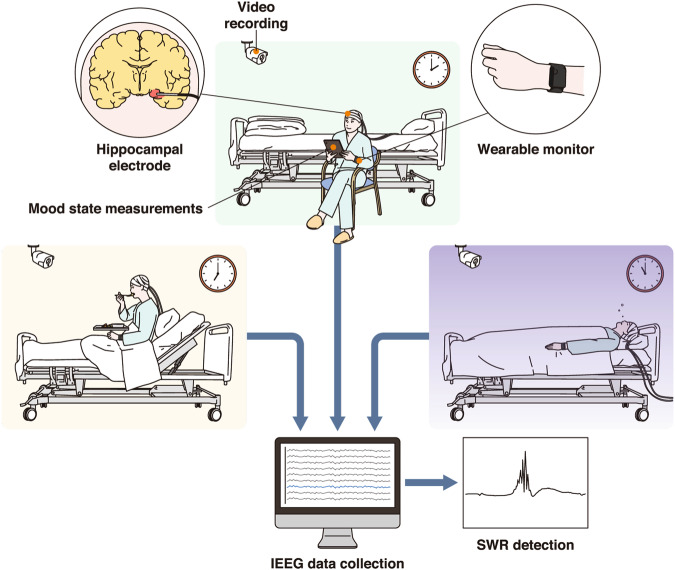
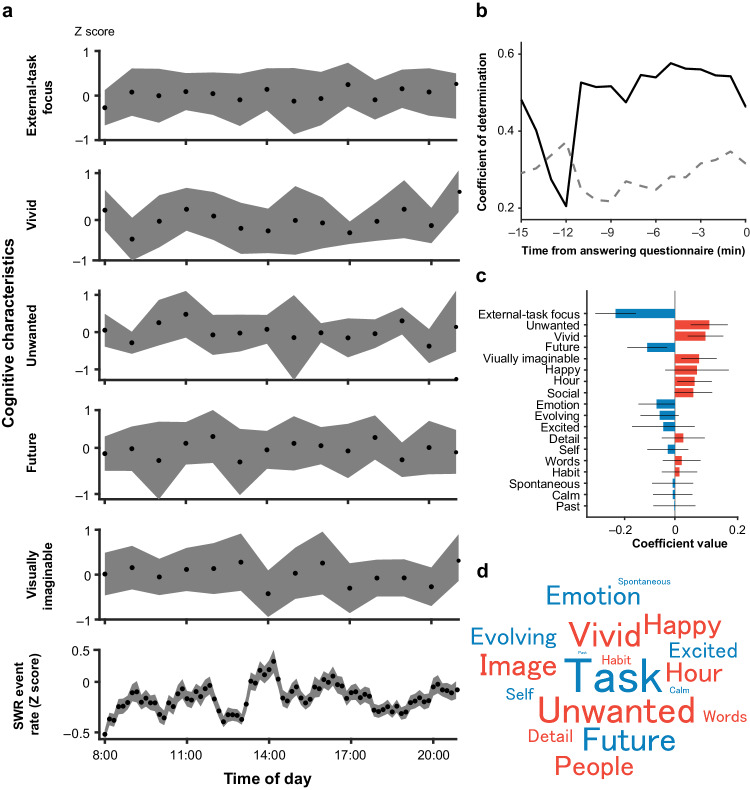
Core features of human cognition highlight the importance of the capacity to focus on information distinct from events in the here and now, such as mind wandering. However, the brain mechanisms that underpin these self-generated states remain unclear. An emerging hypothesis is that self-generated states depend on the process of memory replay, which is linked to sharp-wave ripples (SWRs), which are transient high-frequency oscillations originating in the hippocampus. Local field potentials were recorded from the hippocampus of 10 patients with epilepsy for up to 15 days, and experience sampling was used to describe their association with ongoing thought patterns. The SWR rates were higher during extended periods of time when participants' ongoing thoughts were more vivid, less desirable, had more imaginable properties, and exhibited fewer correlations with an external task. These data suggest a role for SWR in the patterns of ongoing thoughts that humans experience in daily life.
人类认知的核心特征强调了专注于当下事件之外的信息的能力的重要性,例如思维漫游。然而,支持这些自我产生状态的大脑机制尚不清楚。一个新兴的假设是,自我产生的状态取决于记忆回放的过程,而记忆回放与尖波涟漪(SWR)有关,SWR 是起源于海马体的短暂高频振荡。从 10 名癫痫患者的海马体中记录了局部场电位长达 15 天,并使用经验采样来描述它们与持续思维模式的关联。当参与者的持续思维更生动、不太理想、具有更多可想象的特性并且与外部任务的相关性较少时,SWR 率在较长时间内更高。这些数据表明 SWR 在人类日常生活中经历的持续思维模式中起作用。