Zhang Hao, Wang Jian, Liang Zhong, Wu Yuting
School of Geography, Nanjing Normal University, Nanjing, Jiangsu, 210023, China.
Jiangsu Center for Collaborative Innovation in Geographical Information Resource Development and Application, Nanjing, Jiangsu, 210023, China.
Heliyon. 2024 May 11;10(10):e31160. doi: 10.1016/j.heliyon.2024.e31160. eCollection 2024 May 30.
In the last three years, COVID-19 has caused significant harm to both human health and economic stability. Analyzing the causes and mechanisms of COVID-19 has significant theoretical and practical implications for its prevention and mitigation. The role of meteorological factors in the transmission of COVID-19 is crucial, yet their relationship remains a subject of intense debate.
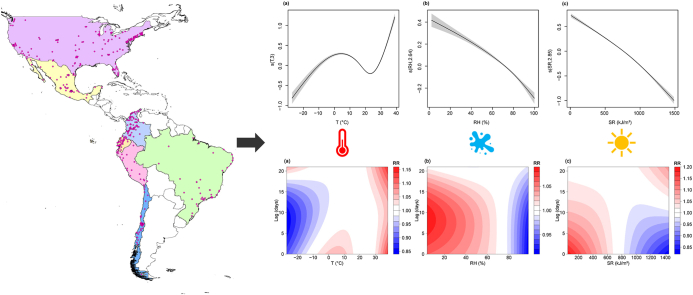
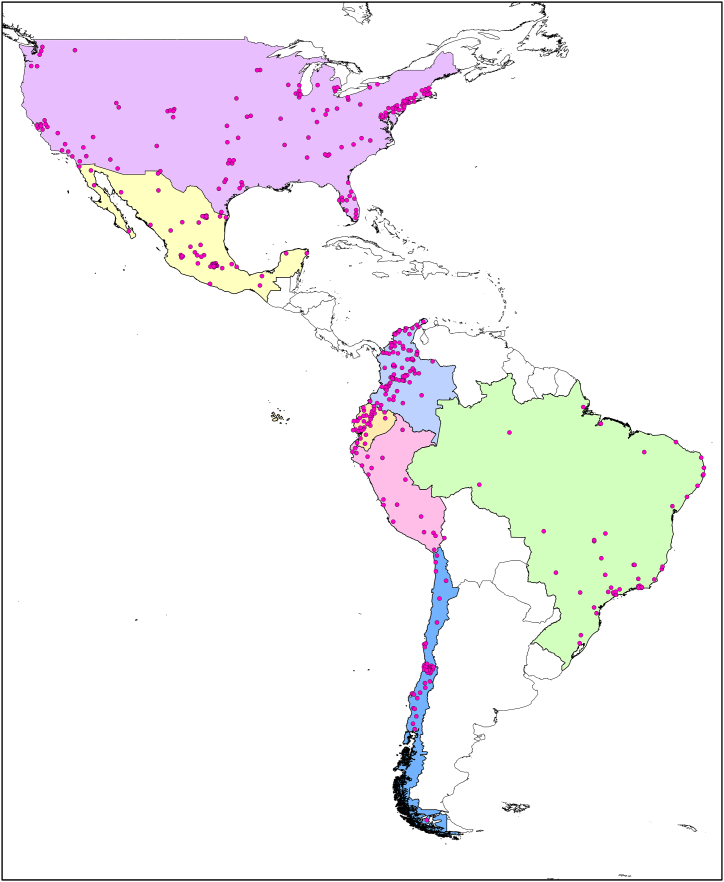
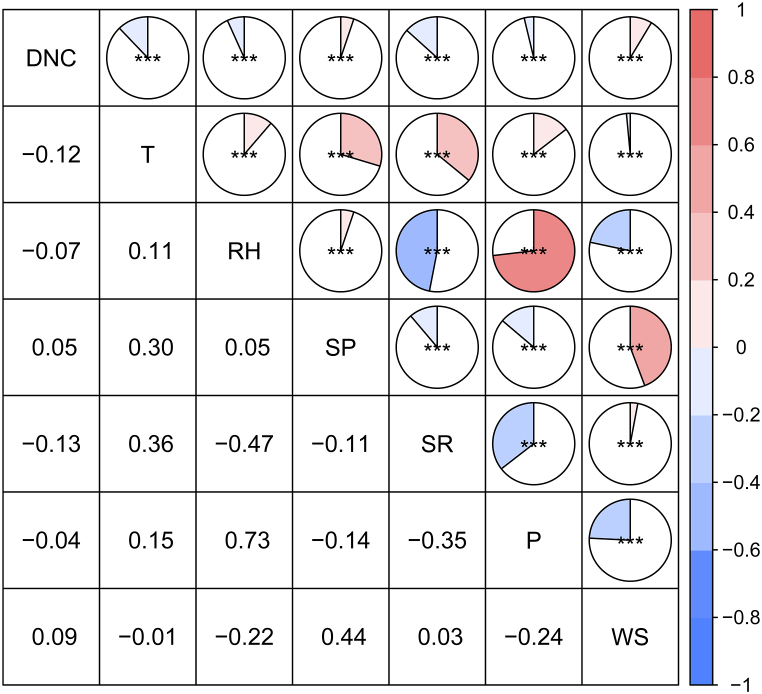
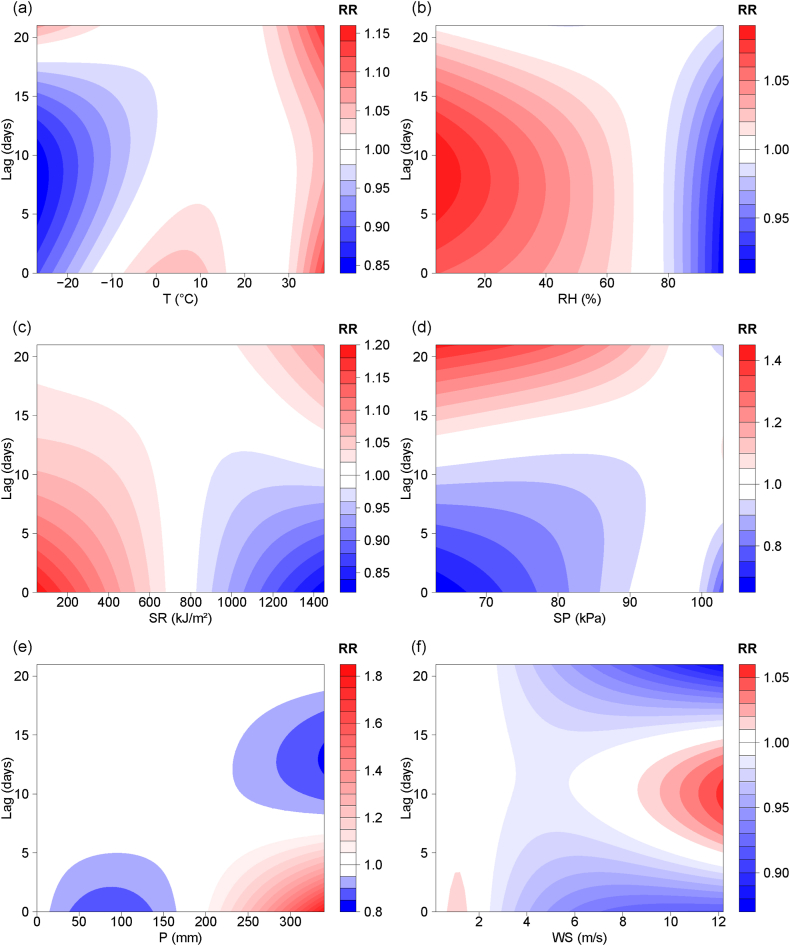
To mitigate the issues arising from short time series, large study units, unrepresentative data and linear research methods in previous studies, this study used counties or districts with populations exceeding 100,000 or 500,000 as the study unit. The commencement of local outbreaks was determined by exceeding 100 cumulative confirmed cases. Pearson correlation analysis, generalized additive model (GAM) and distributed lag nonlinear model (DLNM) were used to analyze the relationship and lag effect between the daily new cases of COVID-19 and meteorological factors (temperature, relative humidity, solar radiation, surface pressure, precipitation, wind speed) across 440 counties or districts in seven countries of the Americas, spanning from January 1, 2020, to December 31, 2021.
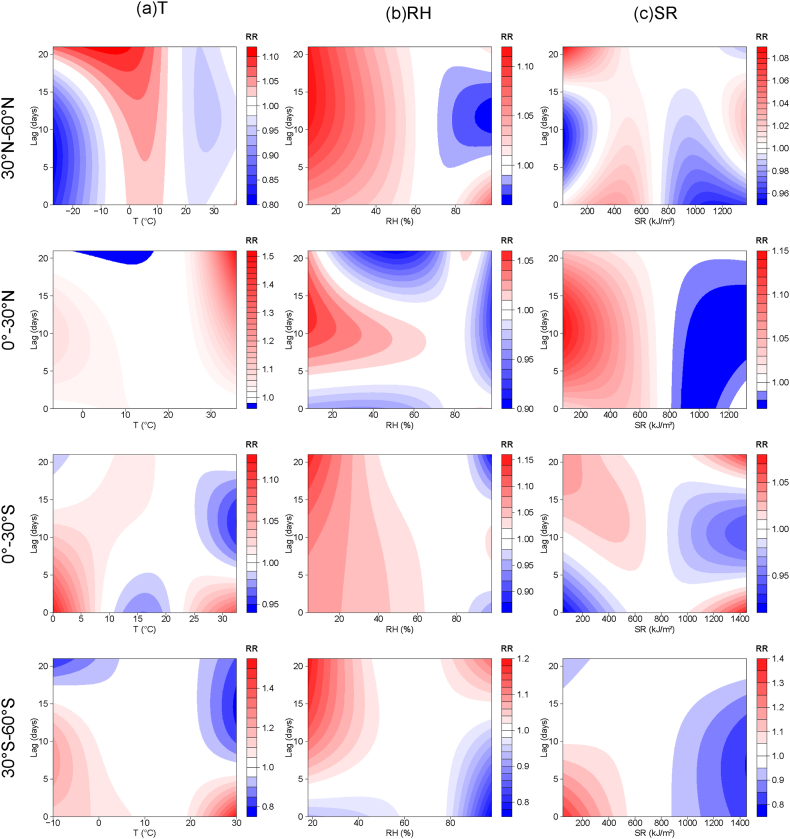
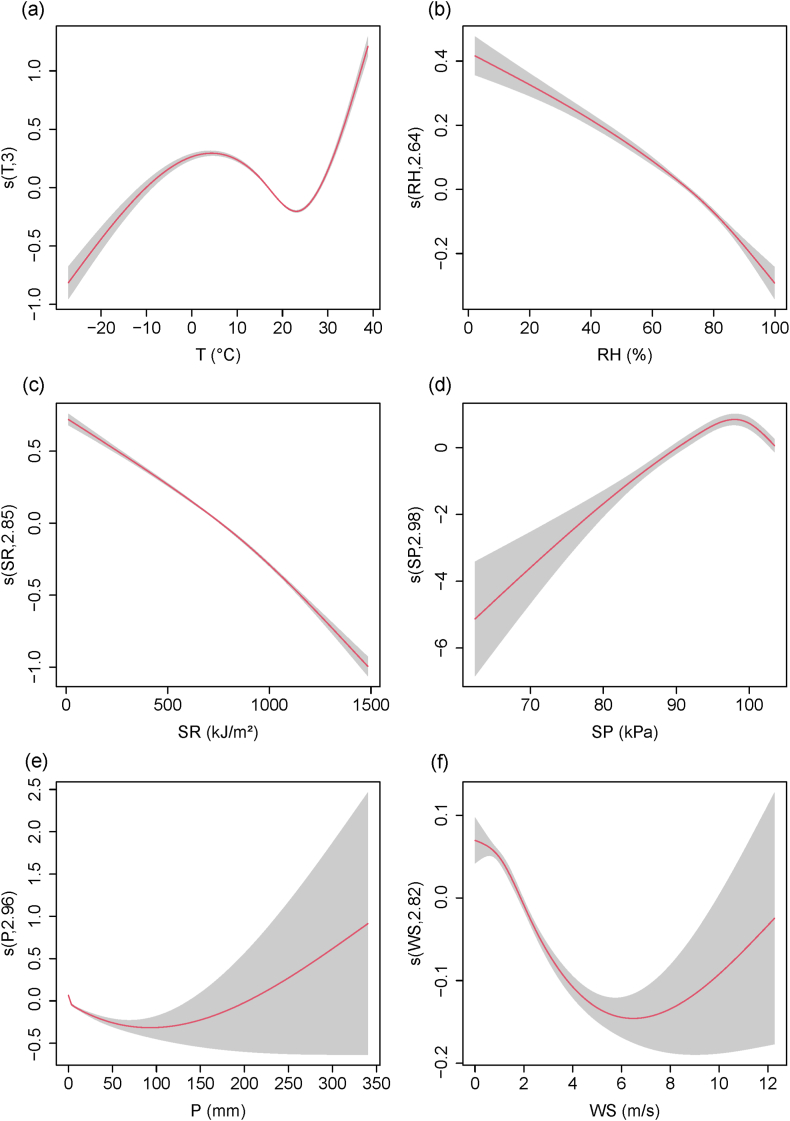
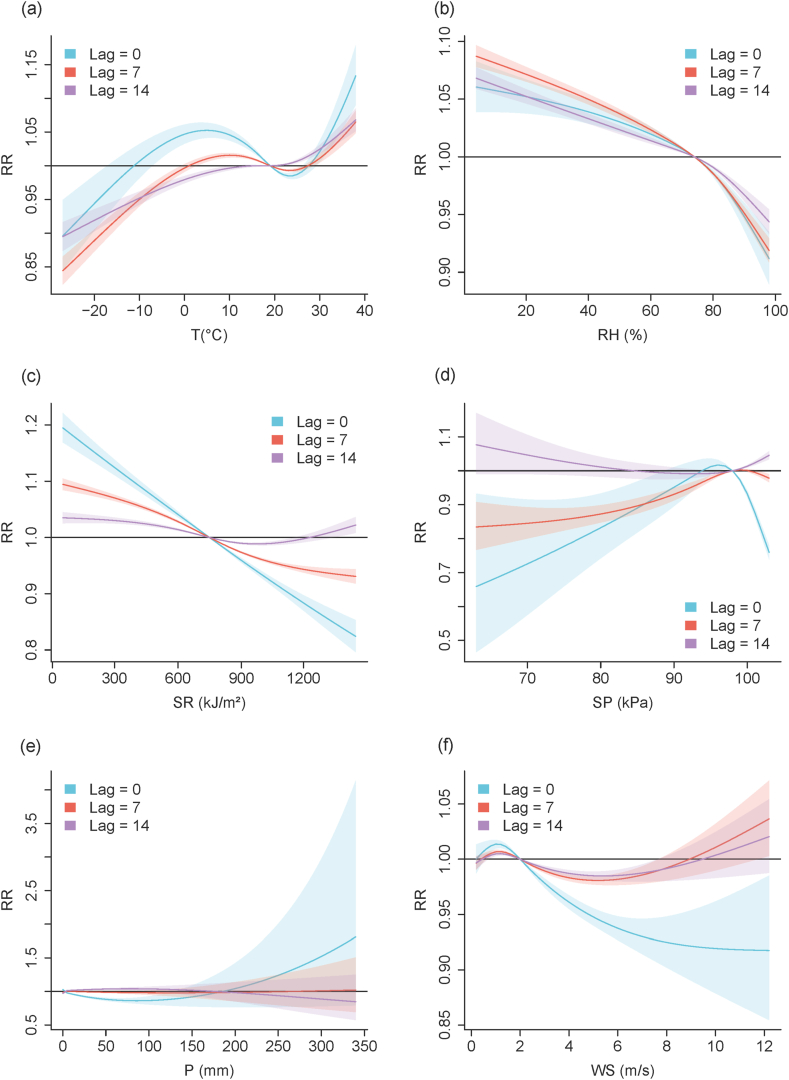
The linear correlations between daily new cases and meteorological indicators such as air temperature, relative humidity and solar radiation were not significant. However, the non-linear correlations were significant. The turning points in the relationship for temperature, relative humidity and solar radiation were 5 °C and 23 °C, 74 % and 750 kJ/m, respectively.
The influence of meteorological factors on COVID-19 is non-linear. There are two thresholds in the relationship with temperature: 5 °C and 23 °C. Below 5 °C and above 23 °C, there is a positive correlation, while between 5 °C and 23 °C, the correlation is negative. Relative humidity and solar radiation show negative correlations, but there is a change in slope at about 74 % and 750 kJ/m, respectively.
在过去三年里,新冠疫情对人类健康和经济稳定都造成了重大损害。分析新冠疫情的成因和机制对其预防和缓解具有重要的理论和实践意义。气象因素在新冠疫情传播中的作用至关重要,但其关系仍是激烈辩论的主题。
为缓解以往研究中存在的时间序列短、研究单元大、数据缺乏代表性以及线性研究方法等问题,本研究将人口超过10万或50万的县或区作为研究单元。以累计确诊病例超过100例来确定本地疫情的开始。使用Pearson相关分析、广义相加模型(GAM)和分布滞后非线性模型(DLNM)分析了2020年1月1日至2021年12月31日期间美洲七个国家440个县或区新冠疫情每日新增病例与气象因素(温度、相对湿度、太阳辐射、地面气压、降水、风速)之间的关系及滞后效应。
每日新增病例与气温、相对湿度和太阳辐射等气象指标之间的线性相关性不显著。然而,非线性相关性显著。温度、相对湿度和太阳辐射关系中的转折点分别为5℃和23℃、74%和750kJ/m。
气象因素对新冠疫情的影响是非线性的。与温度的关系中有两个阈值:5℃和23℃。低于5℃和高于23℃时呈正相关,而在5℃至23℃之间则呈负相关。相对湿度和太阳辐射呈负相关,但分别在约74%和750kJ/m处斜率发生变化。