Department of Pathology, Experimental Vascular Pathology Group, Maastricht University, PO box 5800, 6202 AZ, Maastricht, The Netherlands.
Department of Plasma Proteins, Laboratory for Molecular Cell Biology, Sanquin Research and Landsteiner Laboratory, Amsterdam, The Netherlands.
Angiogenesis. 2024 Aug;27(3):461-474. doi: 10.1007/s10456-024-09921-z. Epub 2024 May 23.
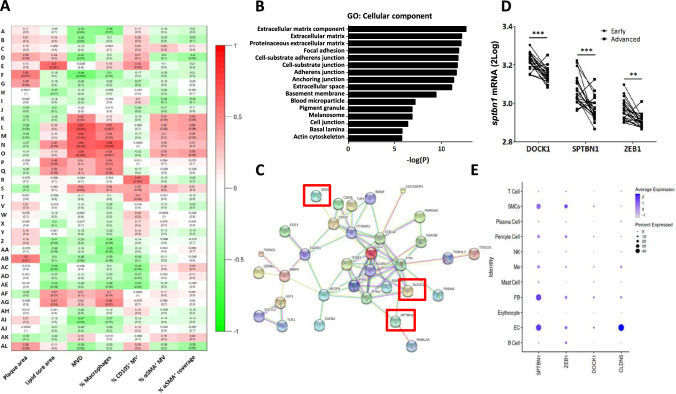
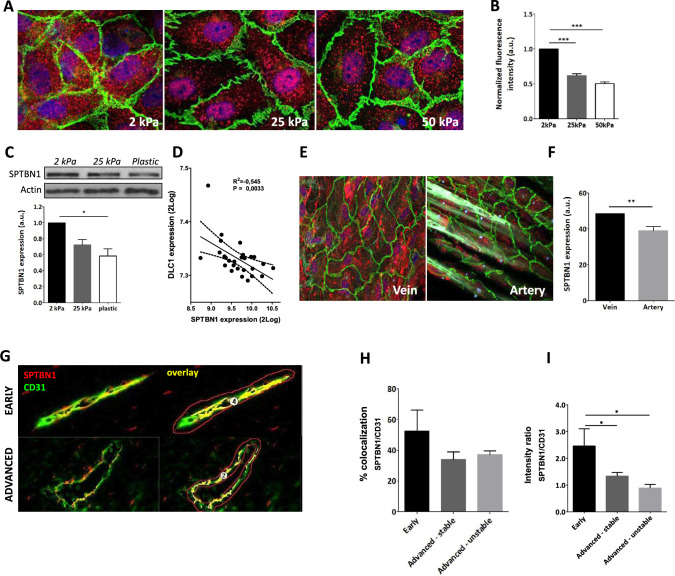
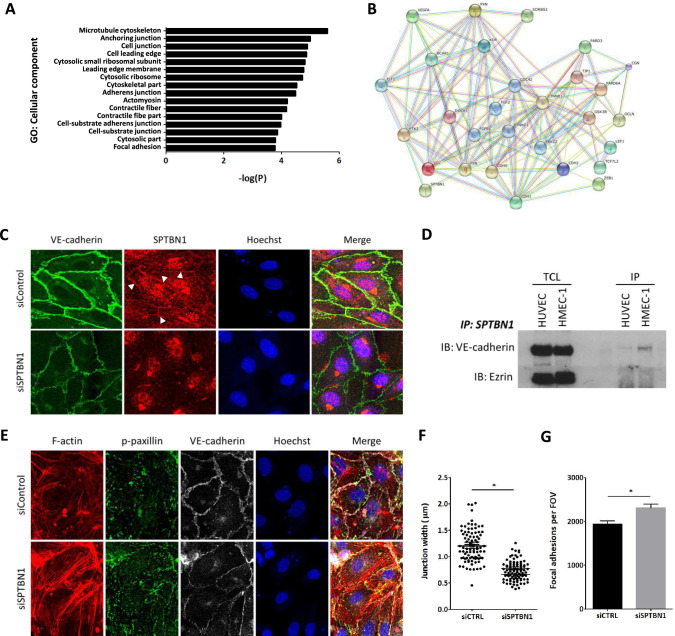
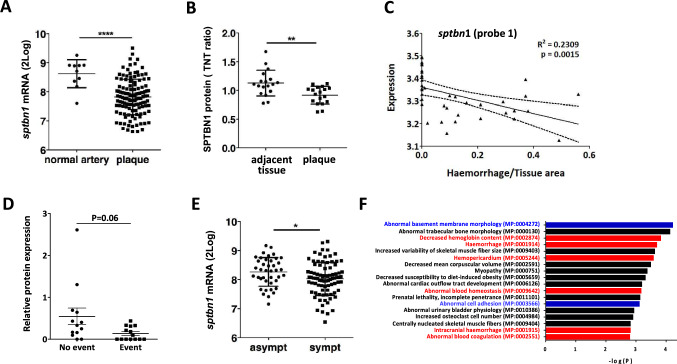
The presence of atherosclerotic plaque vessels is a critical factor in plaque destabilization. This may be attributable to the leaky phenotype of these microvessels, although direct proof for this notion is lacking. In this study, we investigated molecular and cellular patterns of stable and hemorrhaged human plaque to identify novel drivers of intraplaque vessel dysfunction. From transcriptome data of a human atherosclerotic lesion cohort, we reconstructed a co-expression network, identifying a gene module strongly and selectively correlated with both plaque microvascular density and inflammation. Spectrin Beta Non-Erythrocytic 1 (sptbn1) was identified as one of the central hubs of this module (along with zeb1 and dock1) and was selected for further study based on its predominant endothelial expression. Silencing of sptbn1 enhanced leukocyte transmigration and vascular permeability in vitro, characterized by an increased number of focal adhesions and reduced junctional VE-cadherin. In vivo, sptbn1 knockdown in zebrafish impaired the development of the caudal vein plexus. Mechanistically, increased substrate stiffness was associated with sptbn1 downregulation in endothelial cells in vitro and in human vessels. Plaque SPTBN1 mRNA and protein expression were found to correlate with an enhanced presence of intraplaque hemorrhage and future cardiovascular disease (CVD) events during follow-up. In conclusion, we identify SPTBN1 as a central hub gene in a gene program correlating with plaque vascularisation. SPTBN1 was regulated by substrate stiffness in vitro while silencing blocked vascular development in vivo, and compromised barrier function in vitro. Together, SPTBN1 is identified as a new potential regulator of the leaky phenotype of atherosclerotic plaque microvessels.
动脉粥样硬化斑块血管的存在是斑块不稳定的关键因素。这可能归因于这些微血管的渗漏表型,尽管缺乏直接证据支持这一观点。在这项研究中,我们研究了稳定和出血性人类斑块的分子和细胞模式,以确定斑块内血管功能障碍的新驱动因素。从人类动脉粥样硬化病变队列的转录组数据中,我们重建了一个共表达网络,确定了一个与斑块微血管密度和炎症强烈且选择性相关的基因模块。 spectrin Beta Non-Erythrocytic 1 (sptbn1) 被鉴定为该模块的一个中心枢纽之一(与 zeb1 和 dock1 一起),并基于其主要内皮表达被选为进一步研究。 sptbn1 沉默增强了体外白细胞迁移和血管通透性,其特征是焦点粘连增加和连接 VE-cadherin 减少。在体内,斑马鱼中 sptbn1 的敲低会损害尾静脉丛的发育。从机制上讲,体外内皮细胞中 sptbn1 的下调与底物刚性增加有关,并且在人类血管中也是如此。斑块 SPTBN1 mRNA 和蛋白表达与斑块内出血的增强以及随访期间未来心血管疾病 (CVD) 事件相关。总之,我们确定 SPTBN1 为与斑块血管生成相关的基因程序中的一个中心枢纽基因。SPTBN1 在体外受到基质刚性的调节,而沉默会阻止体内血管发育,并损害体外屏障功能。总之,SPTBN1 被确定为动脉粥样硬化斑块微血管渗漏表型的新潜在调节剂。