
同伴提供康复策略预防美国严重精神疾病退伍军人自杀(SUPPORT):社区参与方法
Suicide Prevention by Peers Offering Recovery Tactics (SUPPORT) for US Veterans With Serious Mental Illness: Community Engagement Approach.
作者信息
Chalker Samantha A, Serafez Jesus, Imai Yuki, Stinchcomb Jeffrey, Mendez Estefany, Depp Colin A, Twamley Elizabeth W, Fortuna Karen L, Goodman Marianne, Chinman Matthew
机构信息
Veterans Affairs San Diego Healthcare System, San Diego, CA, United States.
Department of Psychiatry, University of California, San Diego, San Diego, CA, United States.
出版信息
J Particip Med. 2024 May 23;16:e56204. doi: 10.2196/56204.
BACKGROUND
Peer specialists are hired, trained, and accredited to share their lived experience of psychiatric illness to support other similar individuals through the recovery process. There are limited data on the role of peer specialists in suicide prevention, including their role in intervention development.
OBJECTIVE
To better understand peer specialists within the Veterans Health Administration (VHA), we followed partnership community engagement and a formative research approach to intervention development to (1) identify barriers, facilitators, and perceptions of VHA peer specialists delivering a suicide prevention service and (2) develop and refine an intervention curriculum based on an evidence-informed preliminary intervention framework for veterans with serious mental illness (SMI).
METHODS
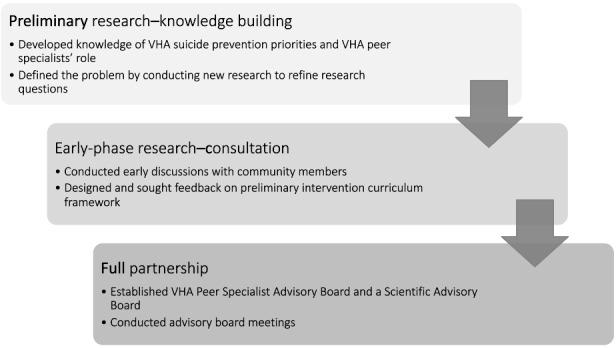
Following the community engagement approach, VHA local and national peer support and mental health leaders, veterans with SMI, and veteran peer specialists met to develop a preliminary intervention framework. Next, VHA peer specialist advisors (n=5) and scientific advisors (n=6) participated in respective advisory boards and met every 2-4 months for more than 18 months via videoconferencing to address study objectives. The process used was a reflexive thematic analysis after each advisory board meeting.
RESULTS
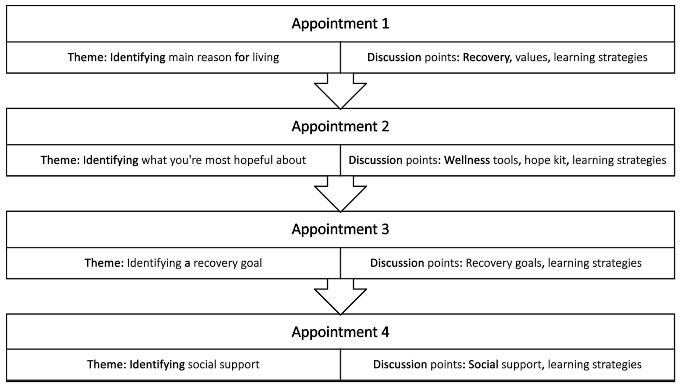
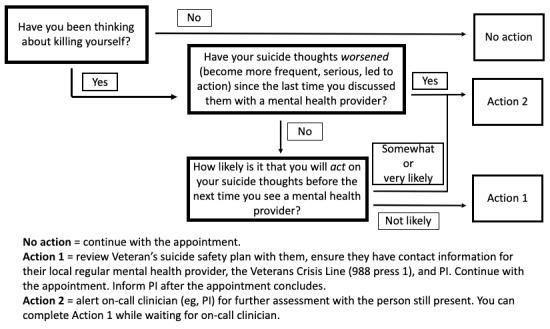
The themes discussed included (1) the desire for suicide prevention training for peer specialists, (2) determining the role of VHA peer specialists in suicide prevention, (3) integration of recovery themes in suicide prevention, and (4) difficulties using safety plans during a crisis. There were no discrepancies in thematic content between advisory boards. Advisor input led to the development of Suicide Prevention by Peers Offering Recovery Tactics (SUPPORT). SUPPORT includes training in general suicide prevention and a peer specialist-delivered intervention for veterans with SMI at an increased suicide risk. This training aims to increase the competence and confidence of peer specialists in suicide prevention and the intervention supports veterans with SMI at an increased suicide risk through their recovery process.
CONCLUSIONS
This paper intends to document the procedures taken in suicide prevention intervention development, specifically those led by peer specialists, and to be a source for future research developing and evaluating similar interventions.
TRIAL REGISTRATION
ClinicalTrials.gov NCT05537376; https://classic.clinicaltrials.gov/ct2/show/NCT05537376.
背景
同伴专家受聘、接受培训并获得认证,以分享他们患精神疾病的亲身经历,在康复过程中支持其他有类似经历的人。关于同伴专家在预防自杀中的作用,包括他们在干预措施开发中的作用的数据有限。
目的
为了更好地了解退伍军人健康管理局(VHA)中的同伴专家,我们遵循伙伴关系社区参与和干预措施开发的形成性研究方法,以(1)确定VHA同伴专家提供自杀预防服务的障碍、促进因素和看法,以及(2)基于针对患有严重精神疾病(SMI)退伍军人的循证初步干预框架,开发和完善干预课程。
方法
遵循社区参与方法,VHA地方和国家同伴支持及心理健康负责人、患有SMI的退伍军人以及退伍军人同伴专家会面,制定初步干预框架。接下来,VHA同伴专家顾问(n = 5)和科学顾问(n = 6)参加各自的顾问委员会,并通过视频会议每2 - 4个月会面一次,持续超过18个月,以实现研究目标。所采用的过程是在每次顾问委员会会议后进行反思性主题分析。
结果
讨论的主题包括(1)同伴专家对自杀预防培训的需求,(2)确定VHA同伴专家在自杀预防中的作用,(3)将康复主题融入自杀预防,以及(4)危机期间使用安全计划的困难。顾问委员会之间的主题内容没有差异。顾问的意见导致了“同伴提供康复策略预防自杀(SUPPORT)”的开发。SUPPORT包括一般自杀预防培训以及由同伴专家为自杀风险增加的患有SMI的退伍军人提供的干预措施。该培训旨在提高同伴专家在自杀预防方面的能力和信心,并且该干预措施通过康复过程支持自杀风险增加的患有SMI的退伍军人。
结论
本文旨在记录自杀预防干预措施开发过程中所采取的程序,特别是那些由同伴专家主导的程序,并成为未来开发和评估类似干预措施的研究来源。
试验注册
ClinicalTrials.gov NCT05537376;https://classic.clinicaltrials.gov/ct2/show/NCT05537376
 Zotero 插件