Rodríguez-Abreo Omar, Cruz-Fernandez Mayra, Fuentes-Silva Carlos, Quiroz-Juárez Mario A, Aragón José L
Centro de Física Aplicada y Tecnología Avanzada, Universidad Nacional Autónoma de México, Santiago de Querétaro 76230, Mexico.
Division de Tecnologías Industriales, Universidad Politécnica de Querétaro, Santiago de Querétaro 76240, Mexico.
Biomimetics (Basel). 2024 May 18;9(5):300. doi: 10.3390/biomimetics9050300.
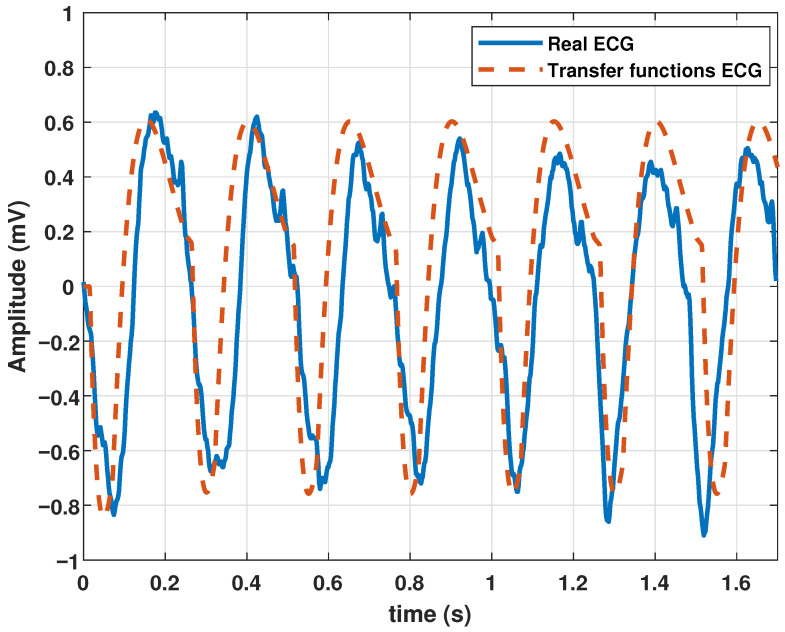
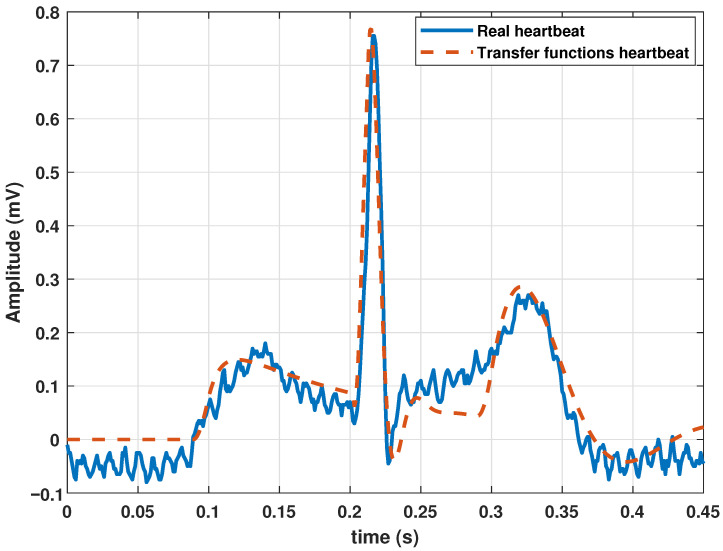
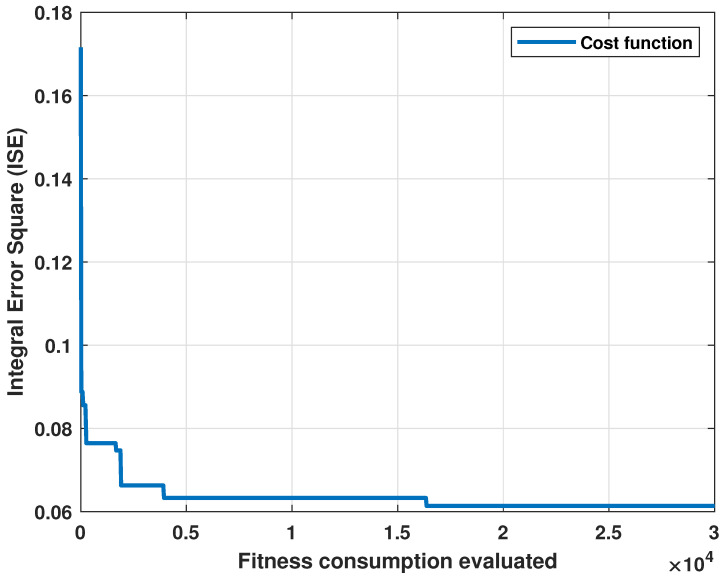
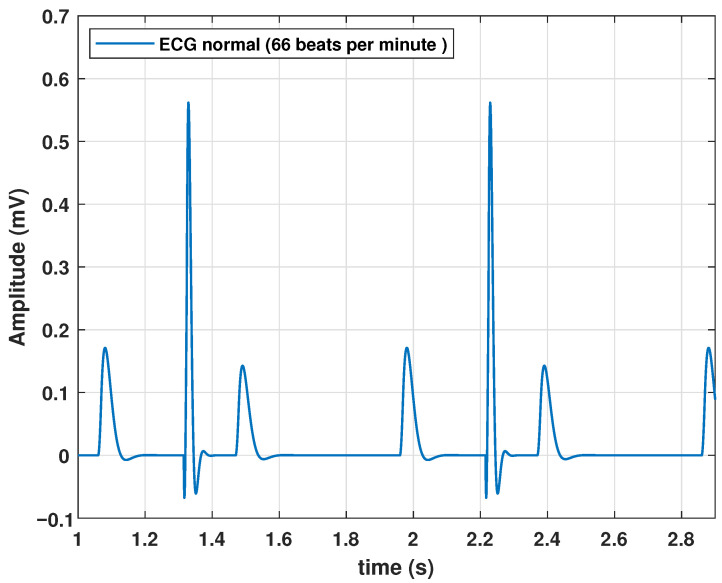
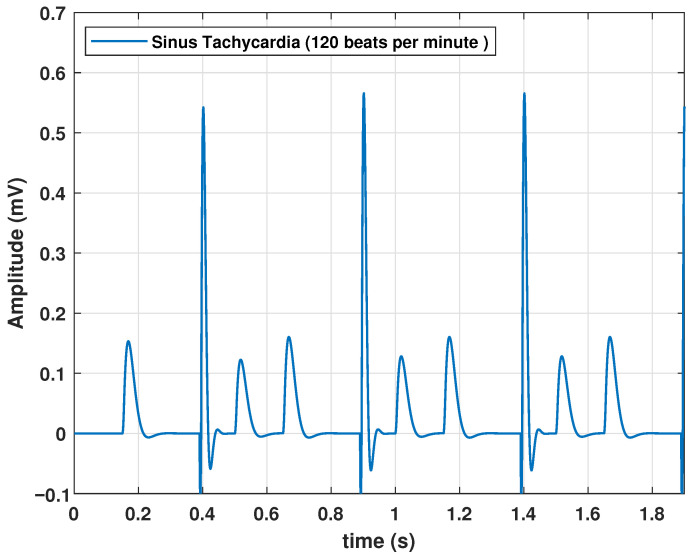
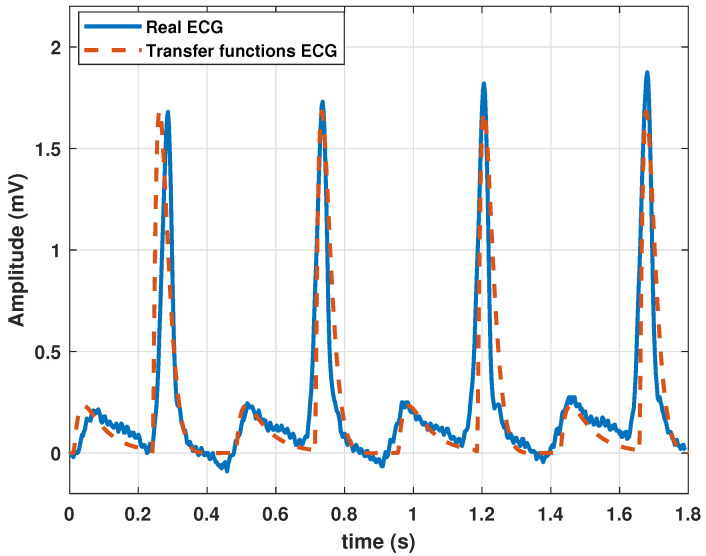
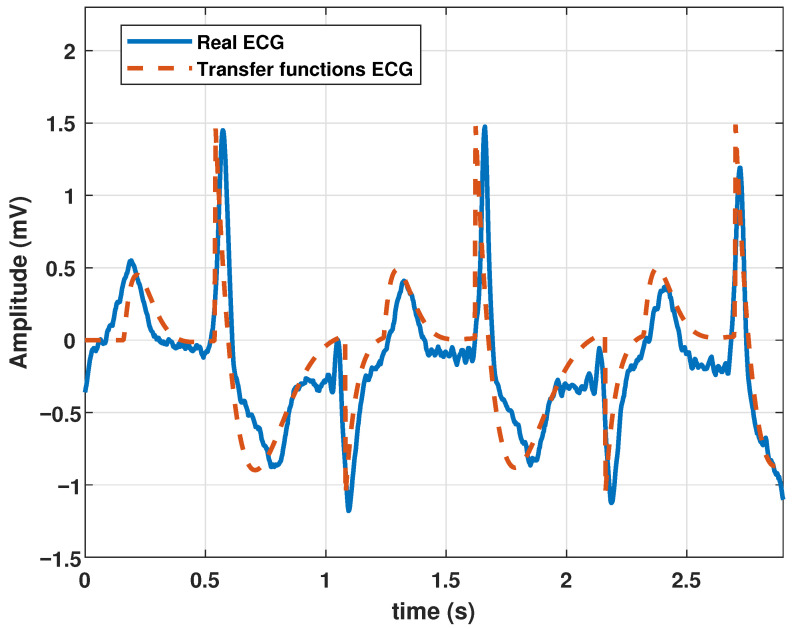
Although healthcare and medical technology have advanced significantly over the past few decades, heart disease continues to be a major cause of mortality globally. Electrocardiography (ECG) is one of the most widely used tools for the detection of heart diseases. This study presents a mathematical model based on transfer functions that allows for the exploration and optimization of heart dynamics in Laplace space using a genetic algorithm (GA). The transfer function parameters were fine-tuned using the GA, with clinical ECG records serving as reference signals. The proposed model, which is based on polynomials and delays, approximates a real ECG with a root-mean-square error of 4.7% and an R2 value of 0.72. The model achieves the periodic nature of an ECG signal by using a single periodic impulse input. Its simplicity makes it possible to adjust waveform parameters with a predetermined understanding of their effects, which can be used to generate both arrhythmic patterns and healthy signals. This is a notable advantage over other models that are burdened by a large number of differential equations and many parameters.
尽管在过去几十年里医疗保健和医疗技术取得了显著进步,但心脏病仍然是全球主要的死亡原因之一。心电图(ECG)是检测心脏病最广泛使用的工具之一。本研究提出了一种基于传递函数的数学模型,该模型允许使用遗传算法(GA)在拉普拉斯空间中探索和优化心脏动力学。传递函数参数通过GA进行微调,临床心电图记录用作参考信号。所提出的基于多项式和延迟的模型以4.7%的均方根误差和0.72的R2值逼近真实心电图。该模型通过使用单个周期性脉冲输入实现了心电图信号的周期性。其简单性使得可以在预先了解其效果的情况下调整波形参数,这可用于生成心律失常模式和健康信号。与其他受大量微分方程和许多参数困扰的模型相比,这是一个显著优势。