School of Design, The Hong Kong Polytechnic University, Hong Kong, China (Hong Kong).
Laboratory for Artificial Intelligence in Design, Hong Kong Science Park, Hong Kong, China (Hong Kong).
J Med Internet Res. 2024 May 24;26:e54375. doi: 10.2196/54375.
With the development of emerging technologies, digital behavior change interventions (DBCIs) help to maintain regular physical activity in daily life.
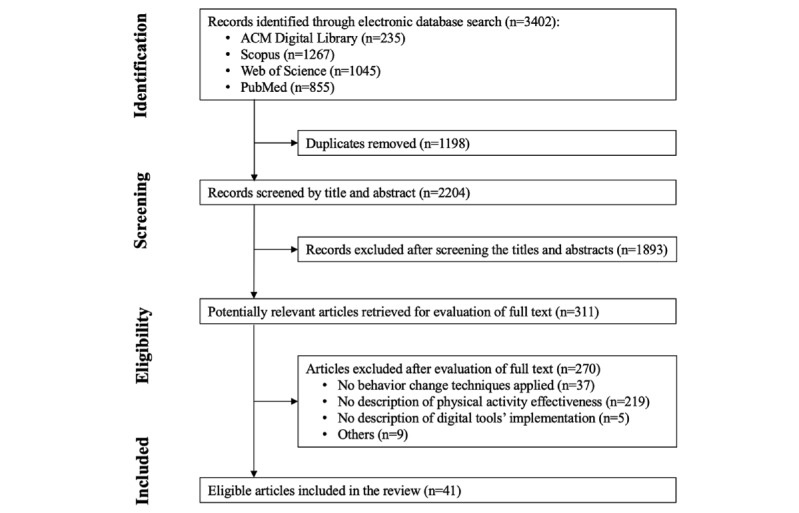
To comprehensively understand the design implementations of habit formation techniques in current DBCIs, a systematic review was conducted to investigate the implementations of behavior change techniques, types of habit formation techniques, and design strategies in current DBCIs.
The process of this review followed the PRISMA (Preferred Reporting Item for Systematic Reviews and Meta-Analyses) guidelines. A total of 4 databases were systematically searched from 2012 to 2022, which included Web of Science, Scopus, ACM Digital Library, and PubMed. The inclusion criteria encompassed studies that used digital tools for physical activity, examined behavior change intervention techniques, and were written in English.
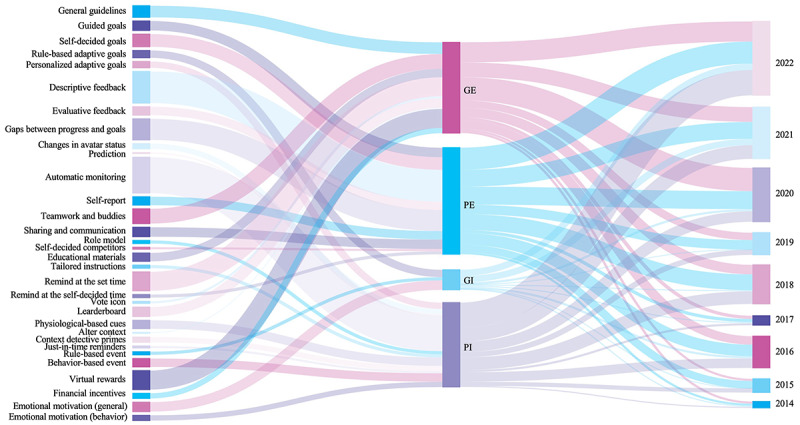
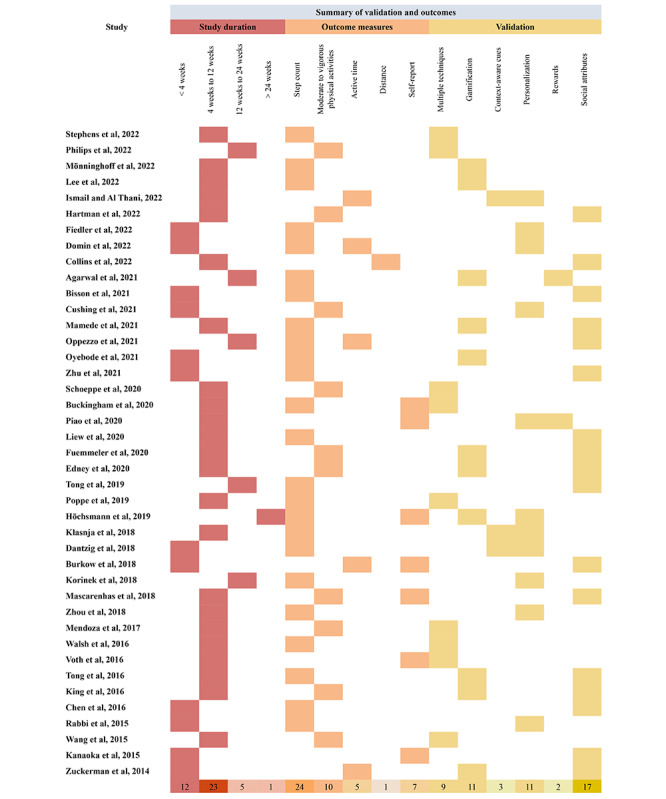
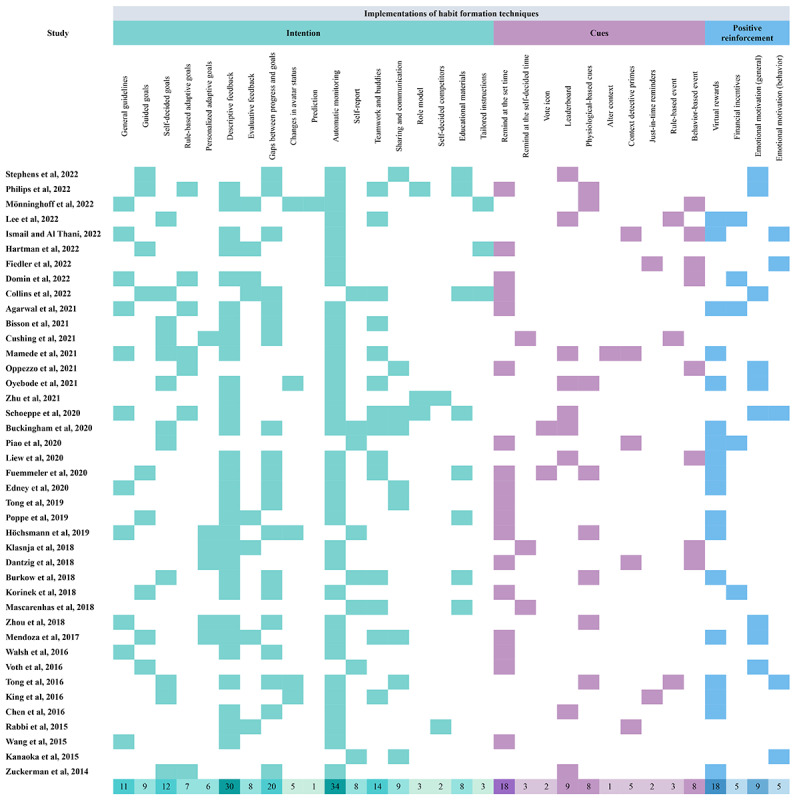
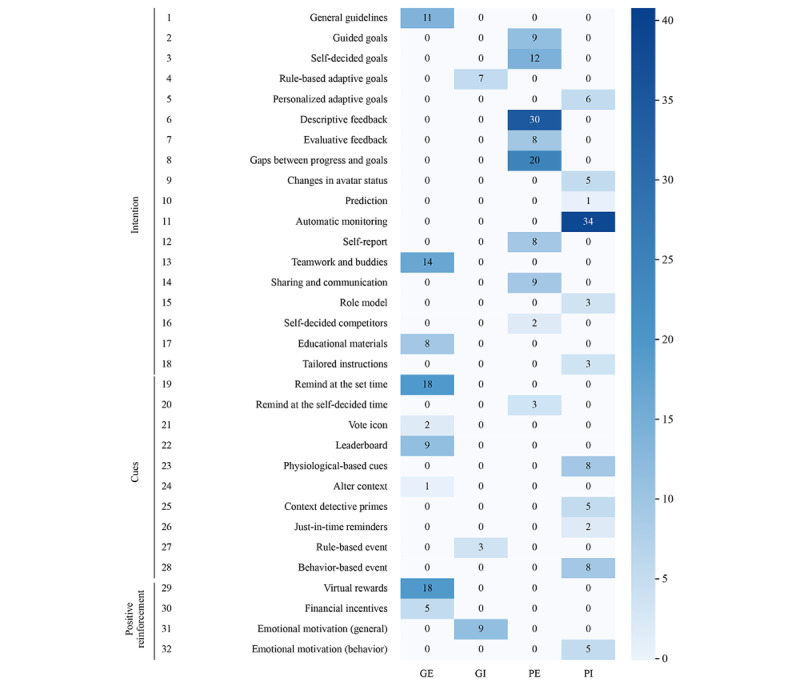
A total of 41 identified research articles were included in this review. The results show that the most applied behavior change techniques were the self-monitoring of behavior, goal setting, and prompts and cues. Moreover, habit formation techniques were identified and developed based on intentions, cues, and positive reinforcement. Commonly used methods included automatic monitoring, descriptive feedback, general guidelines, self-set goals, time-based cues, and virtual rewards.
A total of 32 commonly design strategies of habit formation techniques were summarized and mapped to the proposed conceptual framework, which was categorized into target-mediated (generalization and personalization) and technology-mediated interactions (explicitness and implicitness). Most of the existing studies use the explicit interaction, aligning with the personalized habit formation techniques in the design strategies of DBCIs. However, implicit interaction design strategies are lacking in the reviewed studies. The proposed conceptual framework and potential solutions can serve as guidelines for designing strategies aimed at habit formation within DBCIs.
随着新兴技术的发展,数字行为改变干预(DBCIs)有助于维持日常生活中的规律体育活动。
为了全面了解当前 DBCIs 中习惯形成技术的设计实施情况,本研究进行了系统综述,以调查行为改变技术的实施情况、习惯形成技术的类型以及当前 DBCIs 中的设计策略。
本综述过程遵循 PRISMA(系统评价和荟萃分析的首选报告项目)指南。从 2012 年至 2022 年,系统地在 4 个数据库(Web of Science、Scopus、ACM 数字图书馆和 PubMed)中进行了搜索。纳入标准包括使用数字工具进行体育活动、检查行为改变干预技术且用英文撰写的研究。
本综述共纳入 41 项研究。结果表明,应用最广泛的行为改变技术是行为自我监测、目标设定和提示与线索。此外,根据意图、线索和正强化确定和开发了习惯形成技术。常用的方法包括自动监测、描述性反馈、一般准则、自我设定目标、基于时间的线索和虚拟奖励。
总结了 32 种常见的习惯形成技术设计策略,并将其映射到提出的概念框架中,该框架分为目标介导(泛化和个性化)和技术介导的交互(显式和隐式)。现有研究大多采用显式交互,与 DBCIs 设计策略中的个性化习惯形成技术相一致。然而,在综述研究中缺乏隐式交互设计策略。所提出的概念框架和潜在解决方案可以作为设计 DBCIs 中习惯形成策略的指南。