Lee Sumin, Jeon Hojong, Han Jungho, Song In-Kyu, Baek Seung Hwan, Shim Sungbo, Eun Hoseon, Park Min Soo, Jang Hyeonguk, Shin Jeong Eun, Ihn Kyong
Division of Neonatology, Department of Pediatrics, Severance Children's Hospital, Yonsei University College of Medicine, Seoul 03722, Republic of Korea.
Division of Pediatric Surgery, Department of Surgery, National Health Insurance Service Ilsan Hospital, Goyang-si 10444, Republic of Korea.
J Clin Med. 2024 May 11;13(10):2839. doi: 10.3390/jcm13102839.
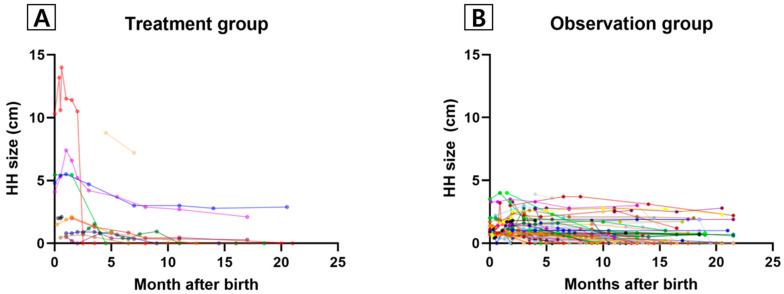
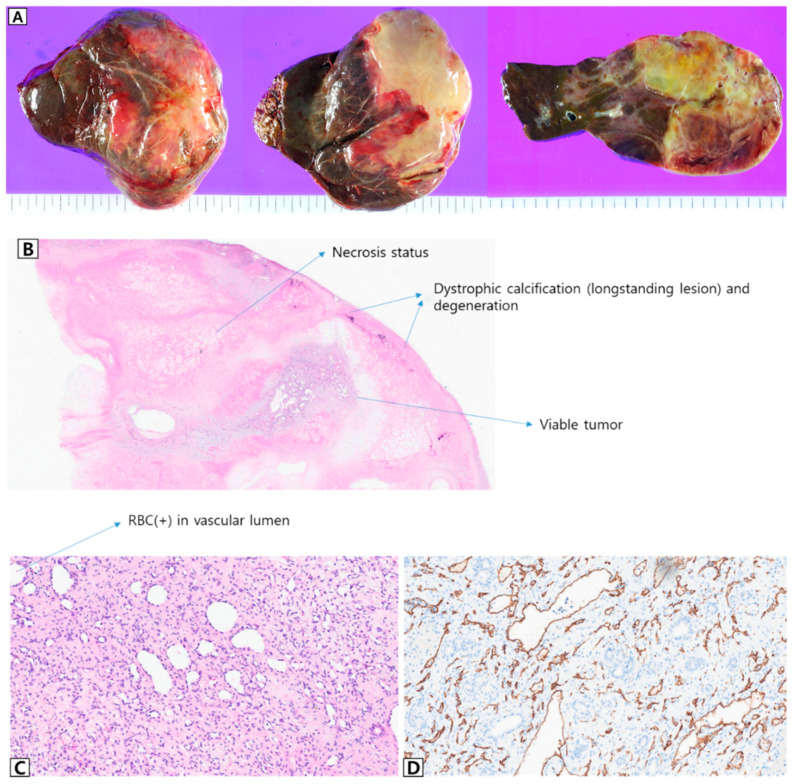
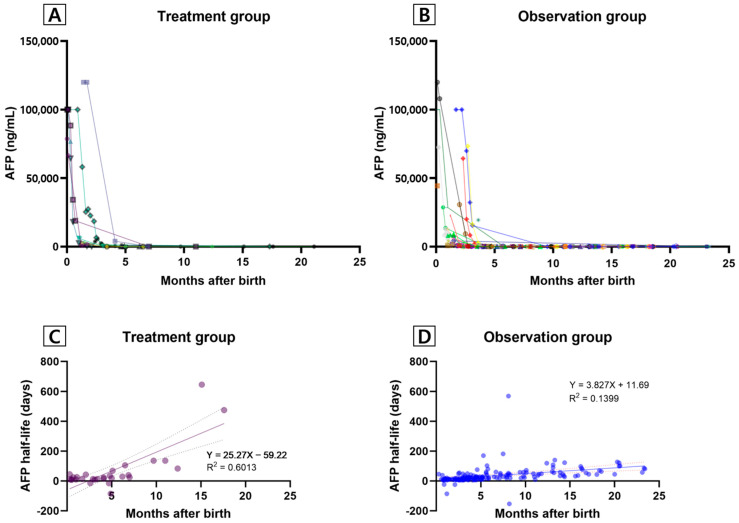
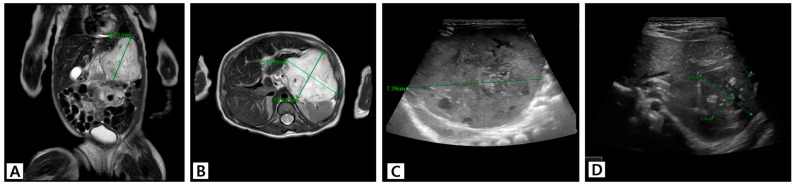
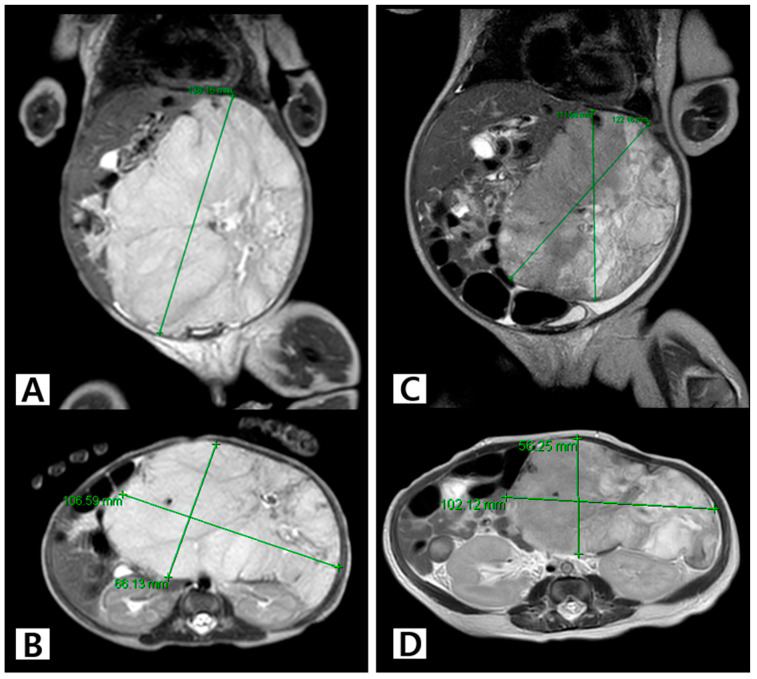
: Management of hepatic hemangioma (HH) in infancy ranges from close monitoring to surgical resection. We analyzed the clinical characteristics and outcomes of HH according to its treatment options, with particular focus on challenging cases. : Data of patients diagnosed with HHs in their first year of life and followed up for at least 1 year were retrospectively reviewed and divided into treatment and observation groups. Serial imaging results, serum alpha-fetoprotein (AFP) levels, medications, and clinical outcomes were compared. The detailed clinical progress in the treatment group was reviewed separately. : A total of 87 patients (75 in the observation group and 12 in the treatment group) were included. The median HH size at the initial diagnosis and the maximum size were significantly larger in the treatment group than the observation group (2.2 [0.5-10.3] cm vs. 1.0 [0.4-4.0] cm and 2.1 [0.7-13.2] vs. 1.1 [0.4-4.0], respectively; all < 0.05]. The median initial and last serum AFP levels were significantly higher in the treatment group than in the observation group (76,818.7 vs. 627.2 and 98.4 vs. 8.7, respectively; all < 0.05). Serum AFP levels in both groups rapidly declined during the first 3 months of life and were almost undetectable after 6 months. Among the challenging cases, a large (14 × 10 × 6.5 cm sized) focal HH was successfully treated using stepwise medical-to-surgical treatment. : Patients with large HH and mild symptoms can be treated using stepwise pharmacotherapy. More aggressive surgical treatment of tumors unresponsive to initial pharmacotherapy may help shorten the treatment period and improve outcomes.
婴儿期肝血管瘤(HH)的治疗方法包括密切监测和手术切除。我们根据治疗方案分析了HH的临床特征和治疗结果,特别关注具有挑战性的病例。回顾性分析出生后第一年诊断为HH且随访至少1年的患者数据,并将其分为治疗组和观察组。比较系列影像学检查结果、血清甲胎蛋白(AFP)水平、用药情况及临床结局。对治疗组的详细临床进展进行单独回顾。共纳入87例患者(观察组75例,治疗组12例)。治疗组初诊时HH的中位大小及最大大小均显著大于观察组(分别为2.2[0.5 - 10.3]cm对1.0[0.4 - 4.0]cm以及2.1[0.7 - 13.2]对1.1[0.4 - 4.0],均P<0.05)。治疗组血清AFP的初始和末次中位水平均显著高于观察组(分别为76,818.7对627.2以及98.4对8.7,均P<0.05)。两组血清AFP水平在出生后前3个月迅速下降,6个月后几乎检测不到。在具有挑战性的病例中,一例巨大(14×10×6.5 cm大小)局灶性HH采用逐步药物 - 手术治疗成功治愈。对于症状较轻的巨大HH患者,可采用逐步药物治疗。对初始药物治疗无反应的肿瘤采取更积极的手术治疗可能有助于缩短治疗周期并改善治疗效果。