Retroviral Replication Laboratory, The Francis Crick Institute, London NW1 1AT, UK.
Viruses. 2024 Apr 25;16(5):670. doi: 10.3390/v16050670.
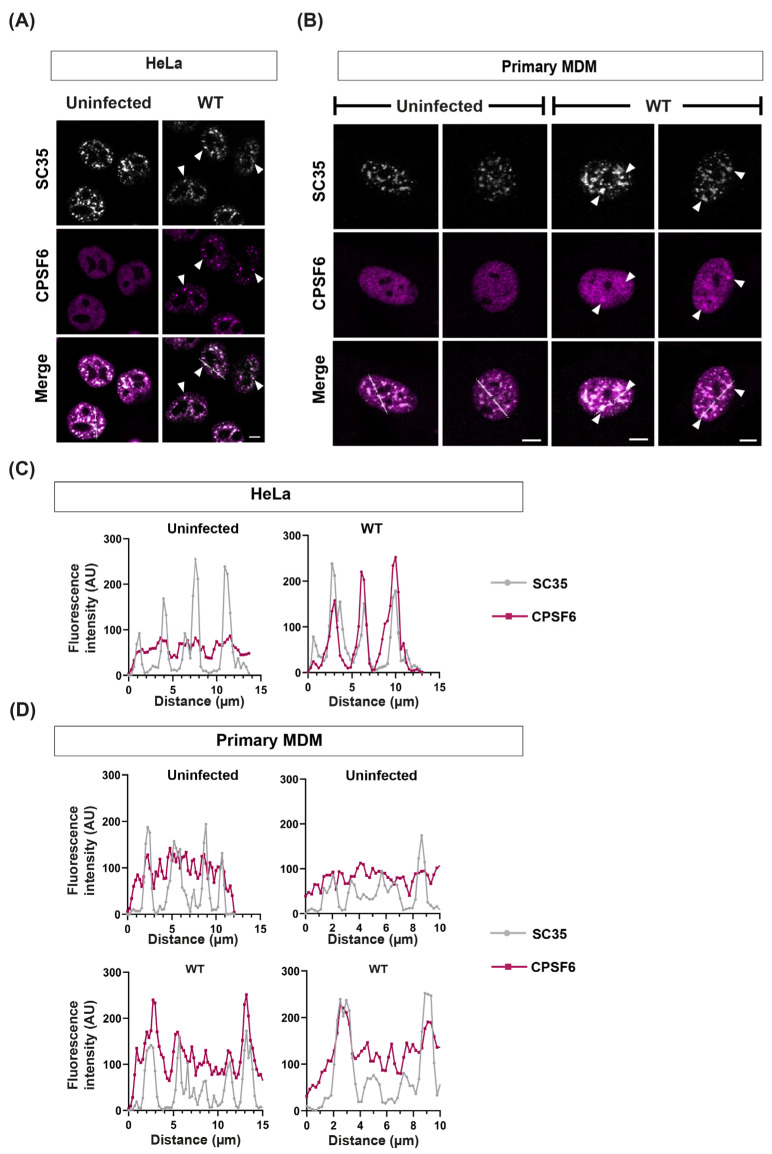
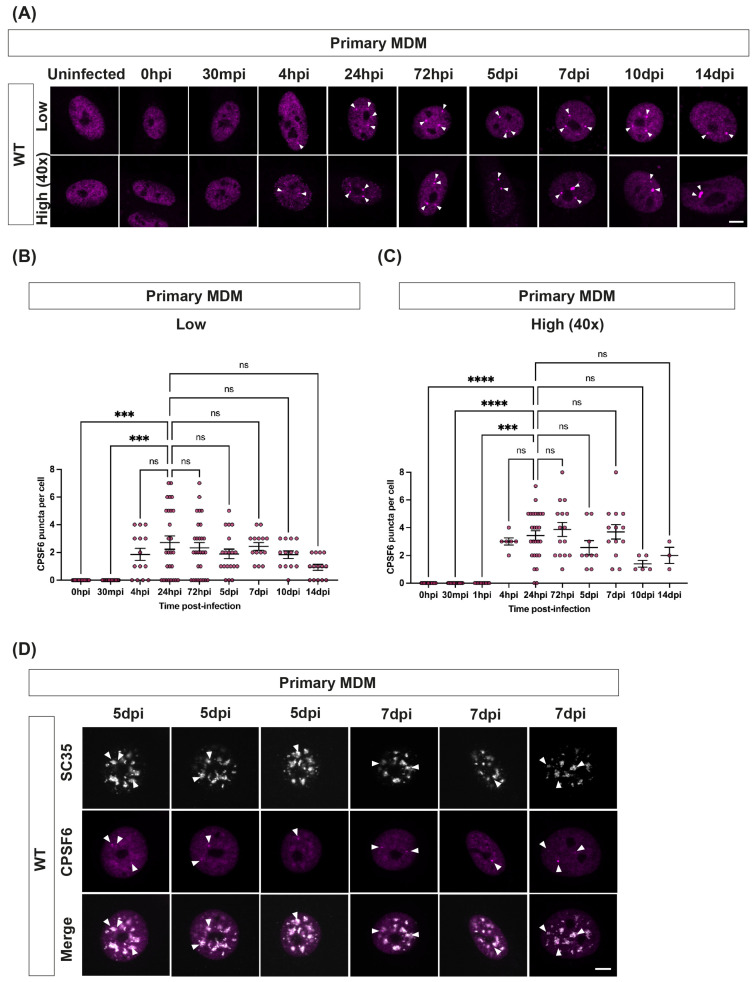
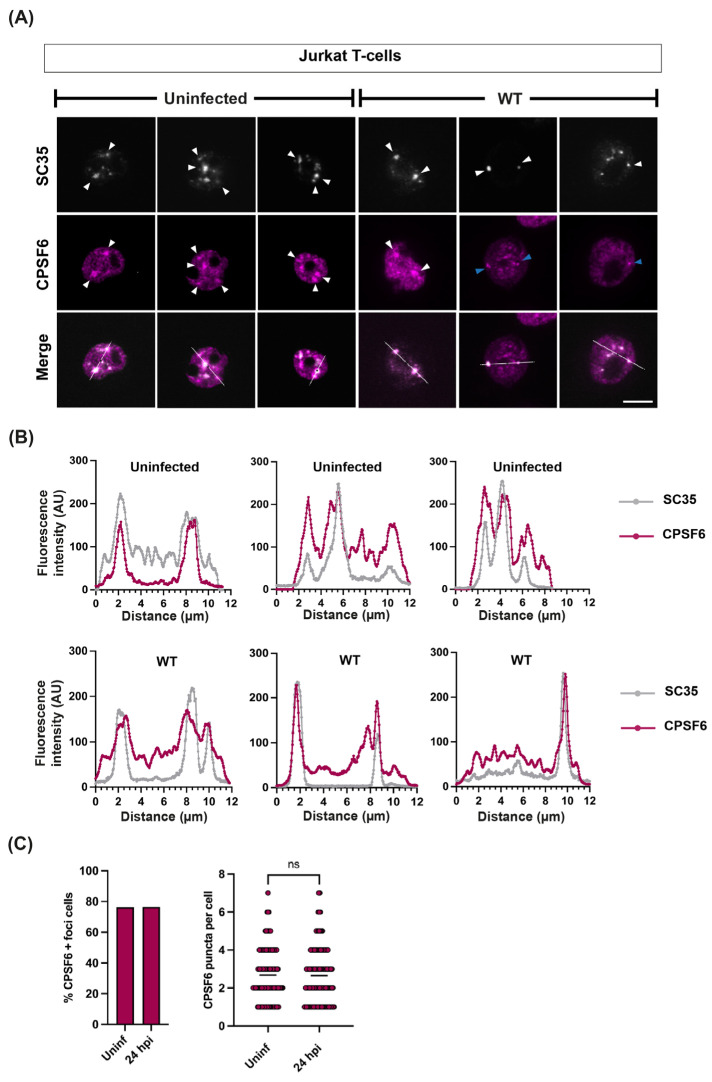
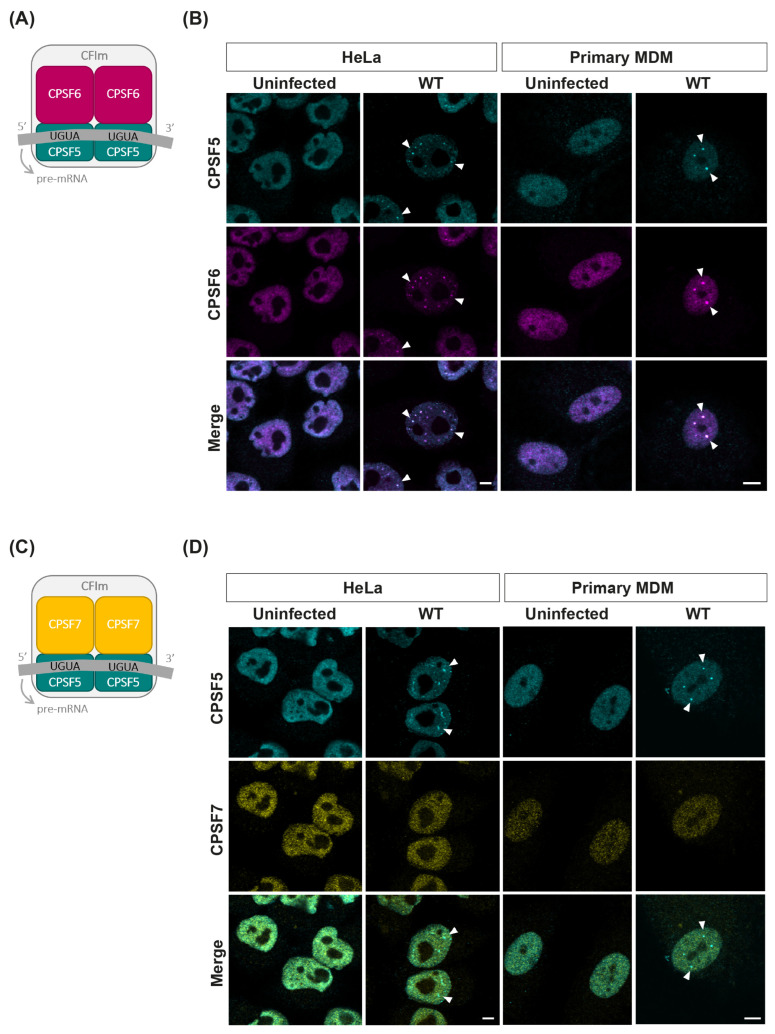
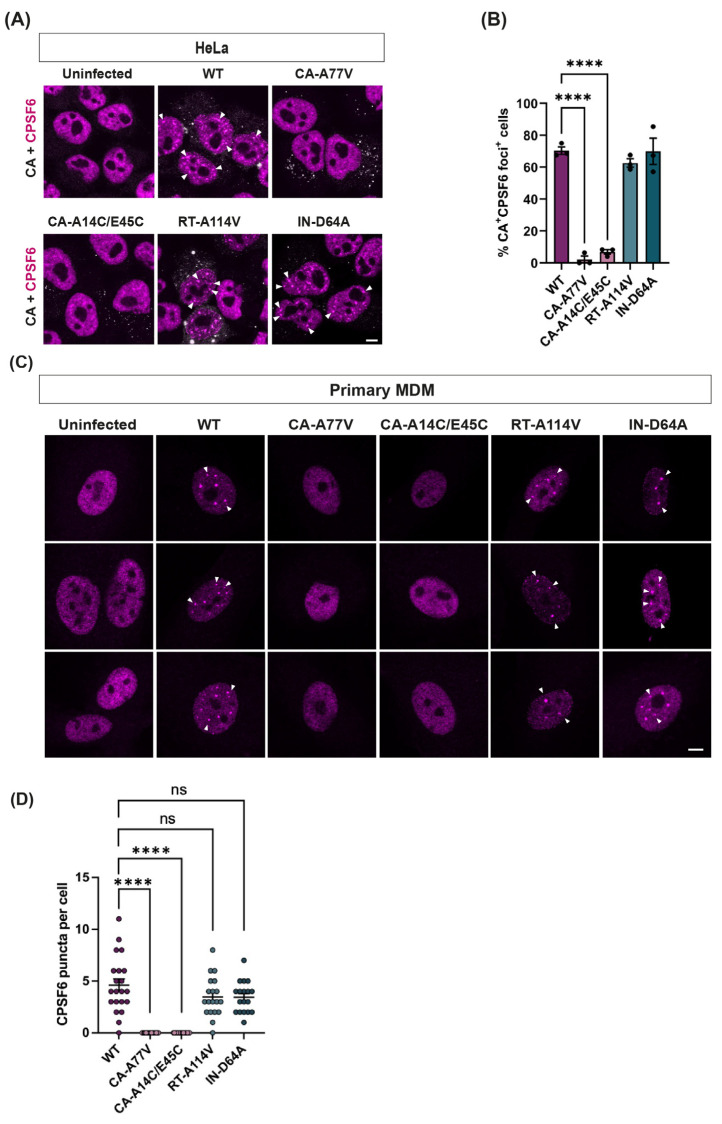
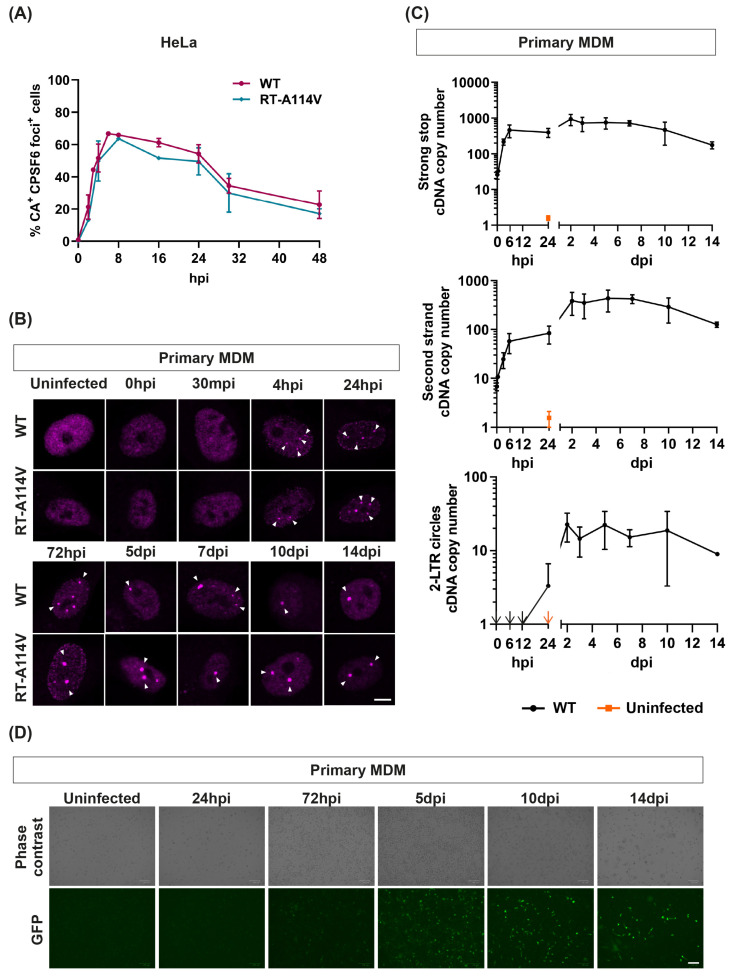
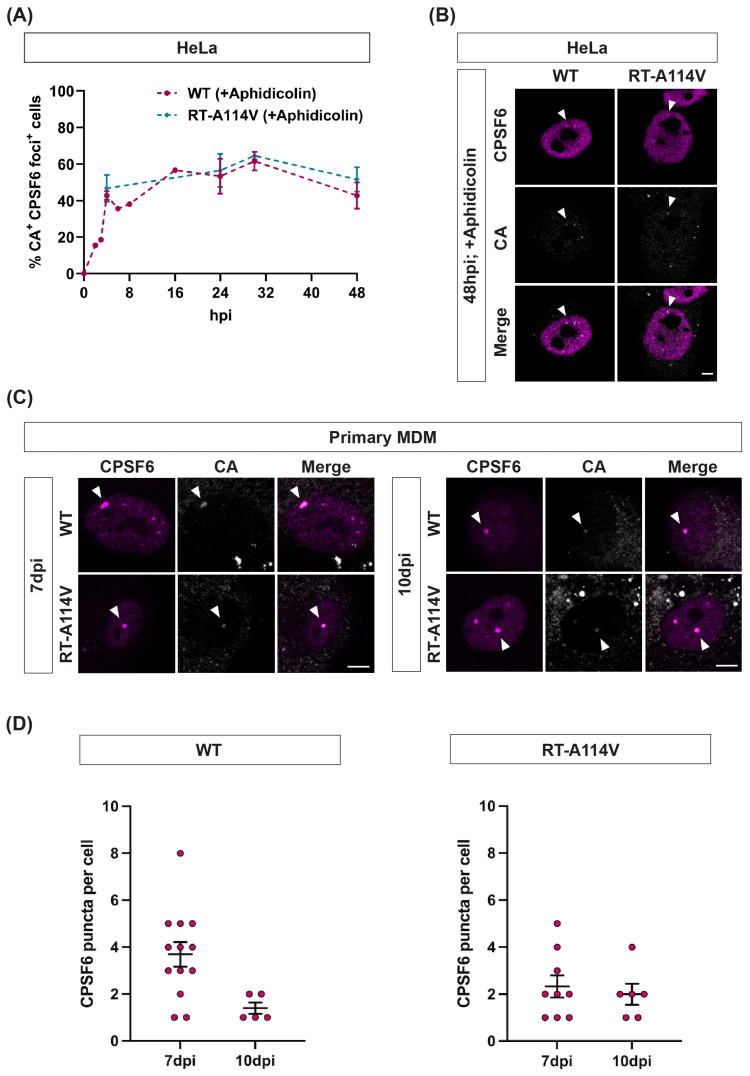
The HIV-1 capsid (CA) protein forms the outer shell of the viral core that is released into the cytoplasm upon infection. CA binds various cellular proteins, including CPSF6, that direct HIV-1 integration into speckle-associated domains in host chromatin. Upon HIV-1 infection, CPSF6 forms puncta in the nucleus. Here, we characterised these CPSF6 puncta further in HeLa cells, T-cells and macrophages and confirmed that integration and reverse transcription are not required for puncta formation. Indeed, we found that puncta formed very rapidly after infection, correlating with the time that CA entered the nucleus. In aphidicolin-treated HeLa cells and macrophages, puncta were detected for the length of the experiment, suggesting that puncta are only lost upon cell division. CA still co-localised with CPSF6 puncta at the latest time points, considerably after the peak of reverse transcription and integration. Intriguingly, the number of puncta induced in macrophages did not correlate with the MOI or the total number of nuclear speckles present in each cell, suggesting that CA/CPSF6 is only directed to a few nuclear speckles. Furthermore, we found that CPSF6 already co-localised with nuclear speckles in uninfected T-cells, suggesting that HIV-1 promotes a natural behaviour of CPSF6.
HIV-1 衣壳(CA)蛋白形成病毒核心的外壳,在感染时释放到细胞质中。CA 结合各种细胞蛋白,包括 CPSF6,指导 HIV-1 整合到宿主染色质中的斑点相关结构域中。在 HIV-1 感染后,CPSF6 在核内形成斑点。在这里,我们进一步在 HeLa 细胞、T 细胞和巨噬细胞中对这些 CPSF6 斑点进行了表征,并证实整合和逆转录不是形成斑点所必需的。事实上,我们发现斑点在感染后很快形成,与 CA 进入核内的时间相关。在用阿非迪可林处理的 HeLa 细胞和巨噬细胞中,斑点在实验过程中一直存在,表明只有在细胞分裂时才会丢失斑点。CA 仍然与 CPSF6 斑点共定位,时间远远晚于逆转录和整合的高峰期。有趣的是,巨噬细胞中诱导的斑点数量与 MOI 或每个细胞中存在的核斑点总数无关,这表明 CA/CPSF6 仅被引导到少数核斑点。此外,我们发现未感染的 T 细胞中 CPSF6 已经与核斑点共定位,这表明 HIV-1 促进了 CPSF6 的自然行为。