Infection Biology Laboratory, Department of Medicine and Life Sciences (MELIS), Universitat Pompeu Fabra, 08003 Barcelona, Spain.
Institute of Agrifood Research and Technology (IRTA), Centre de Recerca en Sanitat Animal (CReSA), 08193 Barcelona, Spain.
Viruses. 2024 May 17;16(5):799. doi: 10.3390/v16050799.
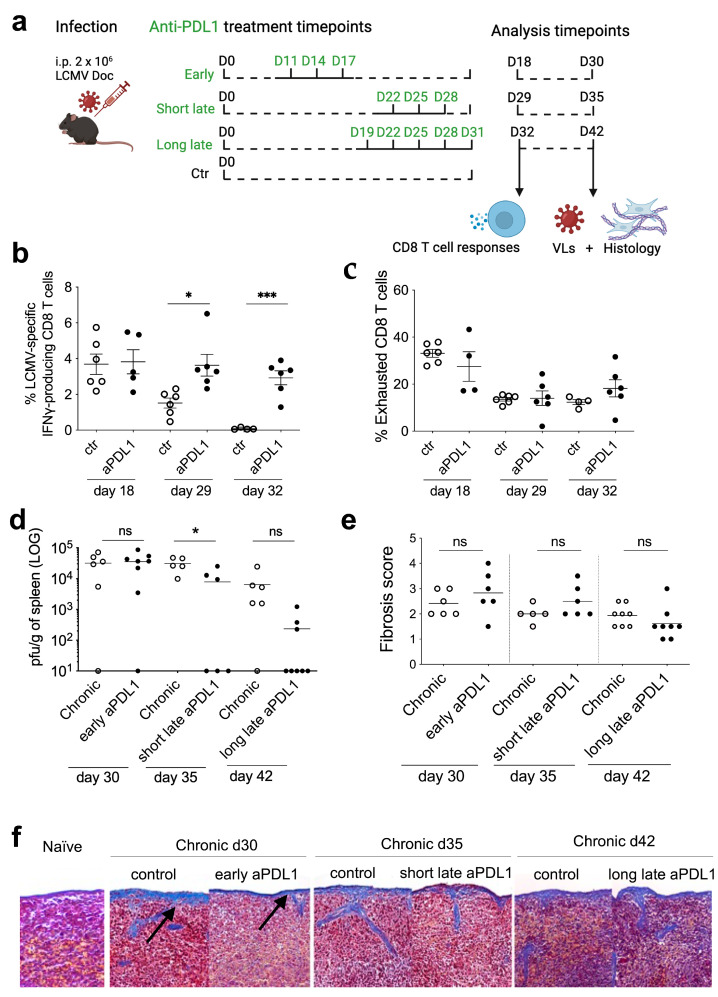
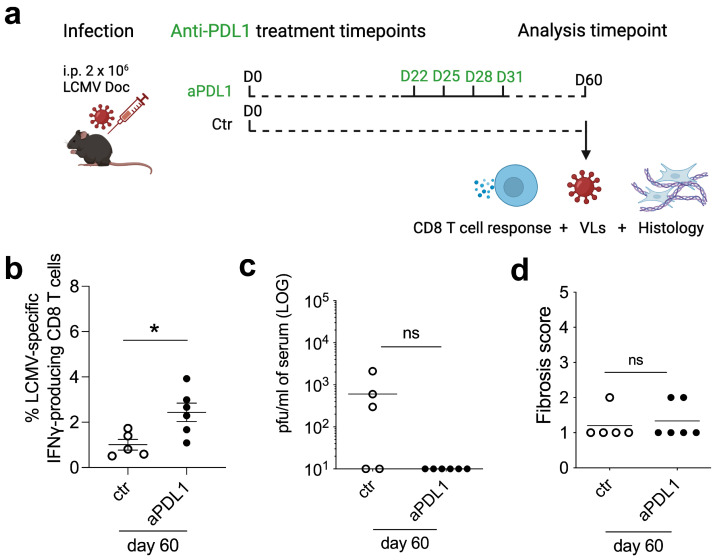
Immunotherapy with checkpoint inhibitors, albeit commonly used against tumors, is still at its infancy against chronic virus infections. It relies on the reinvigoration of exhausted T lymphocytes to eliminate virus-infected cells. Since T cell exhaustion is a physiological process to reduce immunopathology, the reinvigoration of these cells might be associated with an augmentation of pathological changes. To test this possibility, we here analyzed in the model system of chronic lymphocytic choriomeningitis virus (LCMV)-infected mice whether treatment with the checkpoint inhibitor anti-PD-L1 antibody would increase CD8 T cell-dependent fibrosis. We show that pre-existing spleen fibrosis did not worsen under conditions that increase CD8 T cell functionality and reduce virus loads suggesting that the CD8 T cell functionality increase remained below its pathogenicity threshold. These promising findings should further encourage immunotherapeutic trials against chronic virus infections.
免疫检查点抑制剂的免疫疗法,尽管常用于对抗肿瘤,但针对慢性病毒感染仍处于起步阶段。它依赖于耗尽的 T 淋巴细胞的再激活来消除病毒感染的细胞。由于 T 细胞耗竭是减少免疫病理的生理过程,因此这些细胞的再激活可能与病理变化的加剧有关。为了验证这种可能性,我们在此分析了慢性淋巴细胞脉络丛脑膜炎病毒(LCMV)感染小鼠的模型系统,以确定检查点抑制剂抗 PD-L1 抗体的治疗是否会增加 CD8 T 细胞依赖性纤维化。我们发现,在增加 CD8 T 细胞功能和降低病毒载量的情况下,预先存在的脾脏纤维化并没有恶化,这表明 CD8 T 细胞功能的增加仍低于其致病性阈值。这些有希望的发现应进一步鼓励针对慢性病毒感染的免疫治疗试验。