
提高亲脂性药物溶解度和生物利用度的尝试:以芬维A胺为重点。
Attempts to Improve Lipophilic Drugs' Solubility and Bioavailability: A Focus on Fenretinide.
作者信息
Alfei Silvana, Zuccari Guendalina
机构信息
Department of Pharmacy, University of Genoa, Viale Cembrano 4, 16148 Genoa, Italy.
Department of Pharmacy, University of Genoa, Viale Benedetto XV, 16132 Genoa, Italy.
出版信息
Pharmaceutics. 2024 Apr 24;16(5):579. doi: 10.3390/pharmaceutics16050579.
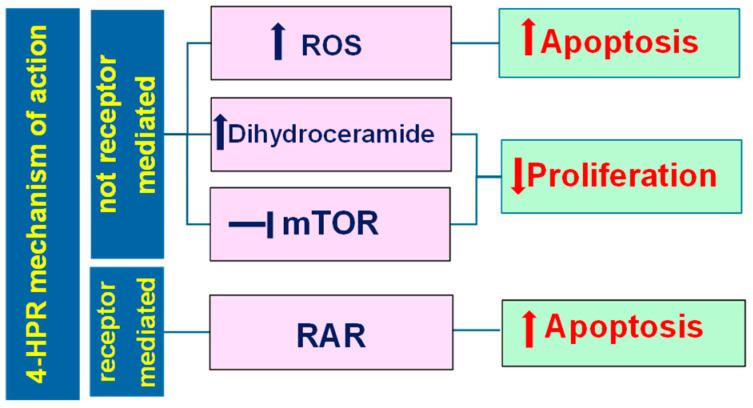
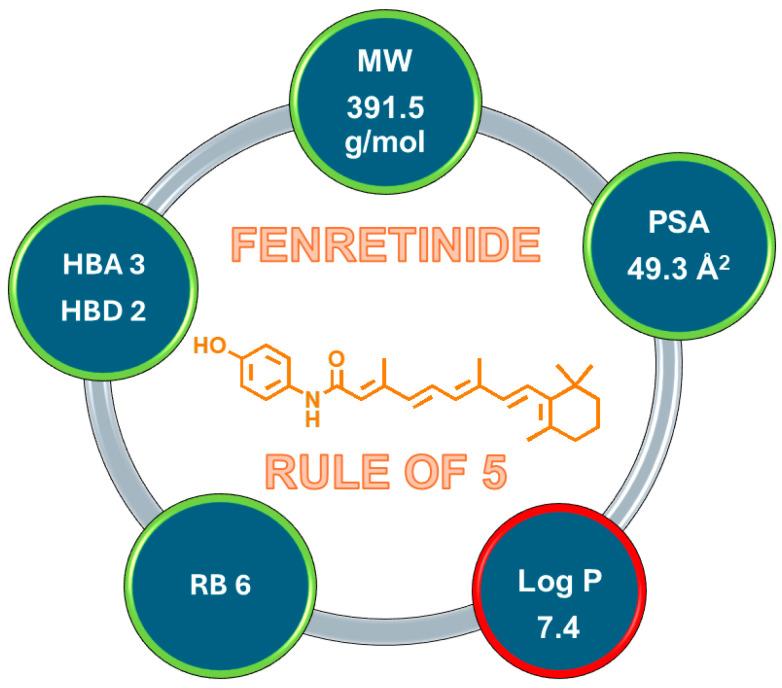
The development of numerous drugs is often arrested at clinical testing stages, due to their unfavorable biopharmaceutical characteristics. It is the case of fenretinide (4-HPR), a second-generation retinoid, that demonstrated promising in vitro cytotoxic activity against several cancer cell lines. Unfortunately, response rates in early clinical trials with 4-HPR did not confirm the in vitro findings, mainly due to the low bioavailability of the oral capsular formulation that was initially developed. Capsular 4-HPR provided variable and insufficient drug plasma levels attributable to the high hepatic first-pass effect and poor drug water solubility. To improve 4-HPR bioavailability, several approaches have been put forward and tested in preclinical and early-phase clinical trials, demonstrating generally improved plasma levels and minimal systemic toxicities, but also modest antitumor efficacy. The challenge is thus currently still far from being met. To redirect the diminished interest of pharmaceutical companies toward 4-HPR and promote its further clinical development, this manuscript reviewed the attempts made so far by researchers to enhance 4-HPR bioavailability. A comparison of the available data was performed, and future directions were proposed.
由于其不良的生物制药特性,许多药物的研发往往在临床试验阶段就停滞不前。第二代维甲酸芬维A胺(4-HPR)就是这样的情况,它在体外对几种癌细胞系显示出有前景的细胞毒性活性。不幸的是,4-HPR早期临床试验的反应率并未证实体外研究结果,主要原因是最初开发的口服胶囊制剂生物利用度低。胶囊型4-HPR的药物血浆水平变化不定且不足,这归因于高肝首过效应和药物水溶性差。为了提高4-HPR的生物利用度,已经提出了几种方法并在临床前和早期临床试验中进行了测试,结果显示血浆水平普遍提高且全身毒性最小,但抗肿瘤疗效也一般。因此,目前这一挑战仍远未得到解决。为了重新唤起制药公司对4-HPR的兴趣并促进其进一步的临床开发,本文回顾了研究人员迄今为止为提高4-HPR生物利用度所做的尝试。对现有数据进行了比较,并提出了未来的方向。
 Zotero 插件