Public Health and Community Medicine, School of Medicine, Tufts University, Boston, MA 02111, USA.
Department of Clinical Nutrition, College of Health Science and Technology, Shanghai Jiao Tong University School of Medicine, Shanghai 200025, China.
Nutrients. 2024 May 9;16(10):1435. doi: 10.3390/nu16101435.
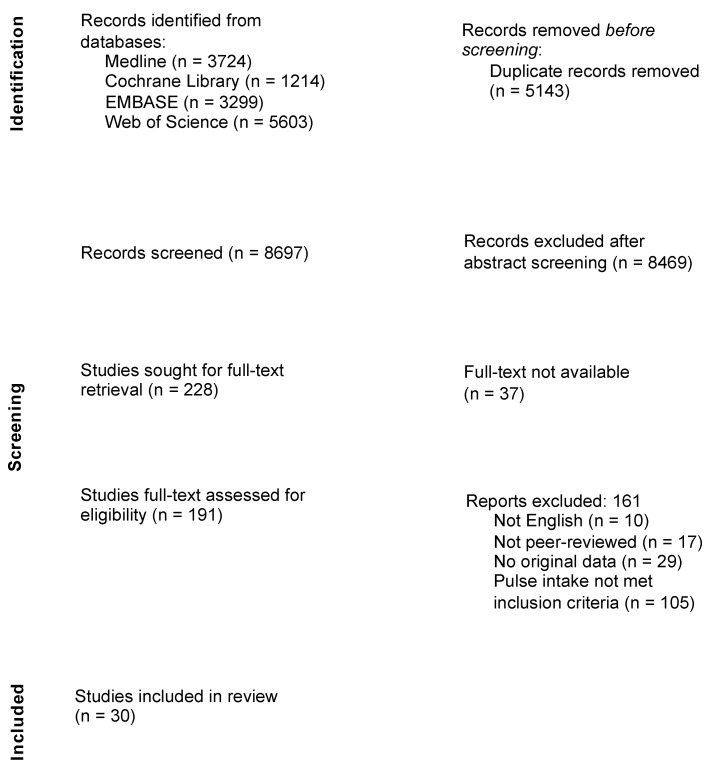
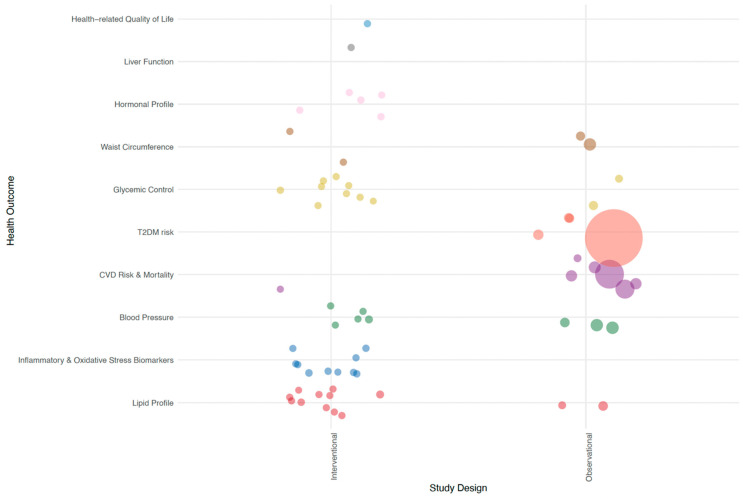
Pulses-comprising the dry, edible seeds of leguminous plants-have long been lauded for their culinary flexibility and substantial nutritional advantages. This scoping review aimed to map the evidence on how pulses contribute to overall human health. Four electronic databases were searched for clinical and observational studies in English. We identified 30 articles (3 cross-sectional studies, 1 federated meta-analysis, 8 prospective cohort studies, 1 before-and-after study, and 17 randomized controlled trials) that met our inclusion criteria. Predominant among the pulses studied were lentils, chickpeas, common bean varieties (e.g., pinto, black, navy, red, kidney), black-eyed peas, cowpeas, and split peas. Consumption modalities varied; most studies examined mixed pulses, while five isolated individual types. In intervention studies, pulses were incorporated into diets by allotting a fixed pulse serving on top of a regular diet or by substituting red meat with pulses, offering a comparative analysis of dietary effects. The health outcomes evaluated were multifaceted, ranging from lipid profiles to blood pressure, cardiovascular disease risk and mortality, type 2 diabetes and glycemic control, metabolic syndrome indicators, inflammatory markers, oxidative stress biomarkers, and hormonal profiles. The most frequently assessed study outcomes included changes in low-density lipoprotein cholesterol, high-density lipoprotein cholesterol, systolic blood pressure, diastolic blood pressure, fasting blood sugar, hemoglobin A1c, waist circumference, and C-reactive protein or high-sensitivity C-reactive protein. This review should serve as a call to action for the scientific community to build upon the existing evidence, enriching our understanding of the nutritional and health-promoting attributes of pulses.
豆类食品包括豆类植物的干燥可食用种子,长期以来一直因其烹饪的灵活性和丰富的营养价值而受到赞誉。本范围综述旨在绘制豆类食品对人类整体健康的影响的证据图。我们在英文数据库中搜索了临床和观察性研究。我们确定了 30 篇符合纳入标准的文章(3 项横断面研究、1 项联邦荟萃分析、8 项前瞻性队列研究、1 项前后研究和 17 项随机对照试验)。研究中主要的豆类食品包括扁豆、鹰嘴豆、普通豆品种(如斑豆、黑豆、海军豆、红豆、肾豆)、黑眼豆、豇豆和 split peas。食用方式多种多样;大多数研究检查了混合豆类食品,而有五篇研究则单独研究了单一类型的豆类食品。在干预研究中,通过在常规饮食上分配固定的豆类食品份额,或者用豆类食品代替红肉,将豆类食品纳入饮食中,进行饮食效果的比较分析。评估的健康结果是多方面的,从血脂谱到血压、心血管疾病风险和死亡率、2 型糖尿病和血糖控制、代谢综合征指标、炎症标志物、氧化应激生物标志物和激素谱。评估的研究结果中最常见的包括低密度脂蛋白胆固醇、高密度脂蛋白胆固醇、收缩压、舒张压、空腹血糖、糖化血红蛋白 A1c、腰围和 C 反应蛋白或高敏 C 反应蛋白的变化。本综述应呼吁科学界在现有证据的基础上进一步研究,丰富我们对豆类食品的营养和促进健康属性的理解。