Türtscher Julia, Jambura Patrick L, Villalobos-Segura Eduardo, López-Romero Faviel A, Underwood Charlie J, Thies Detlev, Lauer Bruce, Lauer René, Kriwet Jürgen
Department of Palaeontology, Faculty of Earth Sciences, Geography & Astronomy, University of Vienna, Josef-Holaubek-Platz 2, 1090 Vienna, Austria.
Vienna Doctoral School of Ecology & Evolution (VDSEE), University of Vienna, Djerassiplatz 1, 1030 Vienna, Austria.
Pap Palaeontol. 2024 Mar 19;10(2):e1552. doi: 10.1002/spp2.1552.
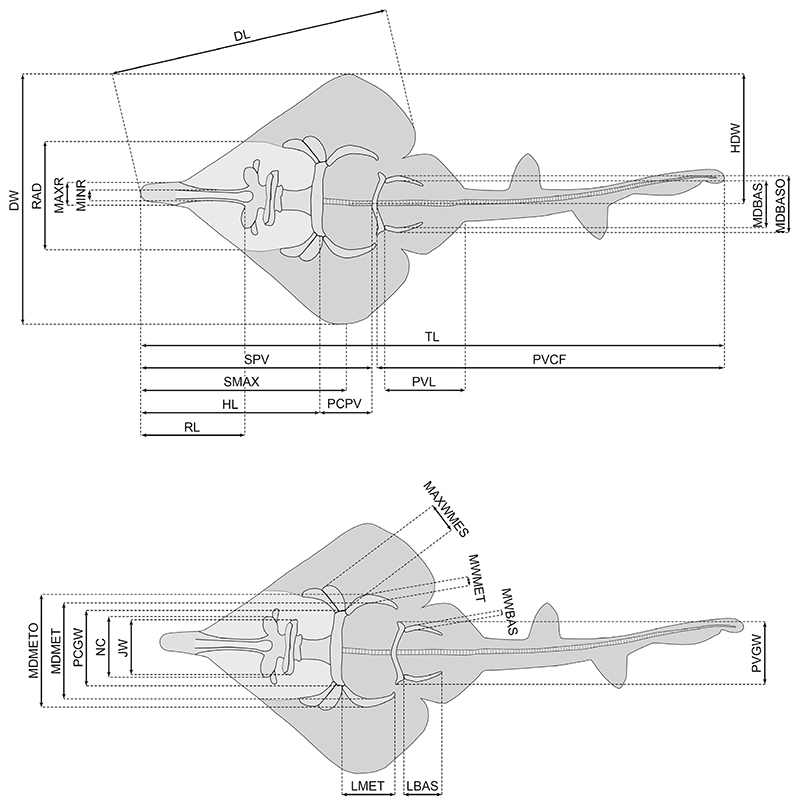
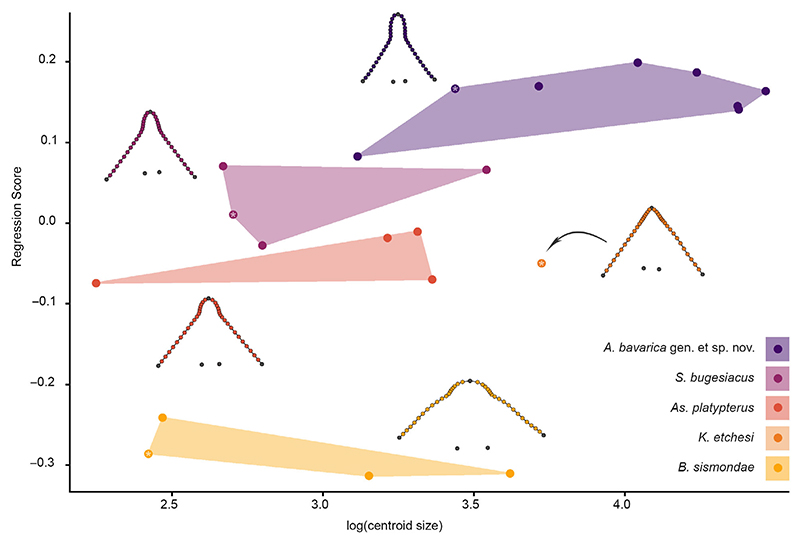
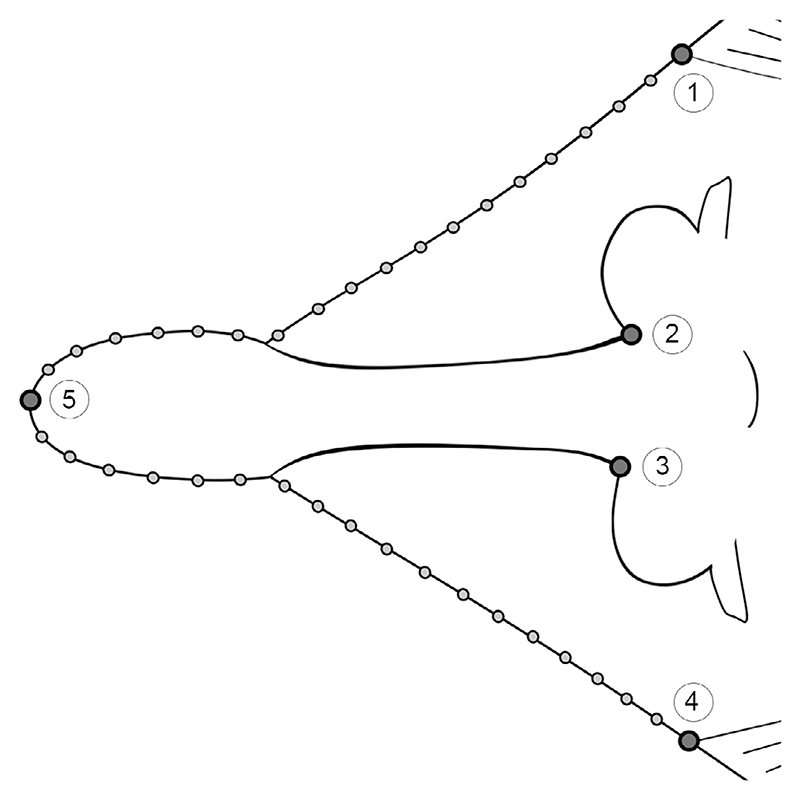
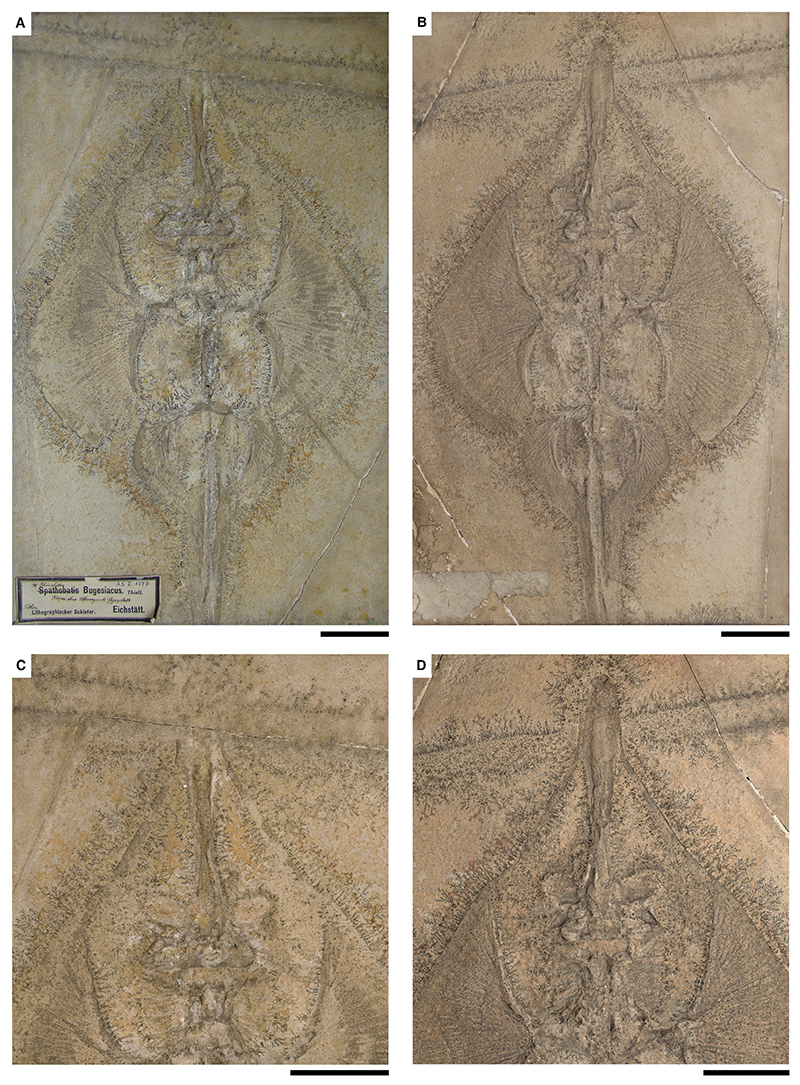
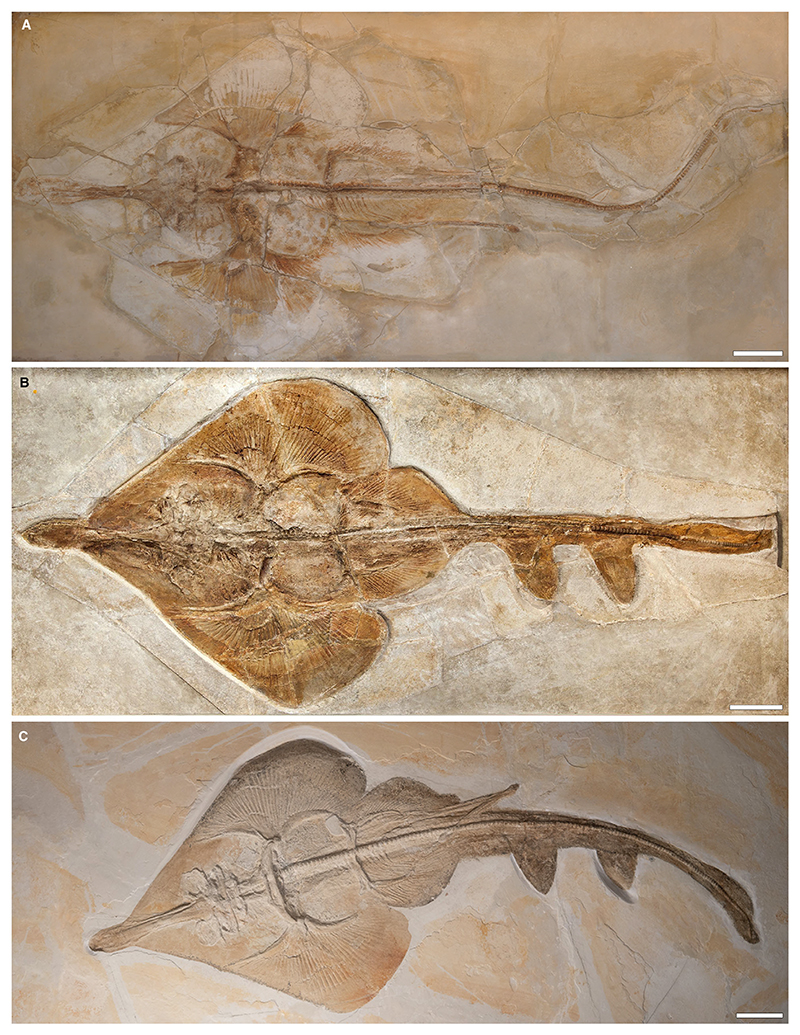
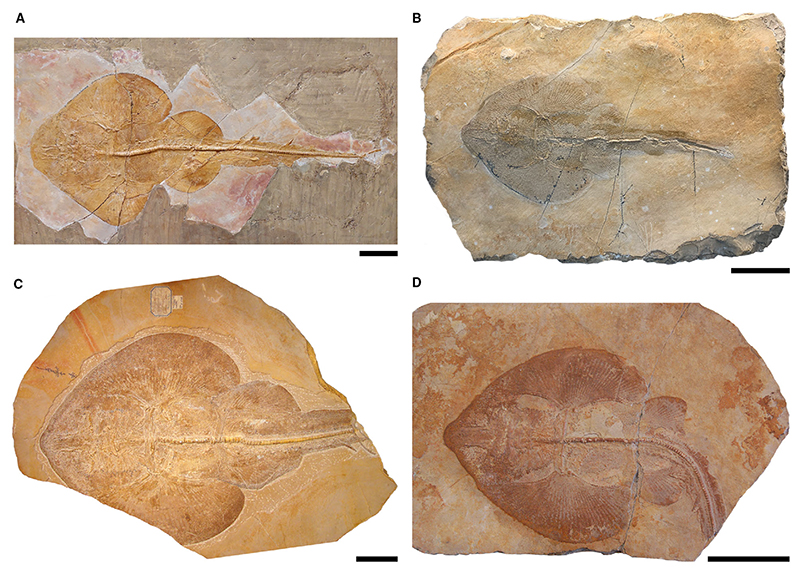
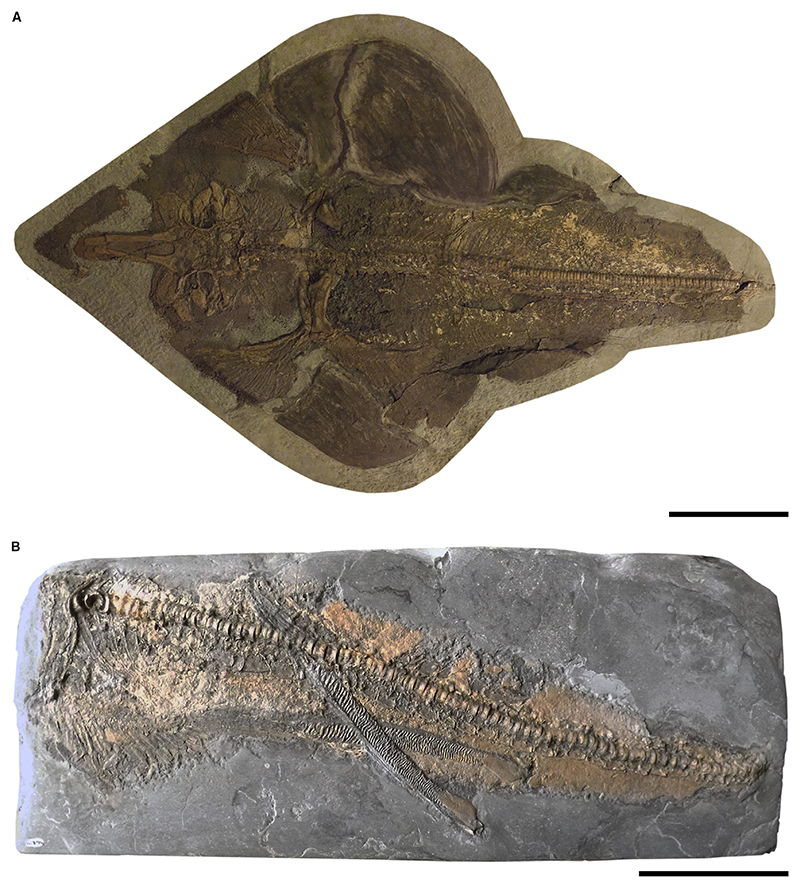
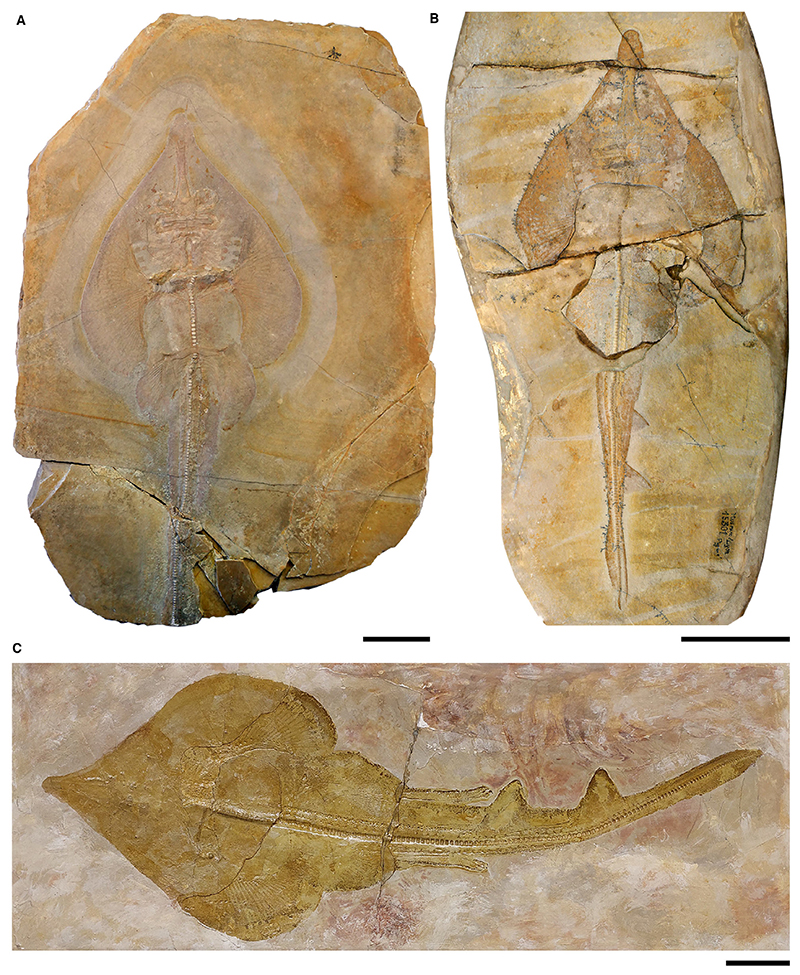
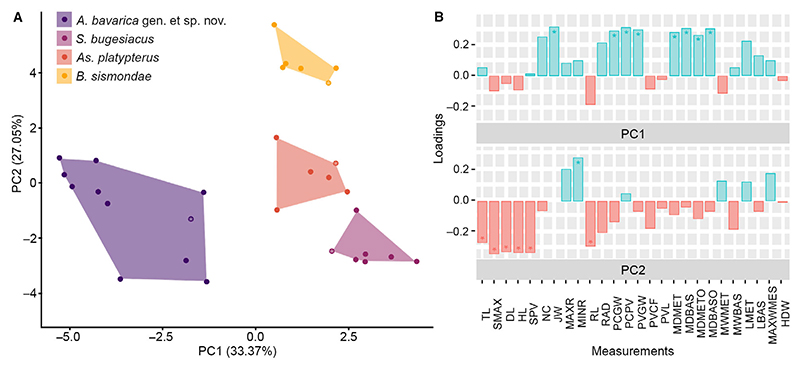
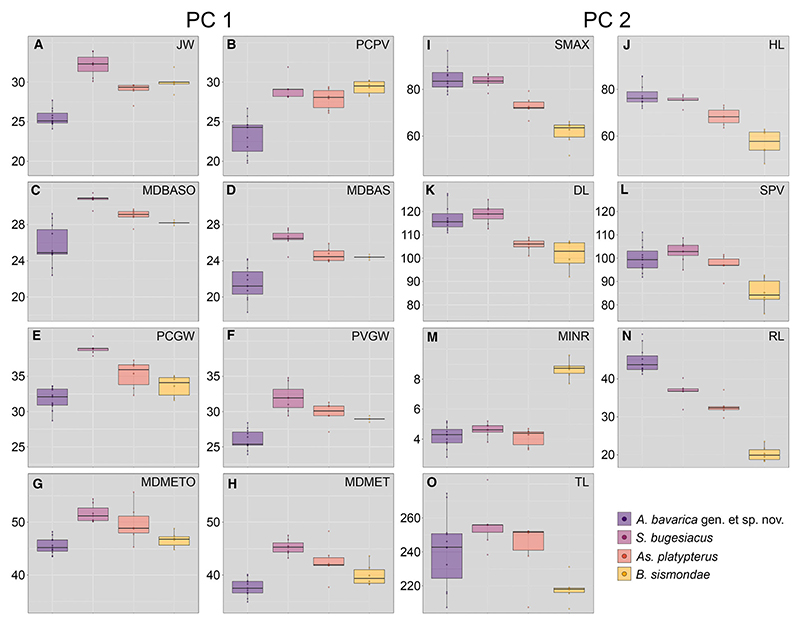
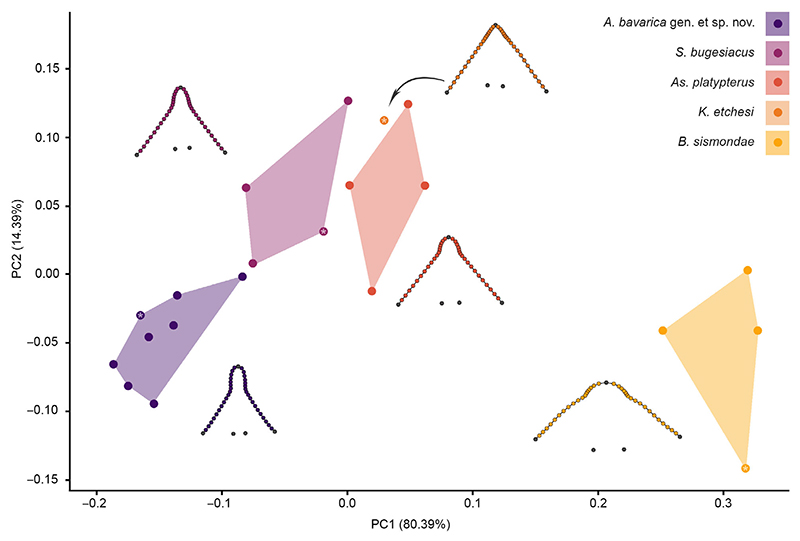
The fossil record of chondrichthyans (chimaeras, sharks, rays and skates) consists largely of isolated teeth, with holomorphic specimens being extraordinary exceptions. However, numerous of these more or less completely preserved specimens are known from several Upper Jurassic deposits of Europe, enabling detailed analysis of their morphology. Batomorphs (rays and skates) resembling modern guitarfishes and wedgefishes (Rhinopristiformes) are among the most common Jurassic chondrichthyans found, but they have been only sporadically studied up to now, resulting in large knowledge gaps concerning their taxonomy and phylogeny. Here, we present the most detailed revision of Late Jurassic holomorphic batomorphs to date, quantitatively analysing body proportions of specimens from Germany (Solnhofen Archipelago), France (Cerin) and the UK (Kimmeridge), using both geometric and traditional morphometrics. Furthermore, we identify qualitative morphological characters for species discrimination, to clarify the taxonomic identity and diversity of Late Jurassic batomorphs based on holomorphic specimens. Our results support the validity of and , as well as that of the previously doubtful . Moreover, we describe , a new taxon, which has hitherto been considered to be a large-sized morphotype of . Our results highlight that the diversity of holomorphic batomorphs during the Late Jurassic was greater than previously thought, and suggest that this group was already well-established and diverse by this time. This study thus provides vital information about the evolutionary history of Late Jurassic batomorphs and has direct implications for batomorph species that are based on isolated teeth only.
软骨鱼类(银鲛、鲨鱼、魟和鳐)的化石记录主要由孤立的牙齿组成,完整标本极为罕见。然而,在欧洲的几个上侏罗纪沉积层中发现了大量或多或少保存完整的标本,这使得对其形态进行详细分析成为可能。类似现代犁头鳐和楔齿鳐(犁头鳐目)的鳐形目鱼类是侏罗纪最常见的软骨鱼类之一,但到目前为止,它们仅得到零星研究,导致在其分类学和系统发育方面存在很大的知识空白。在此,我们对晚侏罗纪完整鳐形目鱼类进行了迄今为止最详细的修订,使用几何形态测量学和传统形态测量学,定量分析了来自德国(索伦霍芬群岛)、法国(塞兰)和英国(金梅尔里奇)的标本的身体比例。此外,我们确定了用于物种区分的定性形态特征,以基于完整标本阐明晚侏罗纪鳐形目鱼类的分类身份和多样性。我们的结果支持了[具体物种1]和[具体物种2]的有效性,以及之前存疑的[具体物种3]的有效性。此外,我们描述了[新分类单元名称],这是一个新的分类单元,此前一直被认为是[相关物种名称]的一种大型形态类型。我们的结果表明,晚侏罗纪完整鳐形目鱼类的多样性比之前认为的要高,这表明该类群在这个时期已经相当成熟且种类多样。因此,这项研究提供了关于晚侏罗纪鳐形目鱼类进化历史的重要信息,对仅基于孤立牙齿的鳐形目物种具有直接意义。