Department of Neurosurgery, University of Colorado Anschutz Medical Campus, Research Complex II, Aurora, CO, USA.
Division of Pathology, Department of Clinical Sciences, Lund University, Lund, Sweden.
Acta Neuropathol. 2024 May 27;147(1):92. doi: 10.1007/s00401-024-02743-9.
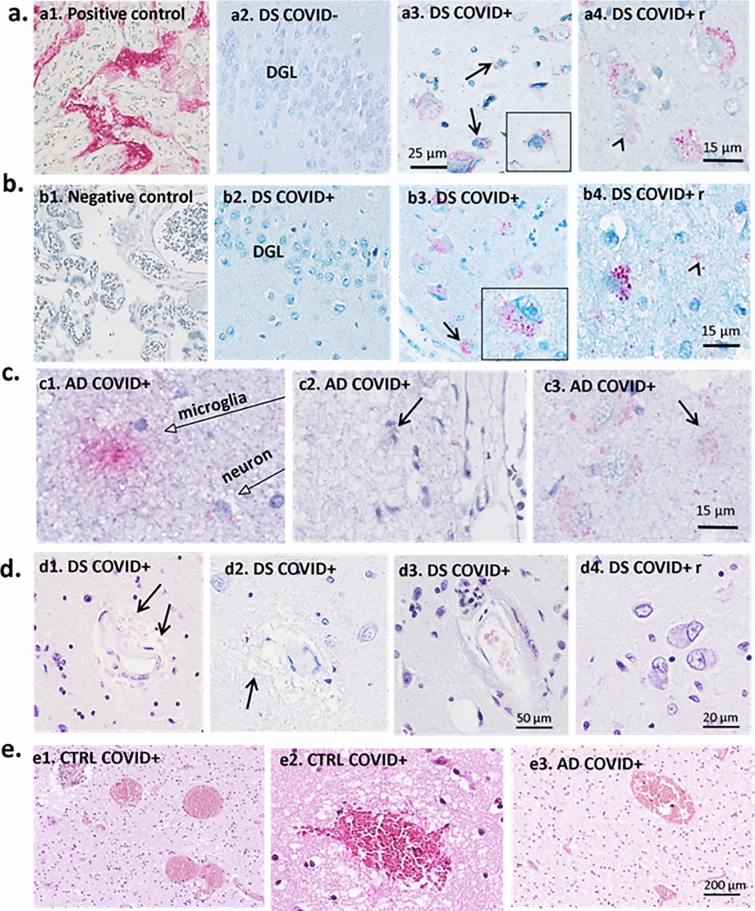
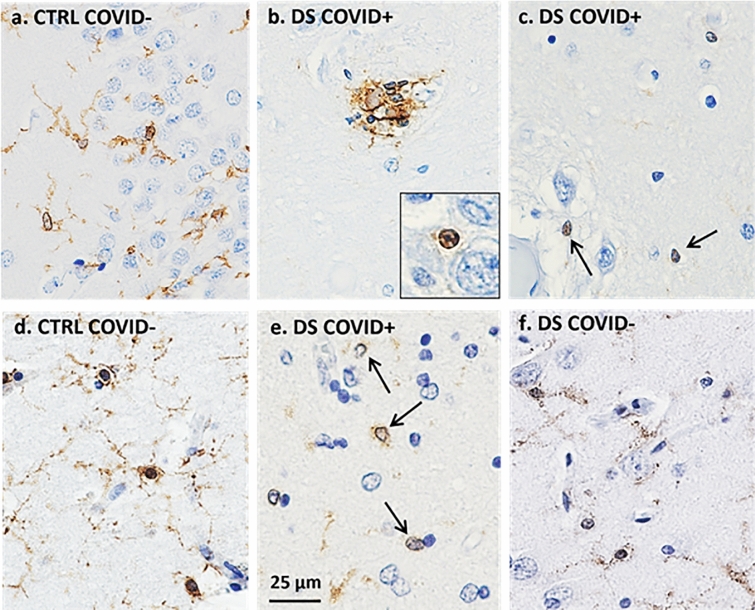
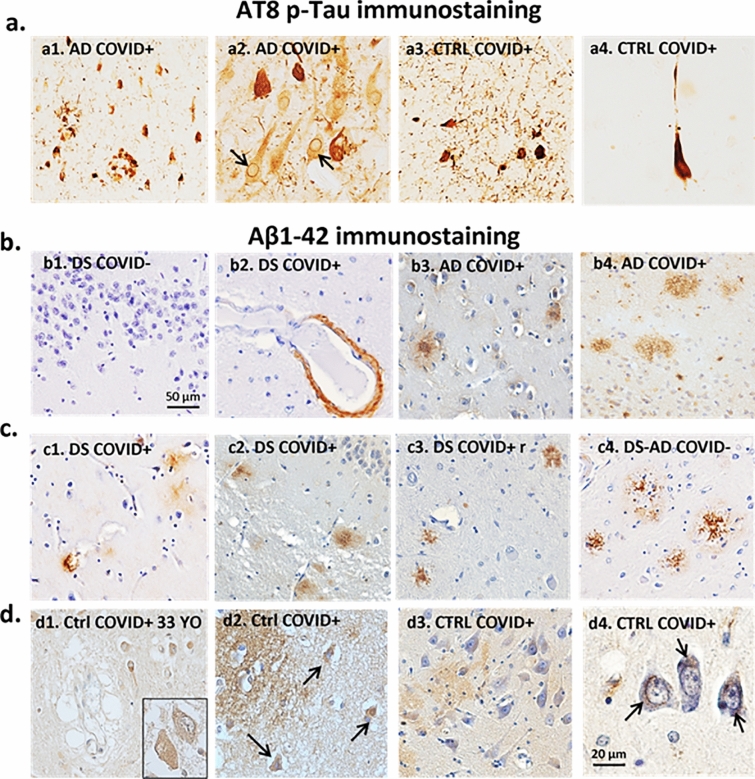
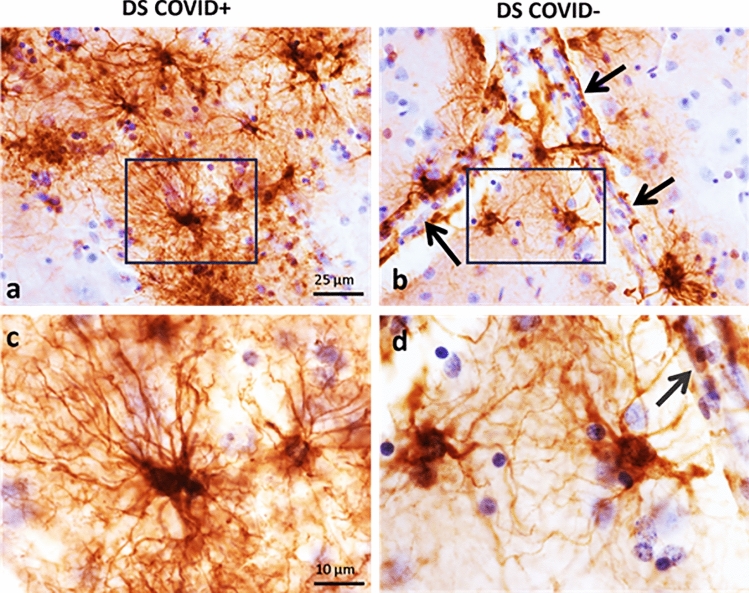
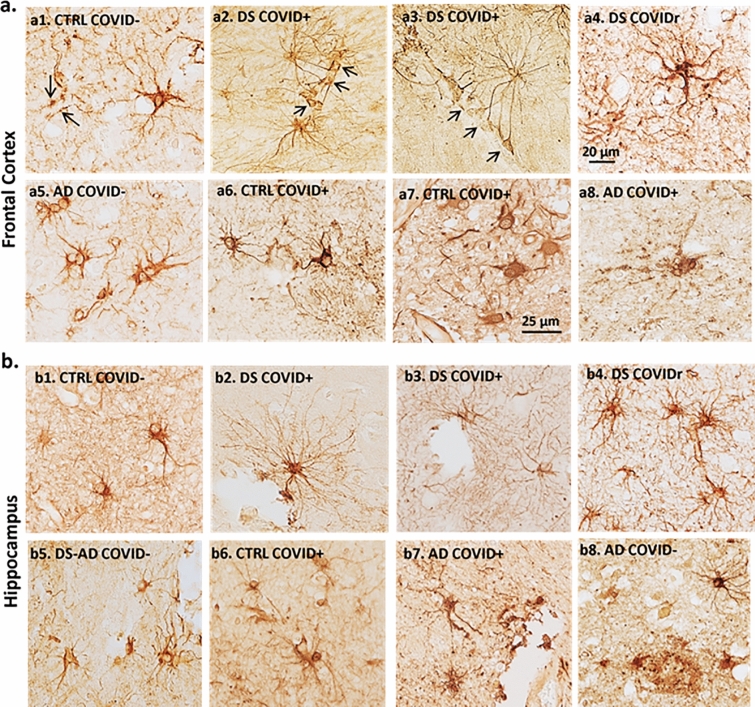
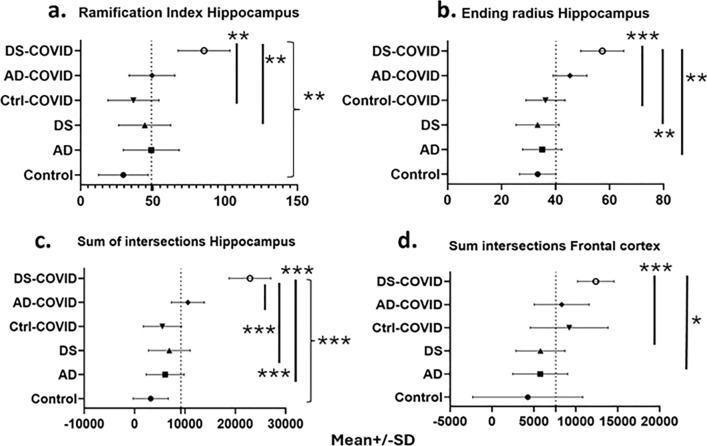
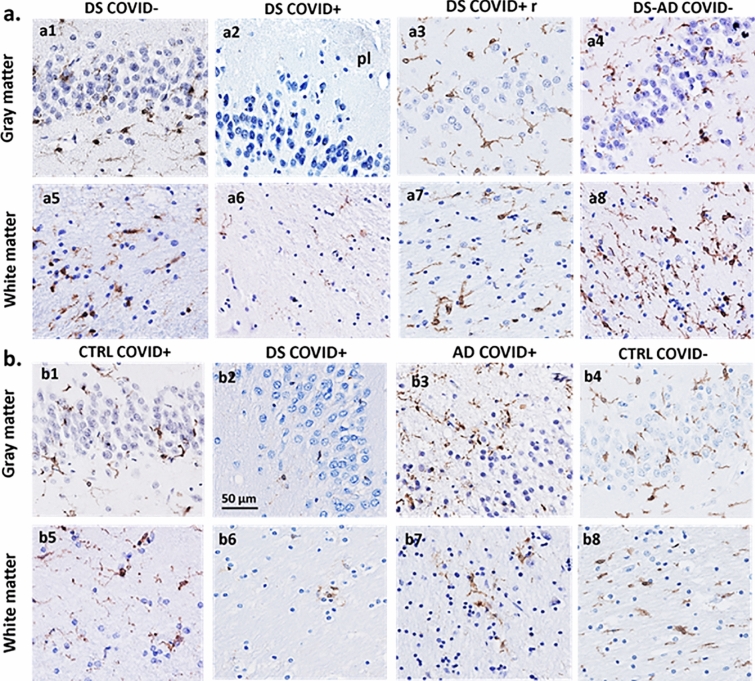
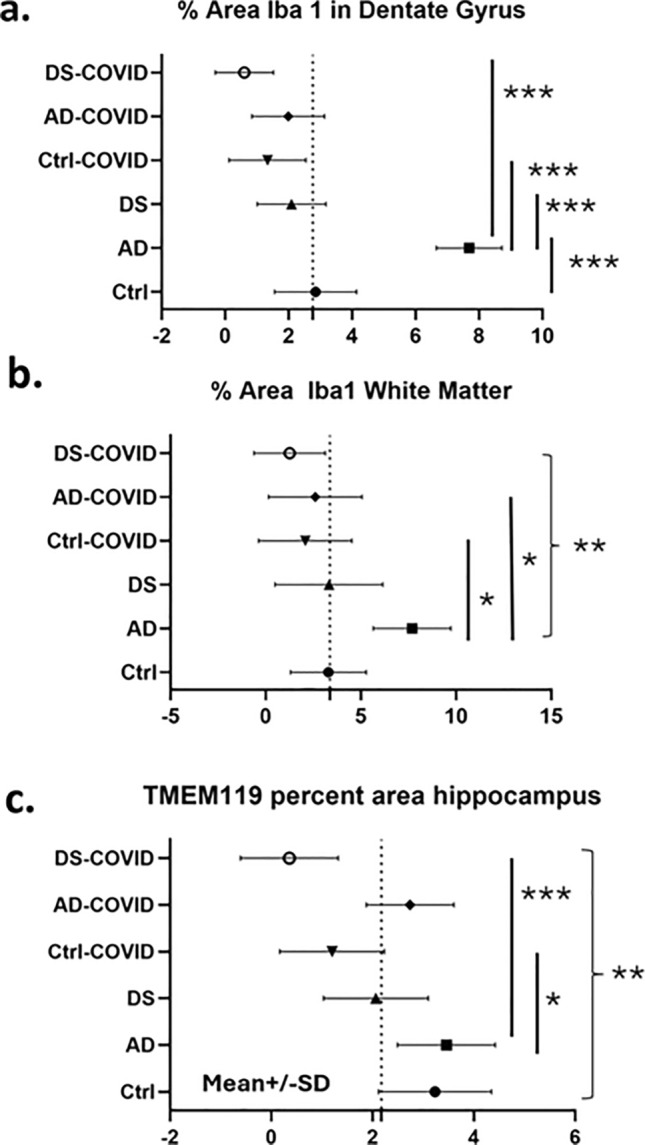
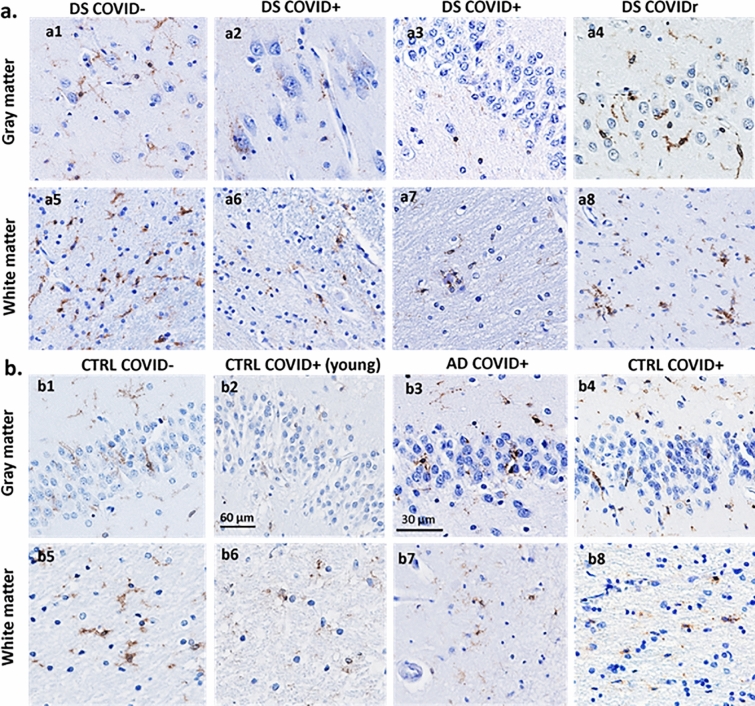
The SARS-CoV-2 virus that led to COVID-19 is associated with significant and long-lasting neurologic symptoms in many patients, with an increased mortality risk for people with Alzheimer's disease (AD) and/or Down syndrome (DS). However, few studies have evaluated the neuropathological and inflammatory sequelae in postmortem brain tissue obtained from AD and people with DS with severe SARS-CoV-2 infections. We examined tau, beta-amyloid (Aβ), inflammatory markers and SARS-CoV-2 nucleoprotein in DS, AD, and healthy non-demented controls with COVID-19 and compared with non-infected brain tissue from each disease group (total n = 24). A nested ANOVA was used to determine regional effects of the COVID-19 infection on arborization of astrocytes (Sholl analysis) and percent-stained area of Iba-1 and TMEM 119. SARS-CoV-2 antibodies labeled neurons and glial cells in the frontal cortex of all subjects with COVID-19, and in the hippocampus of two of the three DS COVID-19 cases. SARS-CoV-2-related alterations were observed in peri-vascular astrocytes and microglial cells in the gray matter of the frontal cortex, hippocampus, and para-hippocampal gyrus. Bright field microscopy revealed scattered intracellular and diffuse extracellular Aβ deposits in the hippocampus of controls with confirmed SARS-CoV-2 infections. Overall, the present preliminary findings suggest that SARS-CoV-2 infections induce abnormal inflammatory responses in Down syndrome.
导致 COVID-19 的 SARS-CoV-2 病毒可导致许多患者出现明显且持久的神经系统症状,阿尔茨海默病(AD)和/或唐氏综合征(DS)患者的死亡风险增加。然而,很少有研究评估过严重 SARS-CoV-2 感染的 AD 和 DS 患者死后脑组织的神经病理学和炎症后遗症。我们检查了 Tau、β-淀粉样蛋白(Aβ)、炎症标志物和 SARS-CoV-2 核衣壳蛋白在 DS、AD 和 COVID-19 的非痴呆对照组中的表达,并与每个疾病组的非感染性脑组织进行了比较(总共 n=24)。嵌套 ANOVA 用于确定 COVID-19 感染对星形胶质细胞分支(Sholl 分析)和 Iba-1 和 TMEM 119 染色面积百分比的区域影响。SARS-CoV-2 抗体标记了所有 COVID-19 患者额皮质的神经元和神经胶质细胞,以及三例 DS COVID-19 病例中的两例海马区。在额皮质、海马体和海马旁回的灰质中,观察到与 SARS-CoV-2 相关的血管周围星形胶质细胞和小胶质细胞改变。明场显微镜显示在确认 SARS-CoV-2 感染的对照组海马体中存在散在的细胞内和弥漫性细胞外 Aβ 沉积。总的来说,目前的初步研究结果表明,SARS-CoV-2 感染可在唐氏综合征中诱导异常的炎症反应。