Pathology, Microbiology, and Immunology Department, University of South Carolina School of Medicine, Columbia, SC, United States.
Front Immunol. 2024 May 13;15:1278197. doi: 10.3389/fimmu.2024.1278197. eCollection 2024.
Primary immunodeficiencies are heritable defects in immune system function. Antibody deficiency is the most common form of primary immunodeficiency in humans, can be caused by abnormalities in both the development and activation of B cells, and may result from B-cell-intrinsic defects or defective responses by other cells relevant to humoral immunity. Inflammatory gastrointestinal complications are commonly observed in antibody-deficient patients, but the underlying immune mechanisms driving this are largely undefined.
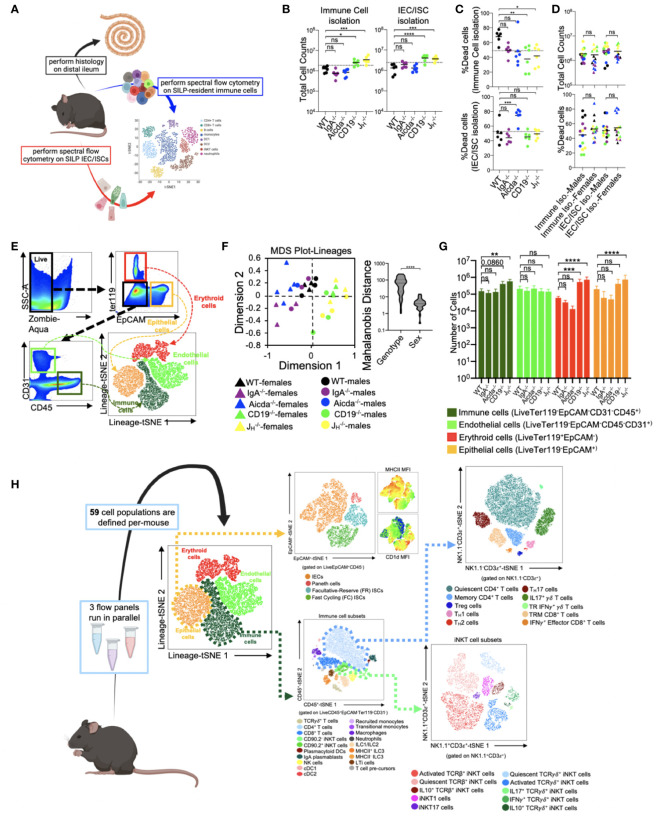
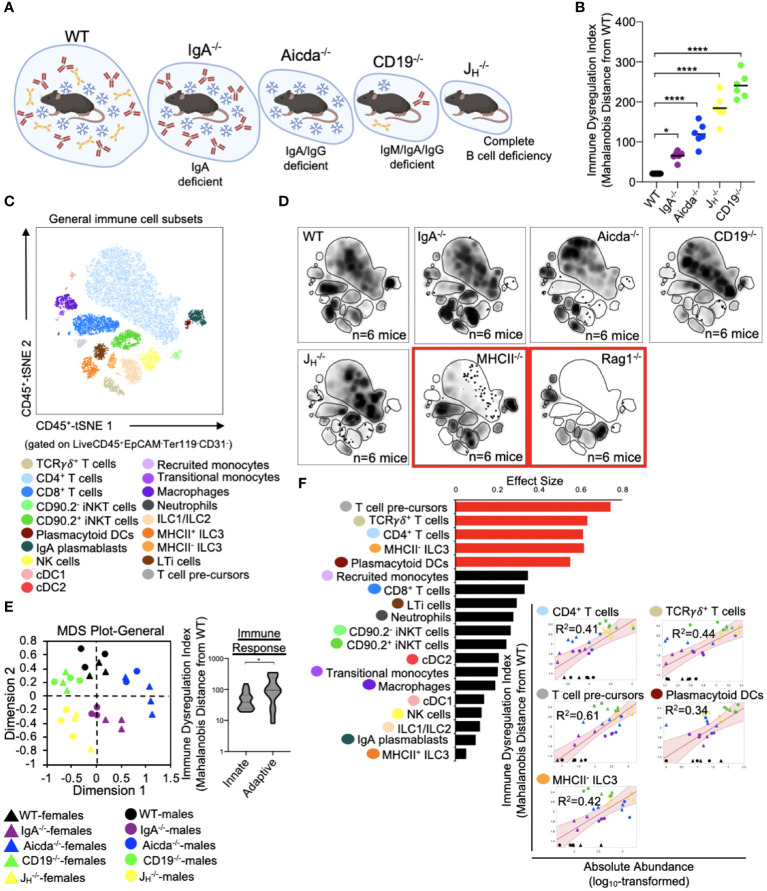
In this study, several mouse strains reflecting a spectrum of primary antibody deficiency (IgA, Aicda, CD19 and J ) were used to generate a functional small-bowel-specific cellular atlas using a novel high-parameter flow cytometry approach that allows for the enumeration of 59 unique cell subsets. Using this cellular atlas, we generated a direct and quantifiable estimate of immune dysregulation. This estimate was then used to identify specific immune factors most predictive of the severity of inflammatory disease of the small bowel (small bowel enteropathy).
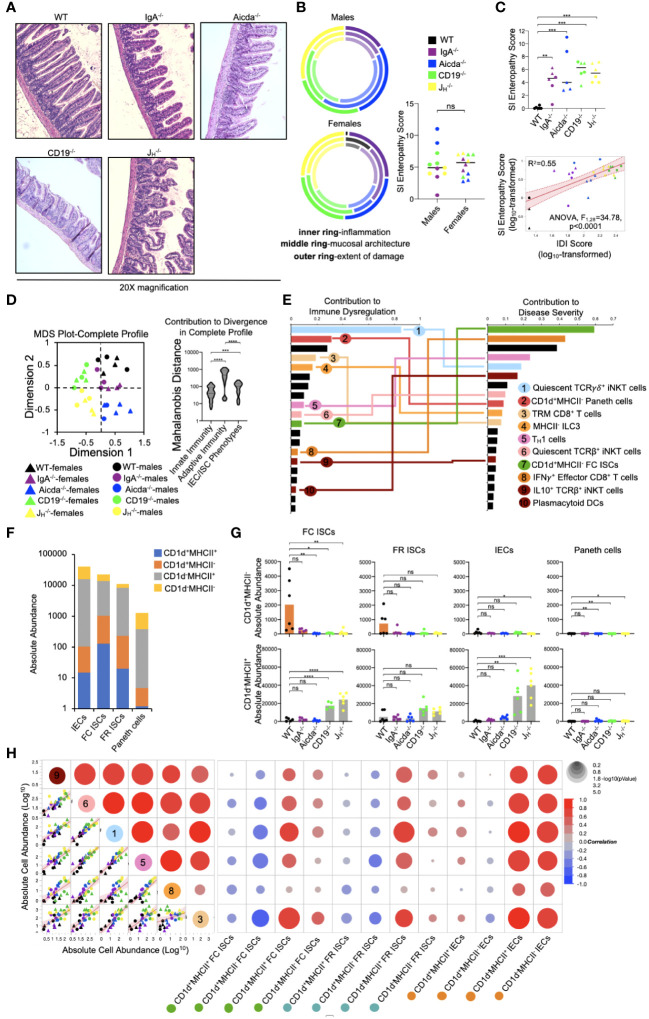
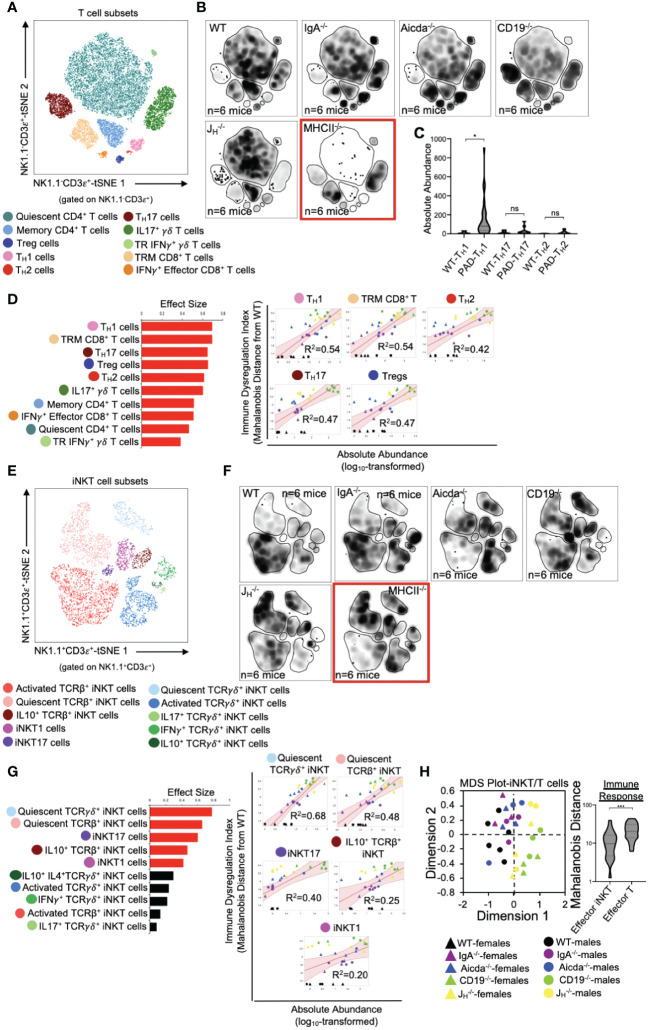
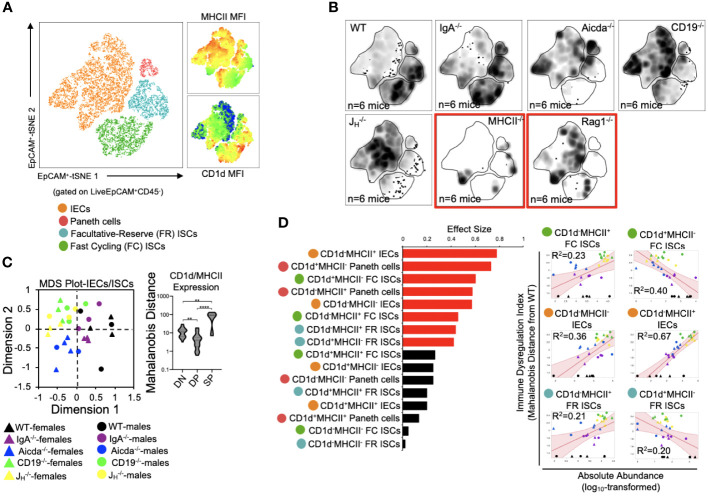
Results from our experiments indicate that the severity of primary antibody deficiency positively correlates with the degree of immune dysregulation that can be expected to develop in an individual. In the SI of mice, immune dysregulation is primarily explained by defective homeostatic responses in T cell and invariant natural killer-like T (iNKT) cell subsets. These defects are strongly correlated with abnormalities in the balance between protein (MHCII-mediated) versus lipid (CD1d-mediated) antigen presentation by intestinal epithelial cells (IECs) and intestinal stem cells (ISCs), respectively.
Multivariate statistical approaches can be used to obtain quantifiable estimates of immune dysregulation based on high-parameter flow cytometry readouts of immune function. Using one such estimate, we reveal a previously unrecognized tradeoff between iNKT cell activation and type 1 immunity that underlies disease in the small bowel. The balance between protein/lipid antigen presentation by ISCs may play a crucial role in regulating this balance and thereby suppressing inflammatory disease in the small bowel.
原发性免疫缺陷是免疫系统功能的遗传性缺陷。抗体缺陷是人类最常见的原发性免疫缺陷形式,可由 B 细胞的发育和激活异常引起,也可能源于 B 细胞内在缺陷或与体液免疫相关的其他细胞的缺陷反应。抗体缺陷患者常伴有炎症性胃肠道并发症,但驱动这些并发症的潜在免疫机制在很大程度上尚未明确。
本研究使用几种反映一系列原发性抗体缺陷(IgA、Aicda、CD19 和 J)的小鼠品系,采用一种新颖的高参数流式细胞术方法生成功能性小肠特异性细胞图谱,该方法允许对 59 种独特的细胞亚群进行计数。利用该细胞图谱,我们生成了免疫失调的直接和定量估计值。然后,使用该估计值来识别最能预测小肠炎症性疾病(小肠肠病)严重程度的特定免疫因子。
实验结果表明,原发性抗体缺陷的严重程度与个体可能发生的免疫失调程度呈正相关。在小鼠的 SI 中,免疫失调主要归因于 T 细胞和不变自然杀伤样 T(iNKT)细胞亚群的固有免疫反应缺陷。这些缺陷与肠道上皮细胞(IECs)和肠干细胞(ISCs)中分别由蛋白质(MHCII 介导)与脂质(CD1d 介导)抗原呈递之间的平衡异常强烈相关。
多变量统计方法可用于根据免疫功能的高参数流式细胞术读数获得免疫失调的定量估计值。使用这样的估计值,我们揭示了一种以前未被认识到的 iNKT 细胞激活与 1 型免疫之间的权衡,这种权衡是小肠疾病的基础。ISCs 进行的蛋白质/脂质抗原呈递之间的平衡可能在调节这种平衡和抑制小肠炎症性疾病方面发挥关键作用。