Department of Pharmacology, Minhang Hospital, and Key Laboratory of Smart Drug Delivery, Shanghai Engineering Research Center of Immune Therapy, School of Pharmacy, Fudan University, Shanghai, 201203, China.
The National Center for Drug Screening and the CAS Key Laboratory of Receptor Research, Shanghai Institute of Materia Medica, Chinese Academy of Sciences (CAS), Shanghai, 201203, China.
Signal Transduct Target Ther. 2024 May 29;9(1):139. doi: 10.1038/s41392-024-01838-9.
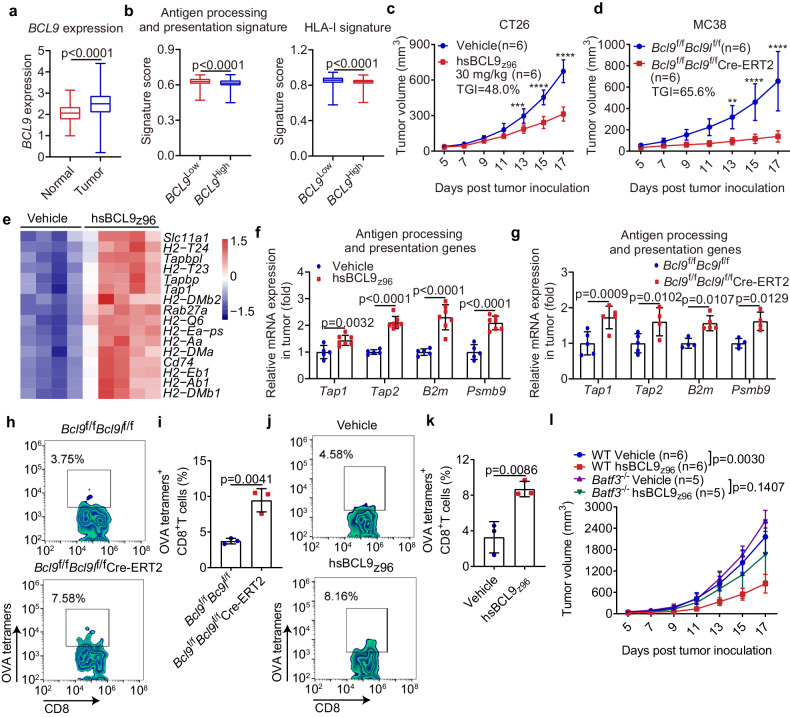
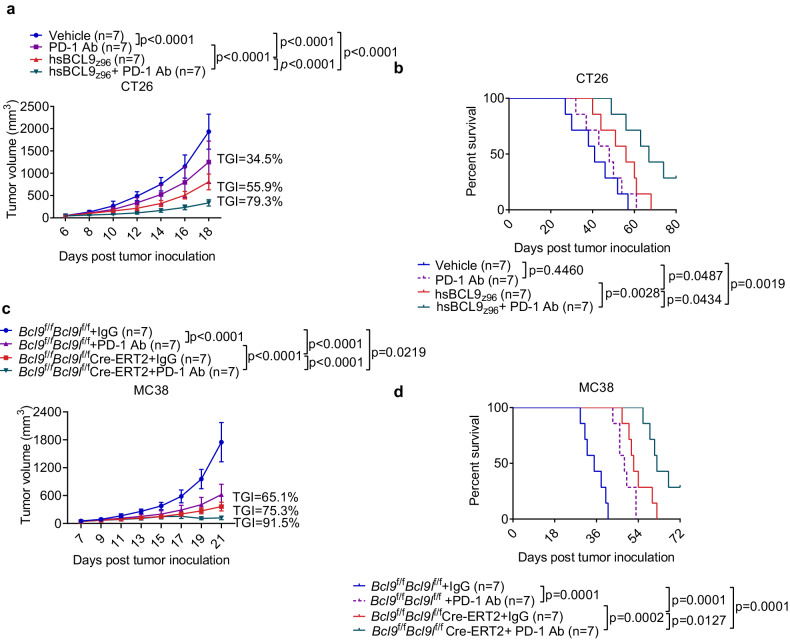
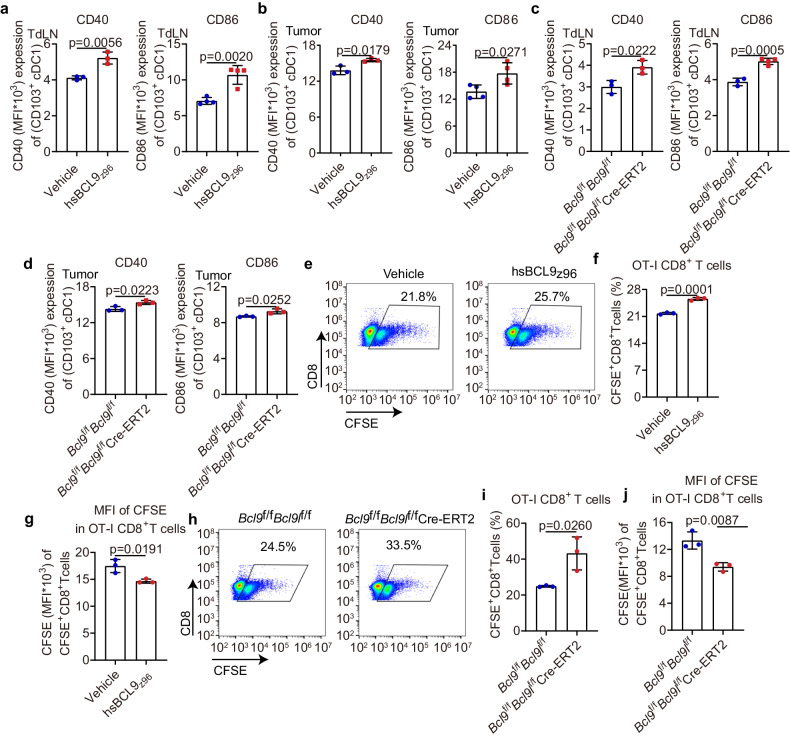
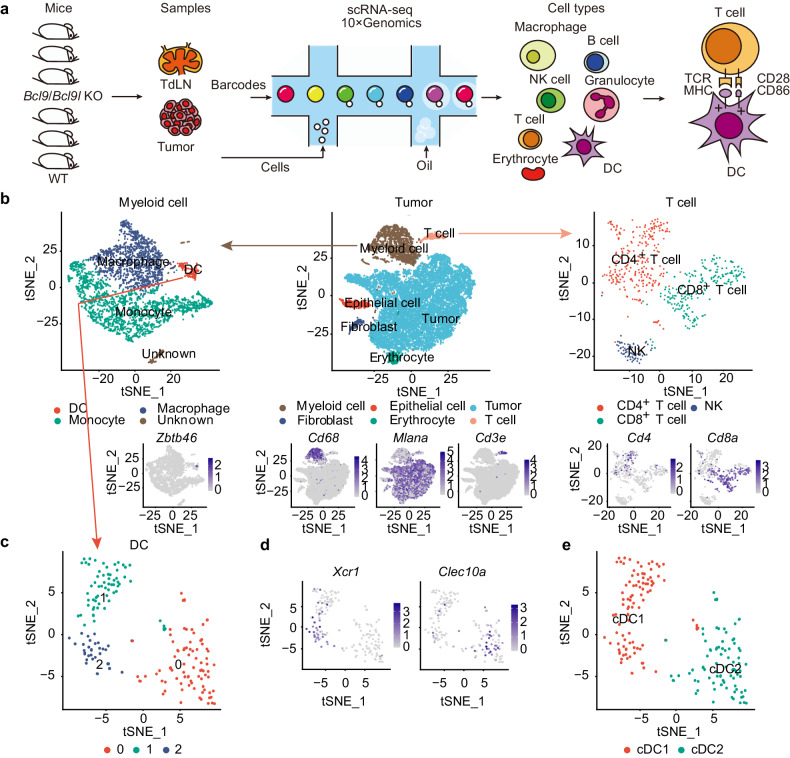
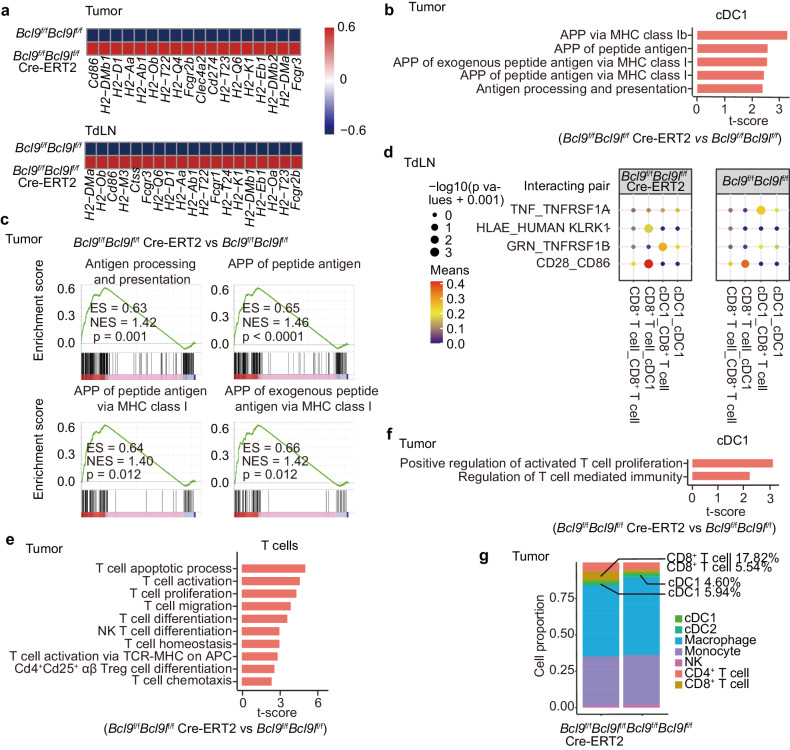
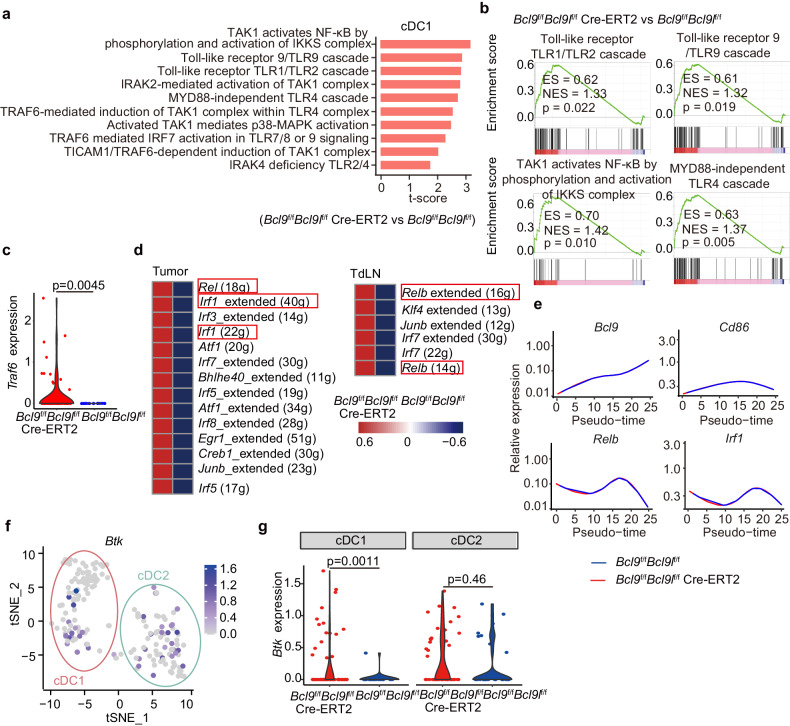
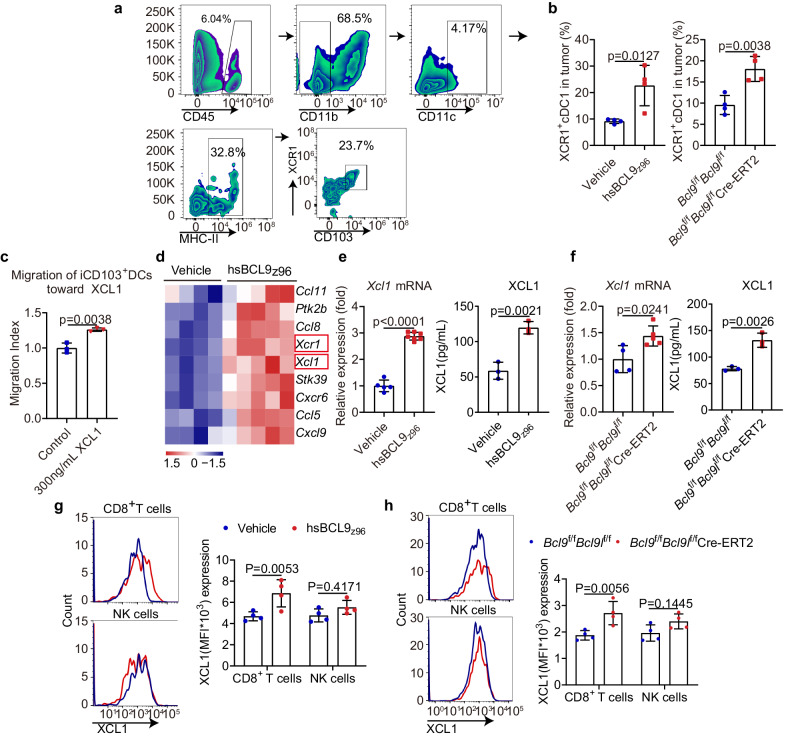
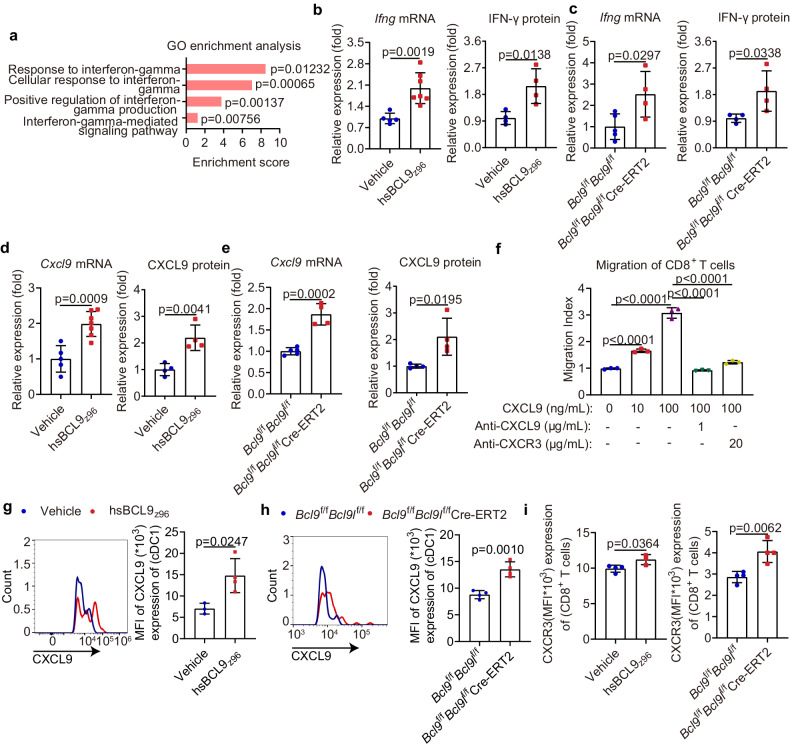
Conventional type 1 dendritic cells (cDC1) are the essential antigen-presenting DC subset in antitumor immunity. Suppressing B-cell lymphoma 9 and B-cell lymphoma 9-like (BCL9/BCL9L) inhibits tumor growth and boosts immune responses against cancer. However, whether oncogenic BCL9/BCL9L impairs antigen presentation in tumors is still not completely understood. Here, we show that targeting BCL9/BCL9L enhanced antigen presentation by stimulating cDC1 activation and infiltration into tumor. Pharmacological inhibition of BCL9/BCL9L with a novel inhibitor hsBCL9 or Bcl9/Bcl9l knockout mice markedly delayed tumor growth and promoted antitumor CD8 T cell responses. Mechanistically, targeting BCL9/BCL9L promoted antigen presentation in tumors. This is due to the increase of cDC1 activation and tumor infiltration by the XCL1-XCR1 axis. Importantly, using single-cell transcriptomics analysis, we found that Bcl9/Bcl9l deficient cDC1 were superior to wild-type (WT) cDC1 at activation and antigen presentation via NF-κB/IRF1 signaling. Together, we demonstrate that targeting BCL9/BCL9L plays a crucial role in cDC1-modulated antigen presentation of tumor-derived antigens, as well as CD8 T cell activation and tumor infiltration. Targeting BCL9/BCL9L to regulate cDC1 function and directly orchestrate a positive feedback loop necessary for optimal antitumor immunity could serve as a potential strategy to counter immune suppression and enhance cancer immunotherapy.
传统的 1 型树突状细胞(cDC1)是抗肿瘤免疫中必不可少的抗原呈递 DC 亚群。抑制 B 细胞淋巴瘤 9 和 B 细胞淋巴瘤 9 样(BCL9/BCL9L)抑制肿瘤生长并增强对癌症的免疫反应。然而,致癌 BCL9/BCL9L 是否会损害肿瘤中的抗原呈递仍不完全清楚。在这里,我们表明,靶向 BCL9/BCL9L 通过刺激 cDC1 激活和浸润肿瘤来增强抗原呈递。用新型抑制剂 hsBCL9 或 Bcl9/Bcl9l 敲除小鼠抑制 BCL9/BCL9L,可显著延缓肿瘤生长并促进抗肿瘤 CD8 T 细胞反应。从机制上讲,靶向 BCL9/BCL9L 可促进肿瘤中的抗原呈递。这是由于 XCL1-XCR1 轴增加了 cDC1 的激活和肿瘤浸润。重要的是,通过单细胞转录组学分析,我们发现 Bcl9/Bcl9l 缺陷型 cDC1 在激活和通过 NF-κB/IRF1 信号转导的抗原呈递方面优于野生型(WT)cDC1。总之,我们证明靶向 BCL9/BCL9L 在 cDC1 调节的肿瘤源性抗原的抗原呈递以及 CD8 T 细胞激活和肿瘤浸润中发挥关键作用。靶向 BCL9/BCL9L 以调节 cDC1 功能并直接协调最佳抗肿瘤免疫所需的正反馈回路可能成为克服免疫抑制和增强癌症免疫治疗的潜在策略。