Novartis BioMedical Research, Basel, Switzerland.
Amsterdam UMC location Vrije Universiteit Amsterdam, Molecular Cell Biology & Immunology, Amsterdam institute for Infection and Immunity, De Boelelaan, 1117, Amsterdam, The Netherlands.
Nat Commun. 2024 May 29;15(1):4584. doi: 10.1038/s41467-024-48922-w.
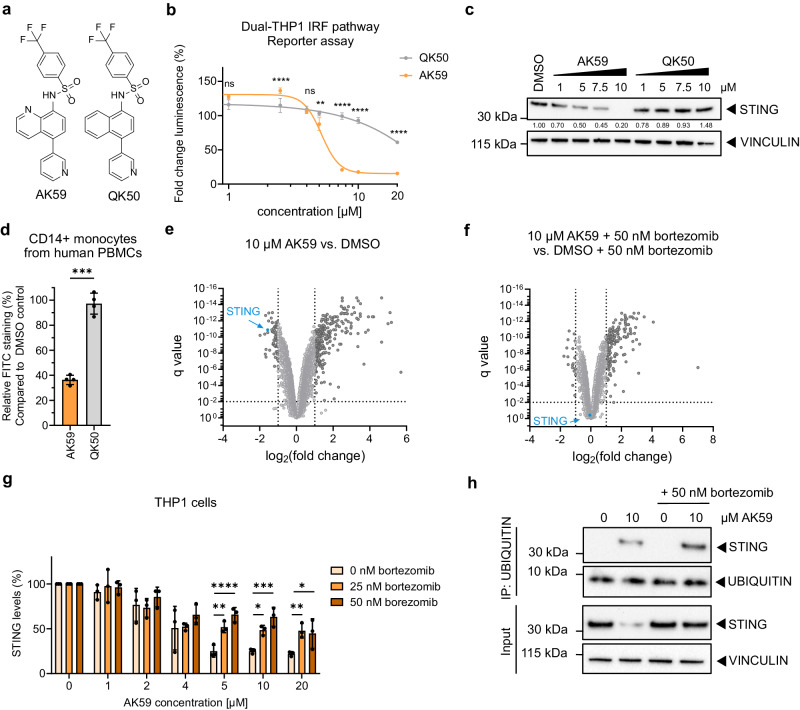
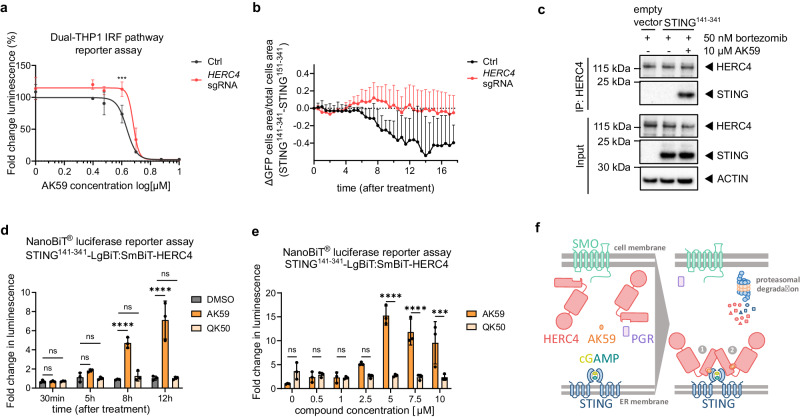
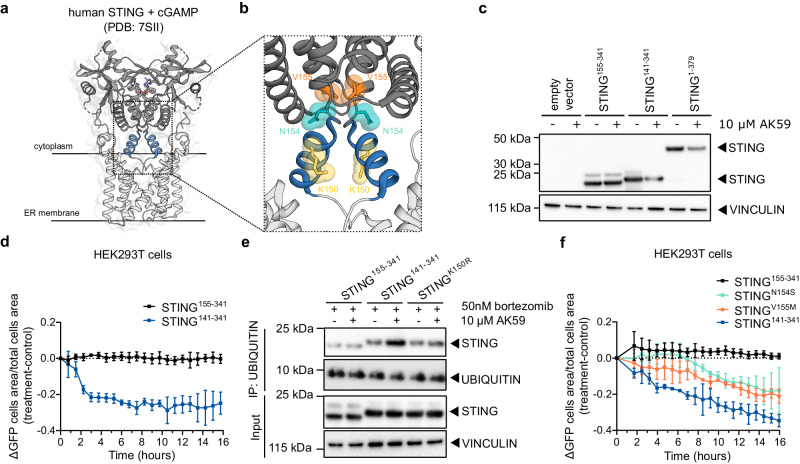
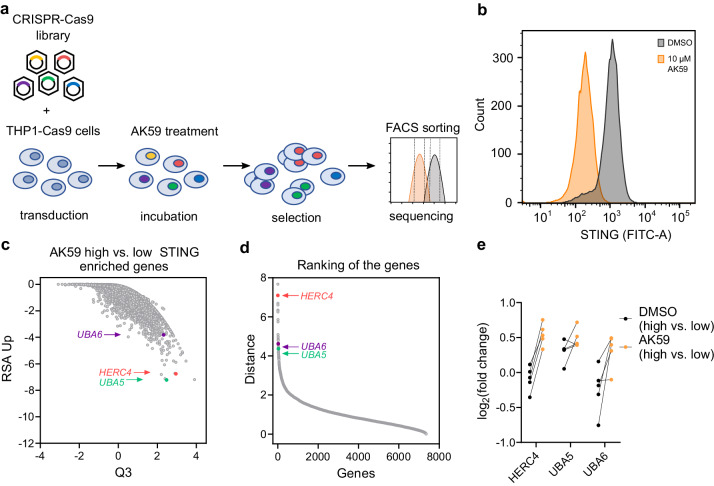
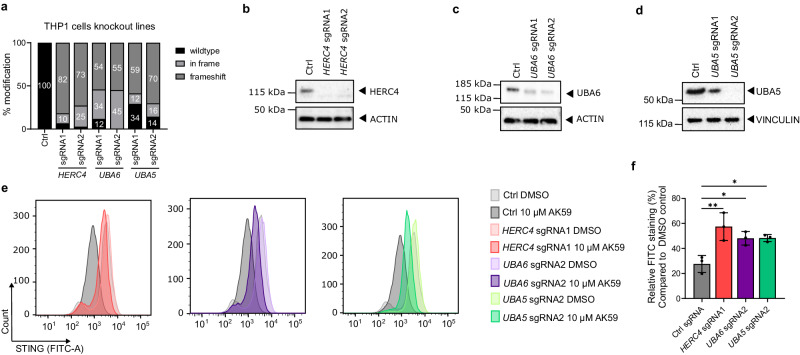
Stimulator of interferon genes (STING) is a central component of the cytosolic nucleic acids sensing pathway and as such master regulator of the type I interferon response. Due to its critical role in physiology and its' involvement in a variety of diseases, STING has been a focus for drug discovery. Targeted protein degradation (TPD) has emerged as a promising pharmacology for targeting previously considered undruggable proteins by hijacking the cellular ubiquitin proteasome system (UPS) with small molecules. Here, we identify AK59 as a STING degrader leveraging HERC4, a HECT-domain E3 ligase. Additionally, our data reveals that AK59 is effective on the common pathological STING mutations, suggesting a potential clinical application of this mechanism. Thus, these findings introduce HERC4 to the fields of TPD and of compound-induced degradation of STING, suggesting potential therapeutic applications.
干扰素基因刺激物 (STING) 是细胞质核酸感应途径的核心组成部分,也是 I 型干扰素反应的主要调节剂。由于其在生理学中的关键作用及其在多种疾病中的参与,STING 一直是药物发现的重点。靶向蛋白降解 (TPD) 已成为一种有前途的药理学方法,通过利用小分子劫持细胞内泛素蛋白酶体系统 (UPS) 来靶向以前被认为不可成药的蛋白质。在这里,我们确定 AK59 是一种利用 HECT 结构域 E3 连接酶 HERC4 的 STING 降解剂。此外,我们的数据表明 AK59 对常见的病理性 STING 突变有效,这表明该机制具有潜在的临床应用。因此,这些发现将 HERC4 引入 TPD 领域和化合物诱导的 STING 降解领域,表明具有潜在的治疗应用。