Department of Molecular Medicine, KSMD, KNUST, Ghana.
PLoS One. 2024 May 30;19(5):e0303778. doi: 10.1371/journal.pone.0303778. eCollection 2024.
Preeclampsia (PE) is characterized by hypertension and proteinuria mostly after 20 weeks of gestation. It affects 2-8% of pregnancies worldwide, with detrimental consequences for both mother and foetus. Evidence, suggests that genetic factors, including vitamin D receptor (VDR) gene polymorphisms, could contribute to PE complexity. However, their role in the Ghanaian population remains underexplored. We assessed the interplay between Vitamin D, VDR gene variants and preeclampsia risk in Ghanaian women.
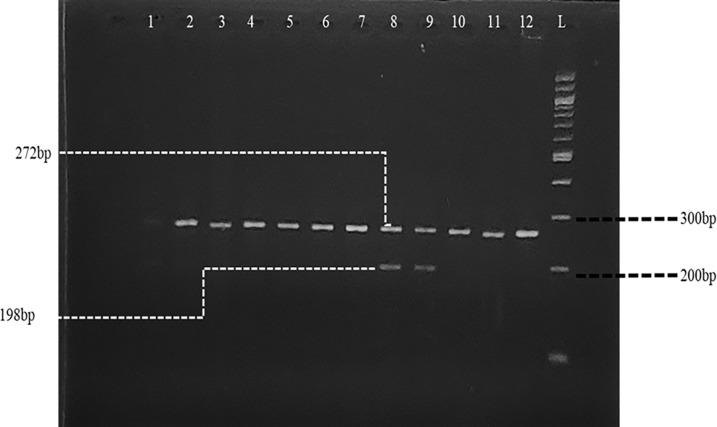
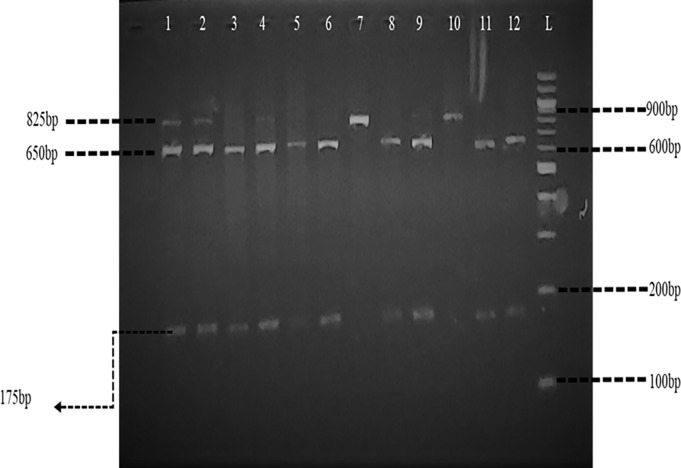
This unmatched case-control study was conducted at Kumasi South Hospital, Ghana, from June to November 2022. A total of 162 participants consisting of 62 PE cases and 100 normotensive controls were enrolled. Clinical and obstetric data were collected. Blood samples were also collected for DNA extraction and vitamin D assay. Genotyping of VDR Fok1 and Bsm1 gene variants was performed using Polymerase Chain Reaction (PCR) and Polymerase Chain Reaction-Restriction Fragment Length Polymorphism (PCR-RFLP) analysis whereas Vitamin D levels were estimated using sandwich ELISA. Statistical analyses were computed with SPSS version 25 and GraphPad prism version 8.0. A p-value of < 0.05 was considered statistically significant.
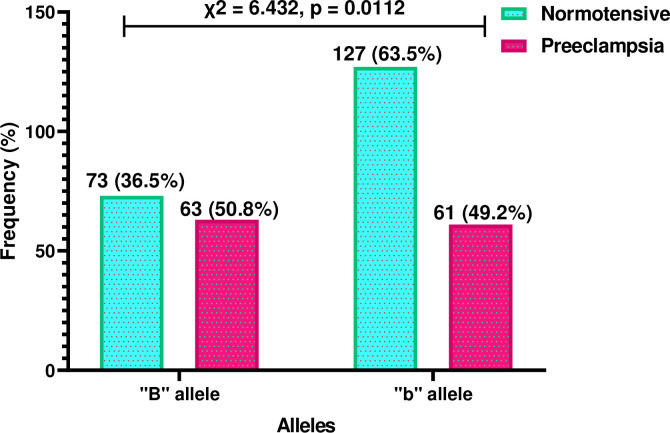
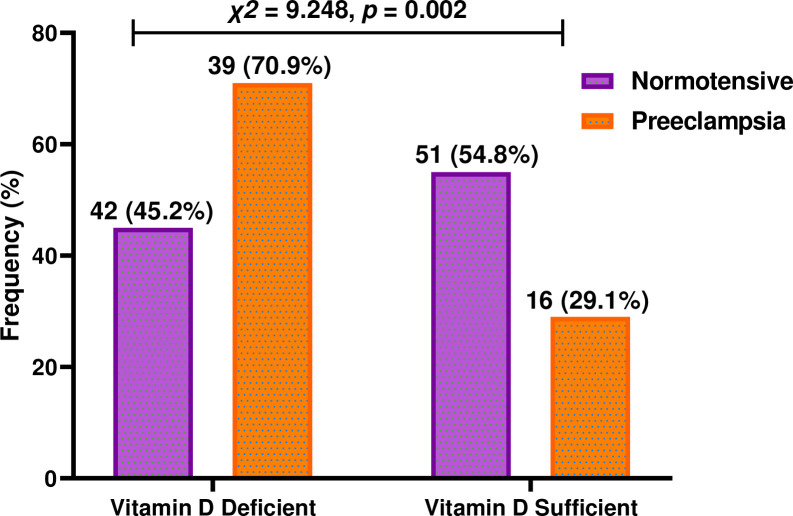
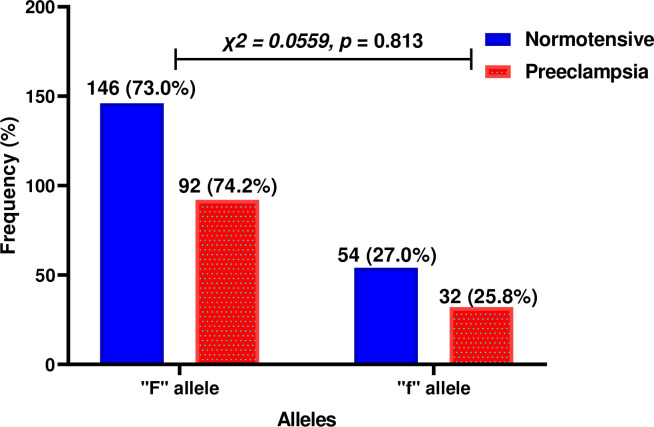
Vitamin D concentration were significantly lower in the PE group (p < 0.0001). Vitamin D deficiency (aOR = 3.311, 95% CI: 1.584-6.921, p = 0.0010) was significantly associated with a three-fold increase in preeclampsia risk, whilst VDR gene variants, particularly the "bb" genotype (cOR = 0.227, 95% CI: 0.055-0.944, p = 0.0410) was associated with reduced risk of PE. There was no association between the distribution of Fok1 genotypes and PE.
This study highlights a significant association between vitamin D deficiency and an increased risk of PE among Ghanaian women. However, the VDR gene variant, "bb", genotype, for Bsm1 reduces the risk of PE.
子痫前期(PE)的特征是大多数在妊娠 20 周后出现高血压和蛋白尿。它影响全球 2-8%的妊娠,对母亲和胎儿都有不利影响。有证据表明,遗传因素,包括维生素 D 受体(VDR)基因多态性,可能导致 PE 复杂化。然而,它们在加纳人群中的作用仍未得到充分探索。我们评估了维生素 D、VDR 基因变异与加纳妇女子痫前期风险之间的相互作用。
这是一项在加纳库马西南方医院进行的未配对病例对照研究,时间为 2022 年 6 月至 11 月。共纳入 162 名参与者,其中 62 名为 PE 病例,100 名为正常血压对照组。收集临床和产科数据。还采集了血样用于 DNA 提取和维生素 D 测定。使用聚合酶链反应(PCR)和聚合酶链反应-限制性片段长度多态性(PCR-RFLP)分析对 VDR Fok1 和 Bsm1 基因变异进行基因分型,而维生素 D 水平则使用夹心 ELISA 进行估计。使用 SPSS 版本 25 和 GraphPad prism 版本 8.0 进行统计分析。p 值<0.05 被认为具有统计学意义。
PE 组的维生素 D 浓度明显较低(p<0.0001)。维生素 D 缺乏症(aOR=3.311,95%CI:1.584-6.921,p=0.0010)与子痫前期风险增加三倍显著相关,而 VDR 基因变异,特别是“bb”基因型(cOR=0.227,95%CI:0.055-0.944,p=0.0410)与 PE 风险降低相关。Fok1 基因型的分布与 PE 无关。
本研究强调了加纳妇女中维生素 D 缺乏症与子痫前期风险增加之间存在显著关联。然而,Bsm1 的 VDR 基因“bb”基因型降低了 PE 的风险。