Zhang Dongmei, Yuan Ting, Huang Anle, Li Xiaoping, Yang Liu, Wang Congzhi, Liu Mingming, Lei Yunxiao, Sun Lu, Li Jing, Zhang Lin, Zhang Jing
School of Nursing, Wannan Medical College, 22 Wenchang West Road, Yijiang District, Wuhu City, Anhui Province, P.R. China.
Nursing Department, the People's Hospital of Yingshang, 566 Ganluo Road, Chengbei New District, Yingshang County, Anhui Province, P.R. China.
BMC Nurs. 2024 May 30;23(1):360. doi: 10.1186/s12912-024-02033-5.
Nursing students are encountering a range of health issues. Assessing social support is a key component in most questionnaire surveys related to health status, aiming to investigate the relationships and mechanisms between health status and social support to enhance overall health. Therefore, it is essential to seek out appropriate instruments to evaluate social support for nursing students. The Oslo-3 Social Support Scale (OSSS-3) is a reliable and concise instrument for evaluating social support. To date, there have been no studies validating the OSSS-3 based on Item Response Theory (IRT) models. Also, an officially validated Chinese version has not been found. The current research intended to verify the Chinese version of the OSSS-3.
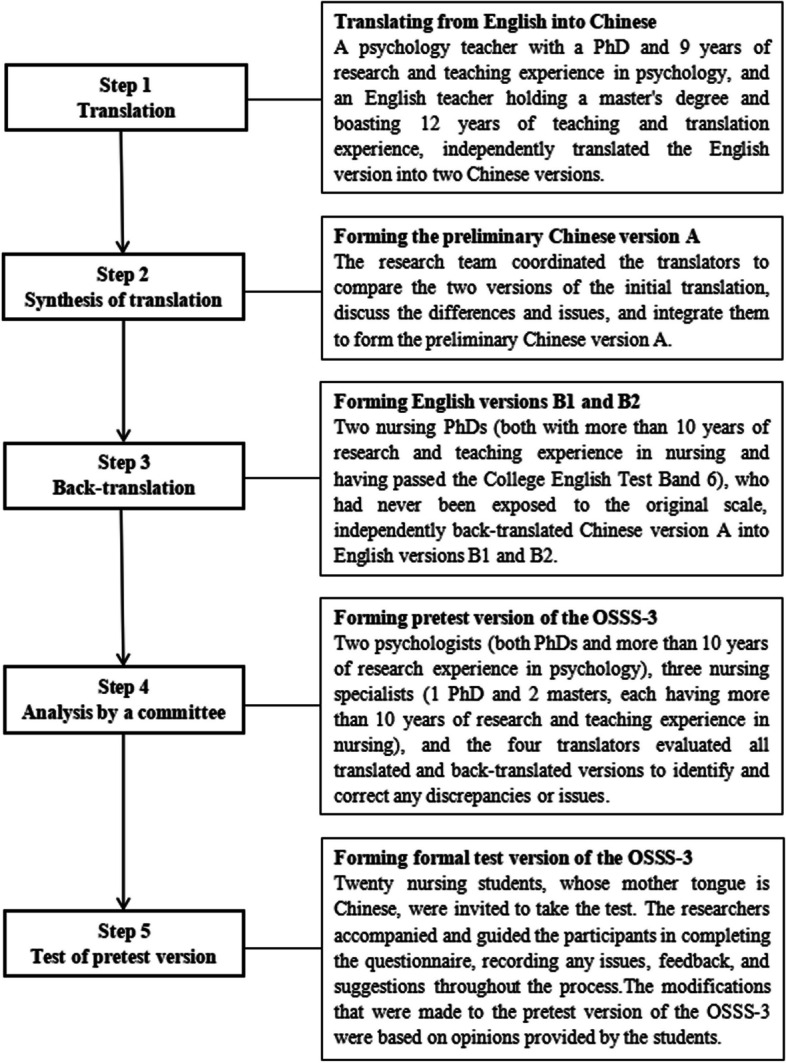
The OSSS-3 was translated into Chinese and culturally adapted. Subsequently, the OSSS-3 was validated by employing the Classical Test Theory (CTT) and IRT models.
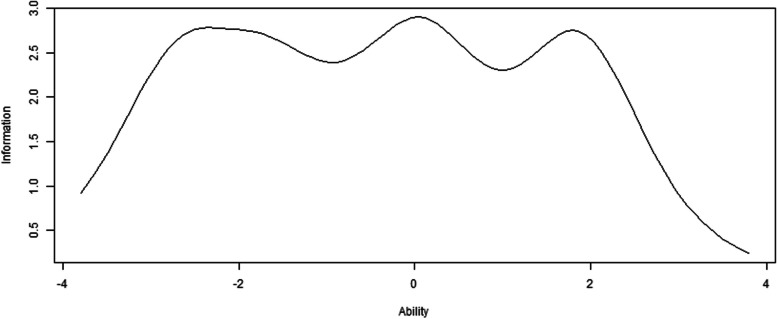
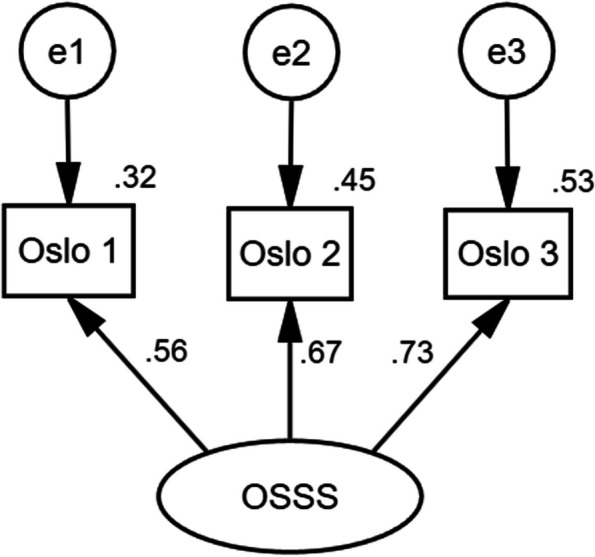
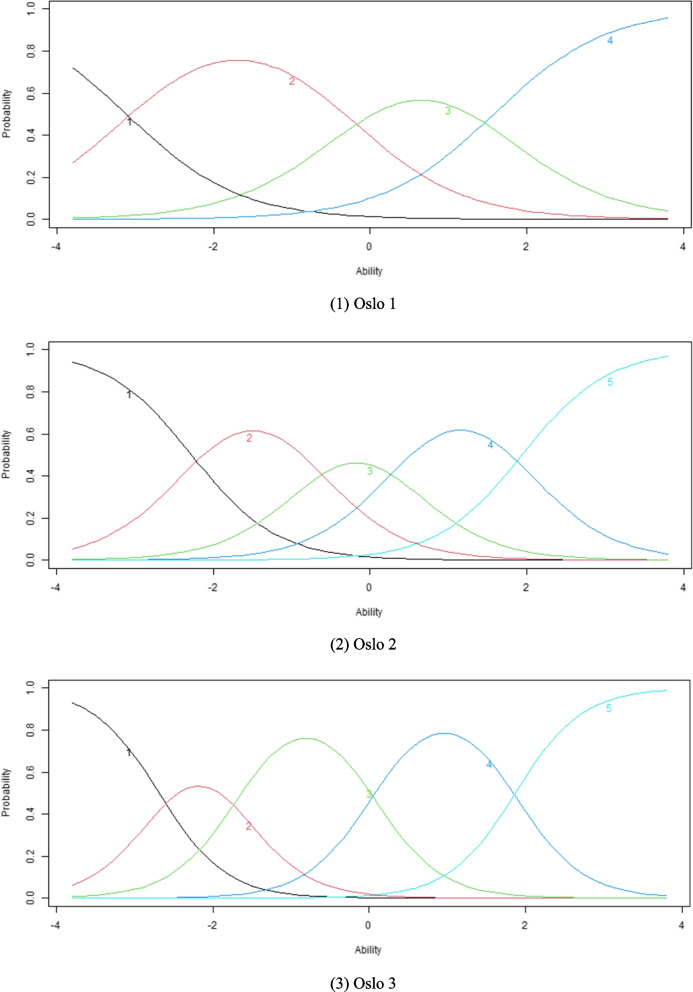
The split-half reliability was 0.622. The Cronbach's α coefficient was 0.687. The correlations between each item and total scores varied from 0.723 to 0.835. The retest coefficient was 0.907. The content validity index was 0.933. A single common factor was extracted and accounted for 61.559% of the variance. The item loading values on the single factor were between 0.743 and 0.814. The communalities were between 0.552 and 0.663. There was no variance between males and females (P = 0.055). The difference in scores between the top (30%) and bottom (30%) groups attained significance. IRT models results revealed that the discrimination parameters ranged from 1.39 to 2.33 and difficulty parameters increased monotonically.
The OSSS-3 demonstrates satisfying psychometric properties and is a proper instrument for measuring social support in Chinese nursing students.
护理专业学生正面临一系列健康问题。评估社会支持是大多数与健康状况相关问卷调查中的关键组成部分,旨在调查健康状况与社会支持之间的关系及机制,以促进整体健康。因此,寻找合适的工具来评估护理专业学生的社会支持至关重要。奥斯陆社会支持量表-3(OSSS-3)是一种可靠且简洁的社会支持评估工具。迄今为止,尚无基于项目反应理论(IRT)模型对OSSS-3进行验证的研究。此外,尚未找到官方验证的中文版。本研究旨在验证OSSS-3中文版。
将OSSS-3翻译成中文并进行文化调适。随后,采用经典测验理论(CTT)和IRT模型对OSSS-3进行验证。
分半信度为0.622。克朗巴哈α系数为0.687。各项目与总分的相关性在0.723至0.835之间。重测系数为0.907。内容效度指数为0.933。提取出一个共同因素,占方差的61.559%。该单一因素上的项目负荷值在0.743至0.814之间。共同度在0.552至0.663之间。男性和女性之间无差异(P = 0.055)。得分最高的30%组与得分最低的30%组之间的差异具有统计学意义。IRT模型结果显示,区分度参数在1.39至2.33之间,难度参数呈单调增加。
OSSS-3表现出令人满意的心理测量学特性,是测量中国护理专业学生社会支持的合适工具。