Zhao Xuanze, Sam Toonghai, Zhang Xia, Liu Yujia
Information Department, Zhejiang University of Finance and Economics Dongfang College, Yangshan Road No.2, Chang'an street, Haining, 314408, Zhejiang, China.
Faculty of Business and Communications, INTI International University, Nilai, 71800, Negeri Sembilan, Malaysia.
Heliyon. 2024 May 17;10(10):e31324. doi: 10.1016/j.heliyon.2024.e31324. eCollection 2024 May 30.
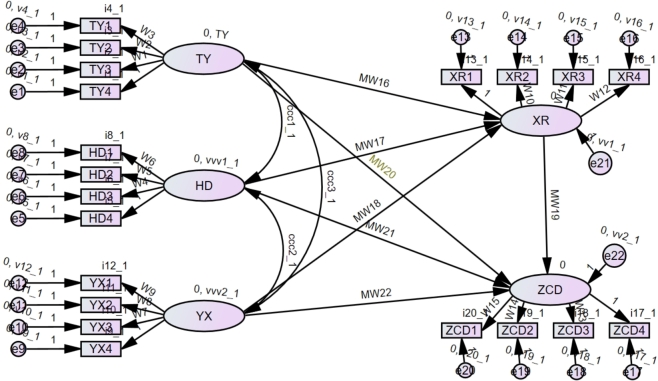
Our research aims to investigate the impact mechanism of brand loyalty among gamers during the gaming process within the framework of brand loyalty theory and cognitive theory. We surveyed game players from Zhejiang Province, China. The research methods include a questionnaire survey and structural equation modelling. Results show that game experience, interaction, and impression are positively correlated with game trust, while game trust is positively correlated with game brand loyalty. Game trust, as a mediator variable, plays a complete mediation role. The clustering results of player gender and age as moderating effects are not significant. Based on the analysis results, we have suggested corresponding policy recommendations and reflections. Our research contributes to the analysation of impact mechanism of brand loyalty during the gaming process through the establishment of a structural equation model and provides suggestions and reflections on the development of the gaming industry.
我们的研究旨在在品牌忠诚度理论和认知理论的框架内,调查游戏玩家在游戏过程中品牌忠诚度的影响机制。我们对来自中国浙江省的游戏玩家进行了调查。研究方法包括问卷调查和结构方程建模。结果表明,游戏体验、互动和印象与游戏信任呈正相关,而游戏信任与游戏品牌忠诚度呈正相关。游戏信任作为中介变量,发挥着完全中介作用。玩家性别和年龄作为调节效应的聚类结果不显著。基于分析结果,我们提出了相应的政策建议和思考。我们的研究通过建立结构方程模型,为游戏过程中品牌忠诚度的影响机制分析做出了贡献,并为游戏产业的发展提供了建议和思考。