Wang Cong, Wang Xiangchong, Zhang Yiyi, Mi Yuan, Han Yanxue, Zhi Yaxin, Zhao Ran, Cui Nanqi, Ma Qianli, Zhang Huaxing, Xue Dazhong, Qiao Ruoyang, Han Jiabing, Yu Yulou, Li Jiaxuan, Shaiea Mohammed, Liu Demin, Gu Guoqiang, Wang Chuan
Department of Pharmacology, the Key Laboratory of Neural and Vascular Biology, Ministry of Education, the Key Laboratory of New Drug Pharmacology and Toxicology, the Hebei Collaboration Innovation Center for Mechanism, Diagnosis and Treatment of Neurological and Psychiatric Disease, Hebei Medical University, Shijiazhuang 050017, China.
Department of Pharmacology, Hebei International Cooperation Center for Ion Channel Function and Innovative Traditional Chinese Medicine, Hebei Higher Education Institute Applied Technology Research Center on TCM Formula Preparation, Hebei University of Chinese Medicine, Shijiazhuang 050091, China.
Acta Biochim Biophys Sin (Shanghai). 2024 May 30;56(12):1802-1812. doi: 10.3724/abbs.2024075.
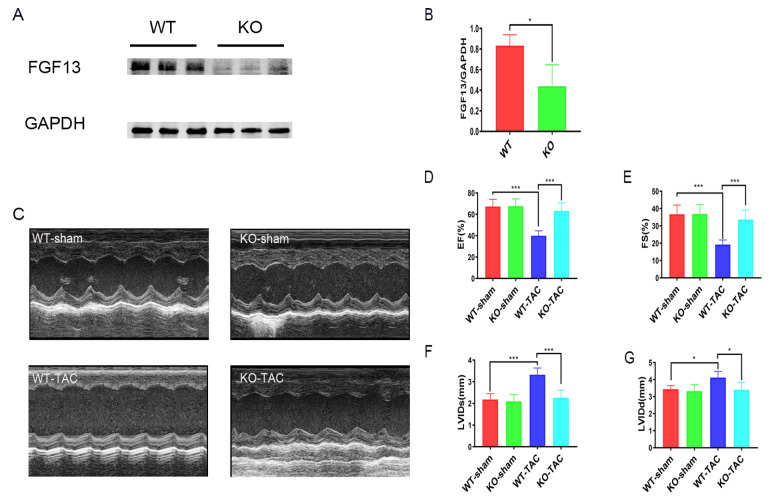
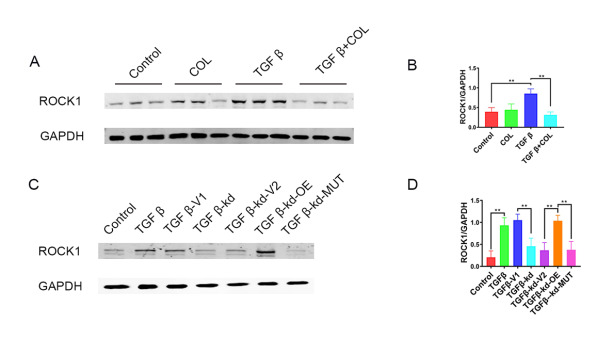
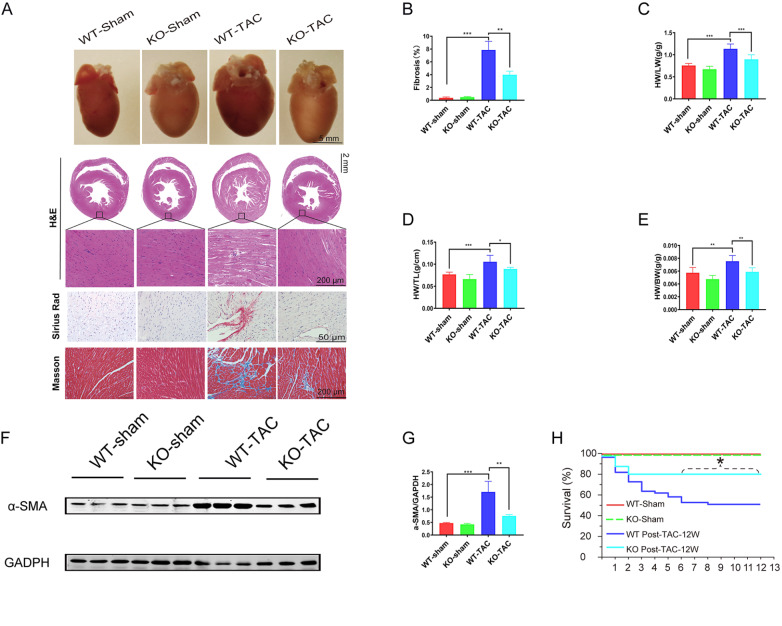
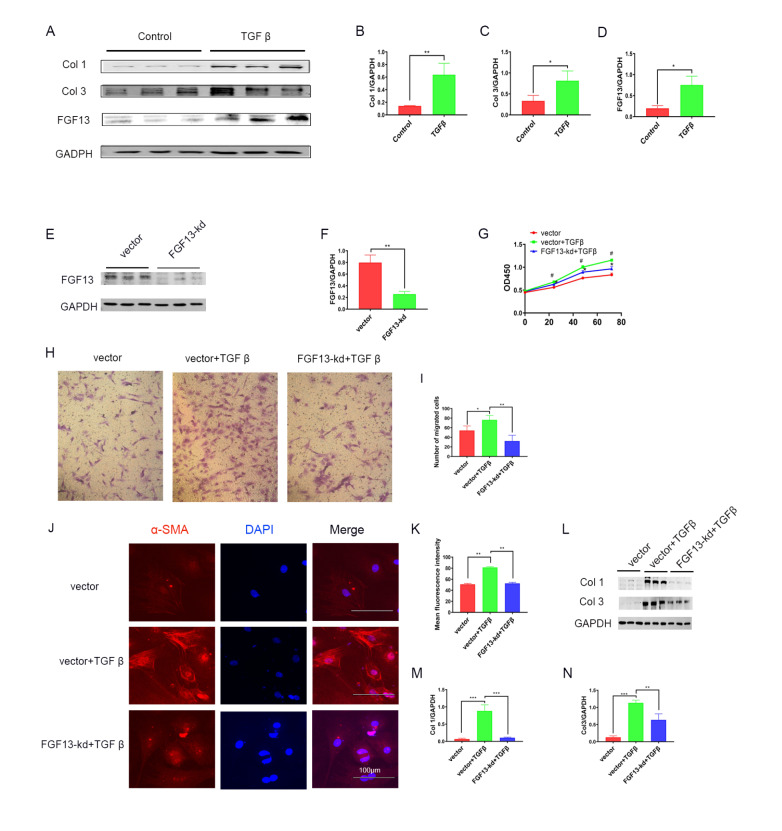
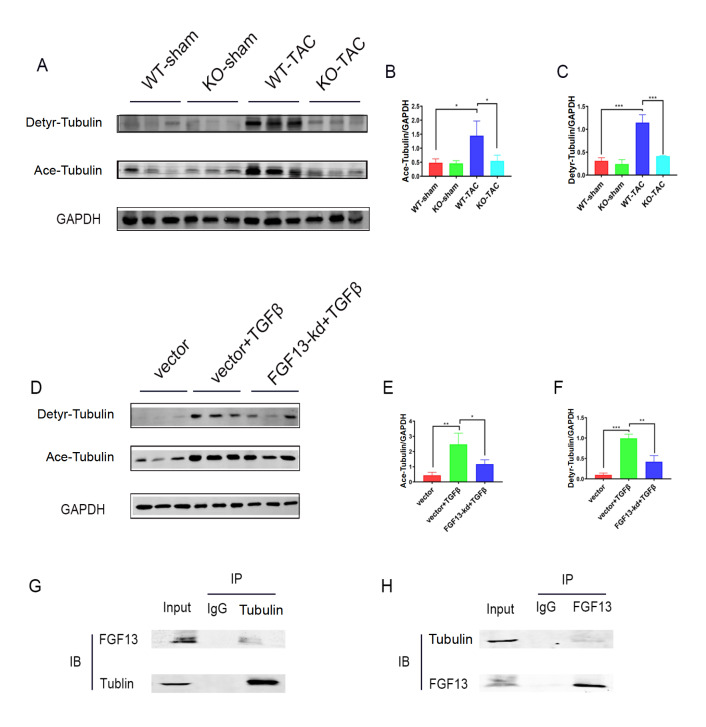
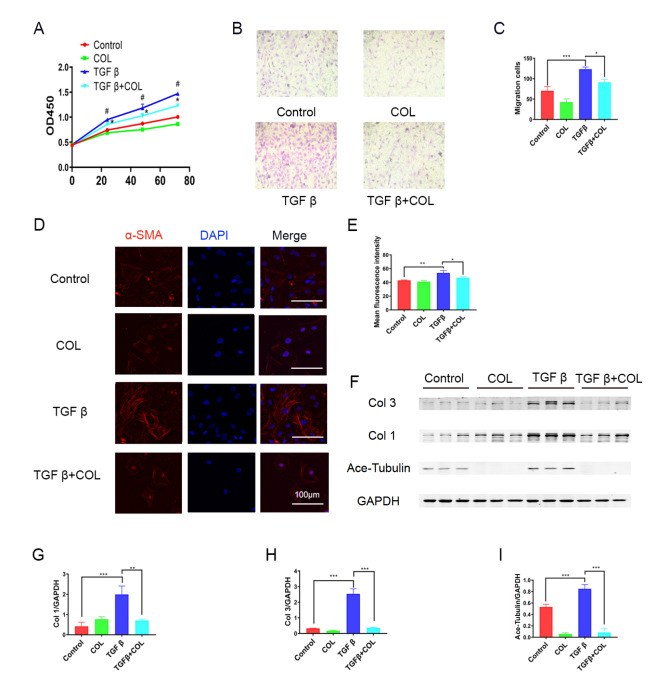
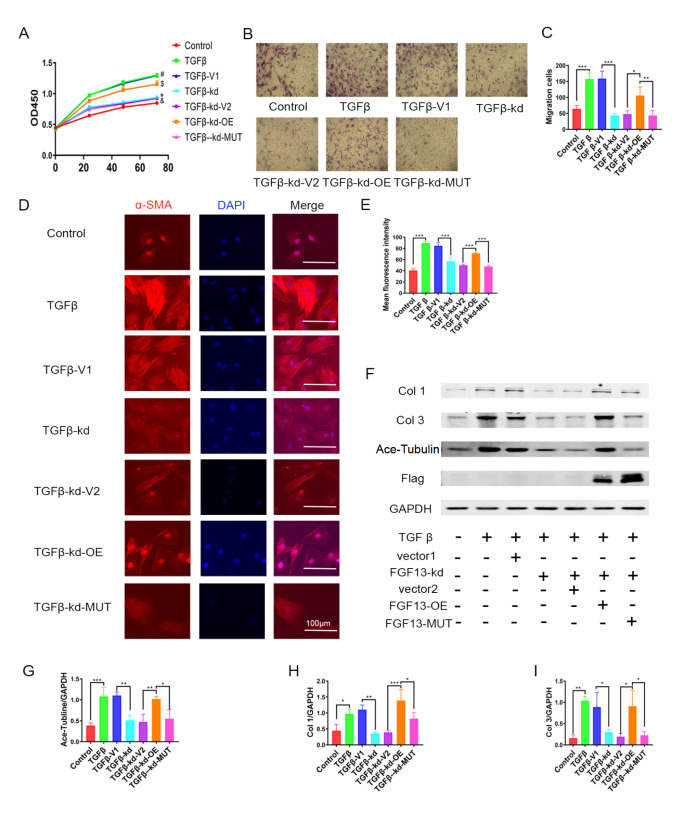
Fibroblast growth factor (FGF) isoform 13, a distinct type of FGF, boasts significant potential for therapeutic intervention in cardiovascular dysfunctions. However, its impact on regulating fibrosis remains unexplored. This study aims to elucidate the role and mechanism of FGF13 on cardiac fibrosis. Here, we show that following transverse aortic constriction (TAC) surgery, interstitial fibrosis and collagen content increase in mice, along with reduced ejection fraction and fractional shortening, augmented heart mass. However, following deletion, interstitial fibrosis is decreased, ejection fraction and fractional shortening are increased, and heart mass is decreased, compared with those in the TAC group. Mechanistically, incubation of cardiac fibroblasts with transforming growth factor β (TGFβ) increases the expressions of types I and III collagen proteins, as well as α-smooth muscle actin (α-SMA) proteins, and enhances fibroblast proliferation and migration. In the absence of , the expressions of these proteins are decreased, and fibroblast proliferation and migration are suppressed, compared with those in the TGFβ-stimulated group. Overexpression of FGF13, but not FGF13 mutants defective in microtubule binding and stabilization, rescues the decrease in collagen and α-SMA protein and weakens the proliferation and migration function of the knockdown group. Furthermore, knockdown decreases ROCK protein expression via microtubule disruption. Collectively, cardiac knockdown protects the heart from fibrosis in response to haemodynamic stress by modulating microtubule stabilization and ROCK signaling pathway.
成纤维细胞生长因子(FGF)亚型13是一种独特的FGF类型,在心血管功能障碍的治疗干预方面具有巨大潜力。然而,其对纤维化调节的影响尚未得到探索。本研究旨在阐明FGF13在心脏纤维化中的作用和机制。在此,我们发现,在进行主动脉缩窄(TAC)手术后,小鼠的间质纤维化和胶原蛋白含量增加,同时射血分数和缩短分数降低,心脏重量增加。然而,与TAC组相比,FGF13缺失后,间质纤维化减少,射血分数和缩短分数增加,心脏重量降低。机制上,用转化生长因子β(TGFβ)孵育心脏成纤维细胞会增加I型和III型胶原蛋白以及α平滑肌肌动蛋白(α-SMA)蛋白的表达,并增强成纤维细胞的增殖和迁移。在缺乏FGF13的情况下,与TGFβ刺激组相比,这些蛋白的表达降低,成纤维细胞的增殖和迁移受到抑制。FGF13的过表达,但不是微管结合和稳定缺陷的FGF13突变体,挽救了胶原蛋白和α-SMA蛋白的减少,并削弱了FGF13敲低组的增殖和迁移功能。此外,FGF13敲低通过微管破坏降低ROCK蛋白表达。总的来说,心脏FGF13敲低通过调节微管稳定和ROCK信号通路,保护心脏免受血流动力学应激引起的纤维化。