Laboratoire de Biologie Moléculaire et Génétique (LABIOGENE), Université Joseph KI- ZERBO, Ouagadougou 03, 03 BP 7021, Burkina Faso.
Centre de Recherche Biomoléculaire Pietro Annigoni (CERBA), Ouagadougou 01, 01 BP 364, Burkina Faso.
BMC Infect Dis. 2024 May 31;24(1):547. doi: 10.1186/s12879-024-09434-6.
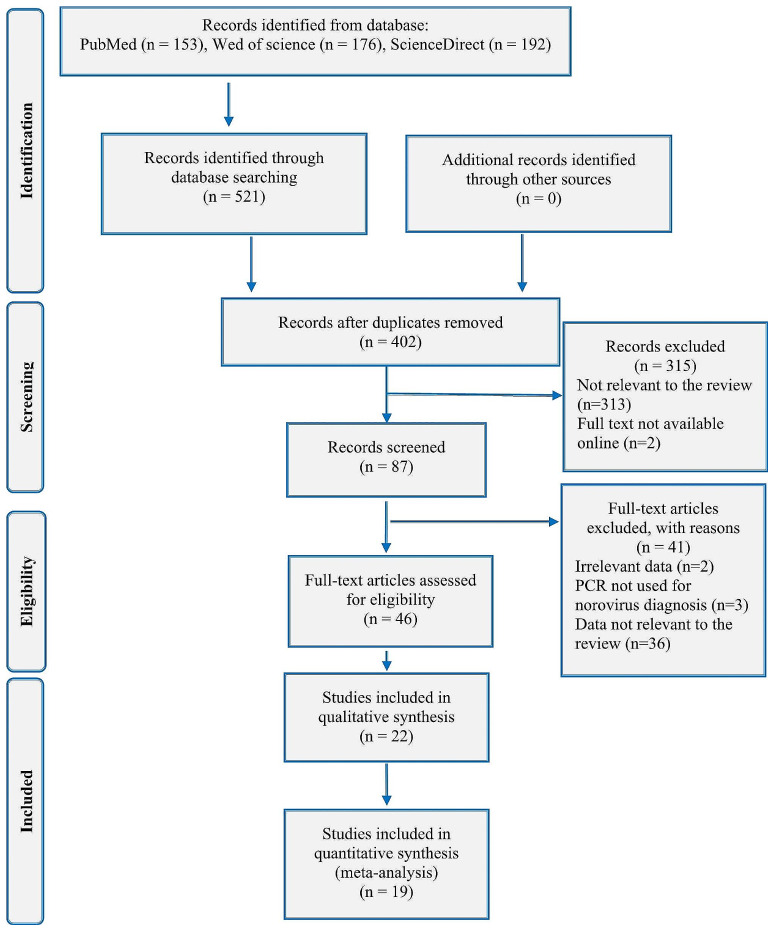
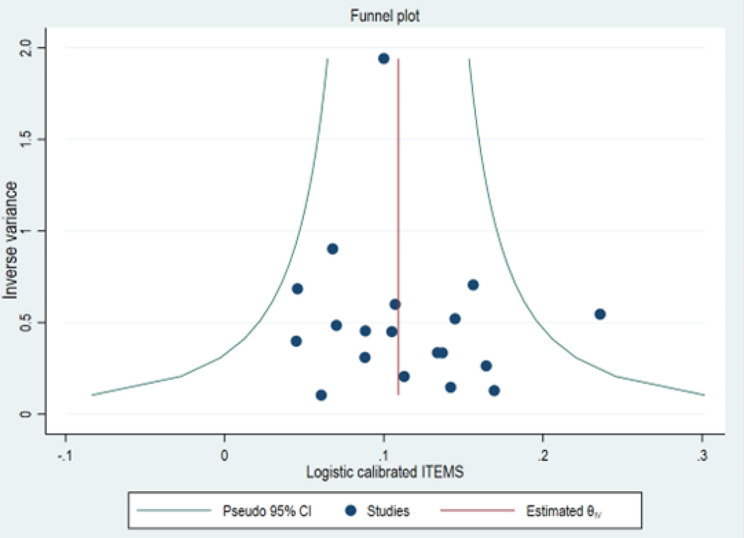
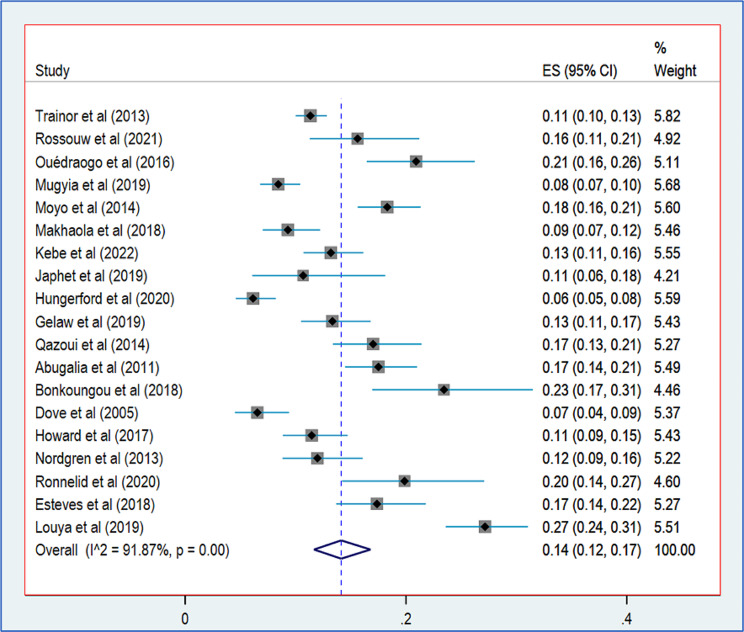
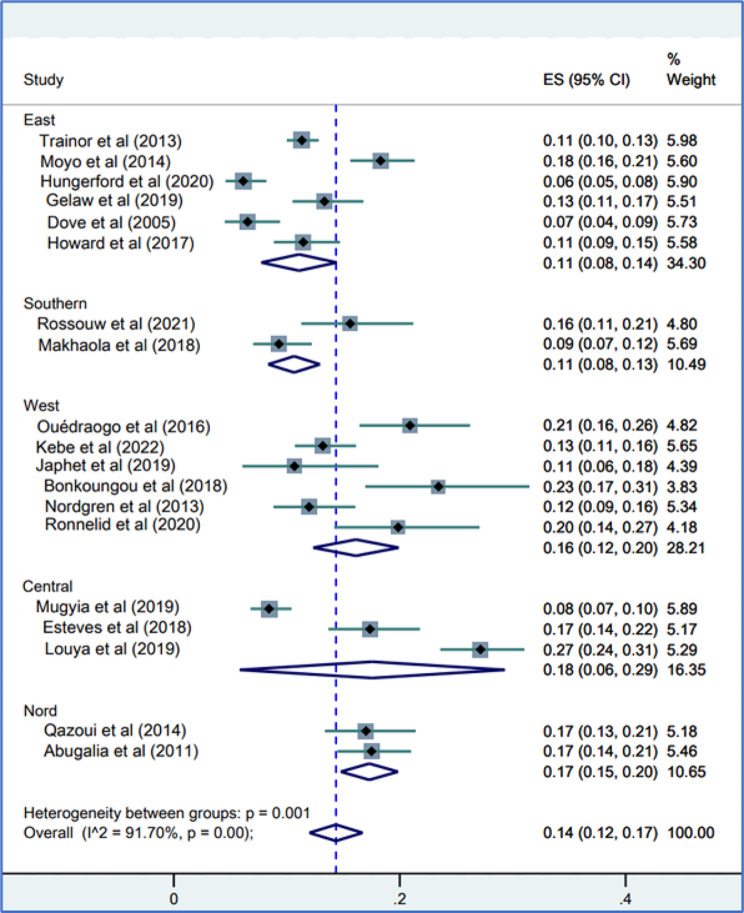
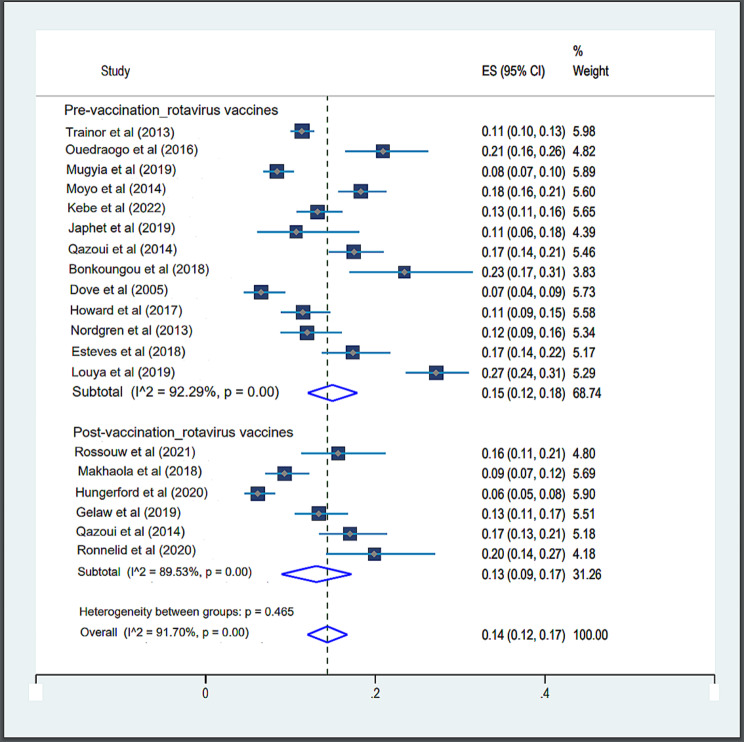
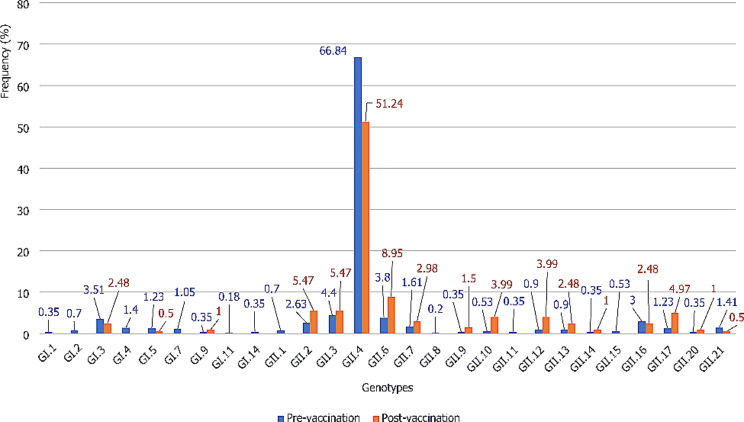
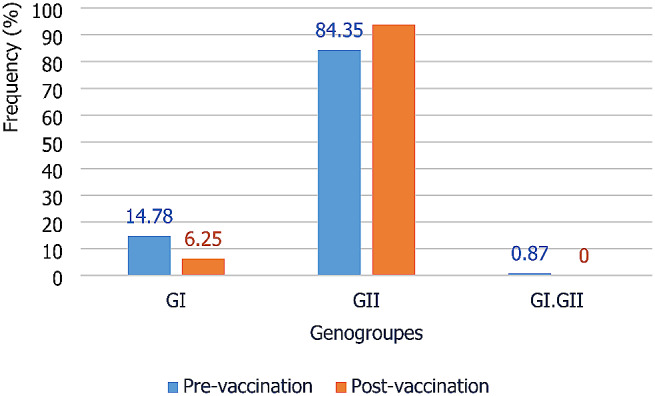
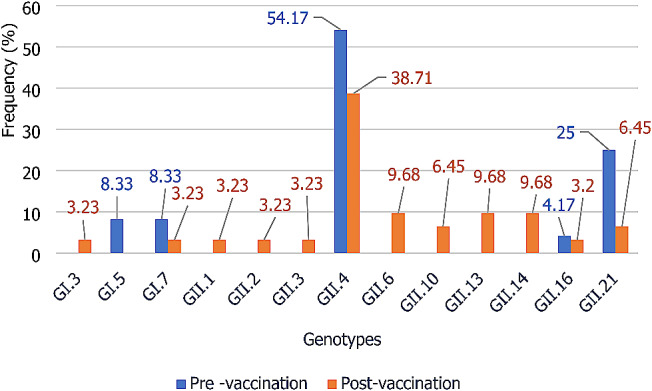
Noroviruses are the second leading cause of death in children under the age of 5 years old. They are responsible for 200 million cases of diarrhoea and 50,000 deaths in children through the word, mainly in low-income countries. The objective of this review was to assess how the prevalence and genetic diversity of noroviruses have been affected by the introduction of rotavirus vaccines in Africa. PubMed, Web of Science and Science Direct databases were searched for articles. All included studies were conducted in Africa in children aged 0 to 5 years old with gastroenteritis. STATA version 16.0 software was used to perform the meta-analysis. The method of Dersimonian and Laird, based on the random effects model, was used for the statistical analyses in order to estimate the pooled prevalence's at a 95% confidence interval (CI). Heterogeneity was assessed by Cochran's Q test using the I2 index. The funnel plot was used to assess study publication bias. A total of 521 studies were retrieved from the databases, and 19 were included in the meta-analysis. The pooled norovirus prevalence's for pre- and post-vaccination rotavirus studies were 15% (95 CI, 15-18) and 13% (95 CI, 09-17) respectively. GII was the predominant genogroup, with prevalence of 87.64% and 91.20% respectively for the pre- and post-vaccination studies. GII.4 was the most frequently detected genotype, with rates of 66.84% and 51.24% respectively for the pre- and post-vaccination studies. This meta-analysis indicates that rotavirus vaccination has not resulted in a decrease in norovirus infections in Africa.
诺如病毒是导致 5 岁以下儿童死亡的第二大原因。它在全球范围内导致 2 亿例腹泻病例和 5 万名儿童死亡,主要发生在低收入国家。本综述的目的是评估诺如病毒的流行率和遗传多样性如何受到非洲轮状病毒疫苗接种的影响。使用 PubMed、Web of Science 和 Science Direct 数据库搜索文章。所有纳入的研究均在非洲进行,研究对象为年龄在 0 至 5 岁的患有肠胃炎的儿童。使用 STATA 版本 16.0 软件进行荟萃分析。采用 Dersimonian 和 Laird 基于随机效应模型的方法进行统计分析,以估计 95%置信区间(CI)的汇总流行率。使用 Cochran's Q 检验和 I2 指数评估异质性。使用漏斗图评估研究发表偏倚。从数据库中检索到 521 项研究,其中 19 项纳入荟萃分析。疫苗接种前和疫苗接种后轮状病毒研究的诺如病毒总流行率分别为 15%(95%CI,15-18)和 13%(95%CI,09-17)。GII 是主要的基因型组,疫苗接种前和疫苗接种后的流行率分别为 87.64%和 91.20%。GII.4 是最常检测到的基因型,疫苗接种前和疫苗接种后的检出率分别为 66.84%和 51.24%。这项荟萃分析表明,在非洲,轮状病毒疫苗接种并未导致诺如病毒感染减少。