Department of Biological Sciences, Rutgers University, Newark, New Jersey, USA.
Department of Pediatrics, Daniel Cracchiolo Institute for Pediatric Autoimmune Disease Research, Steele Children's Research Center, University of Arizona, Tucson, Arizona, USA.
J Biol Chem. 2024 Jul;300(7):107424. doi: 10.1016/j.jbc.2024.107424. Epub 2024 May 31.
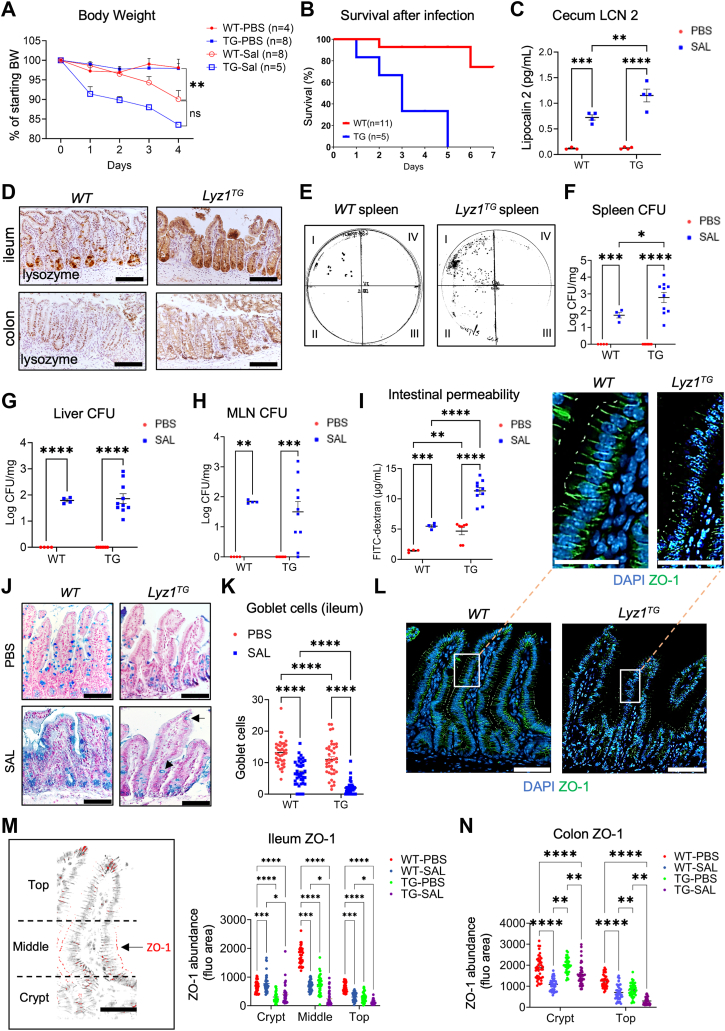
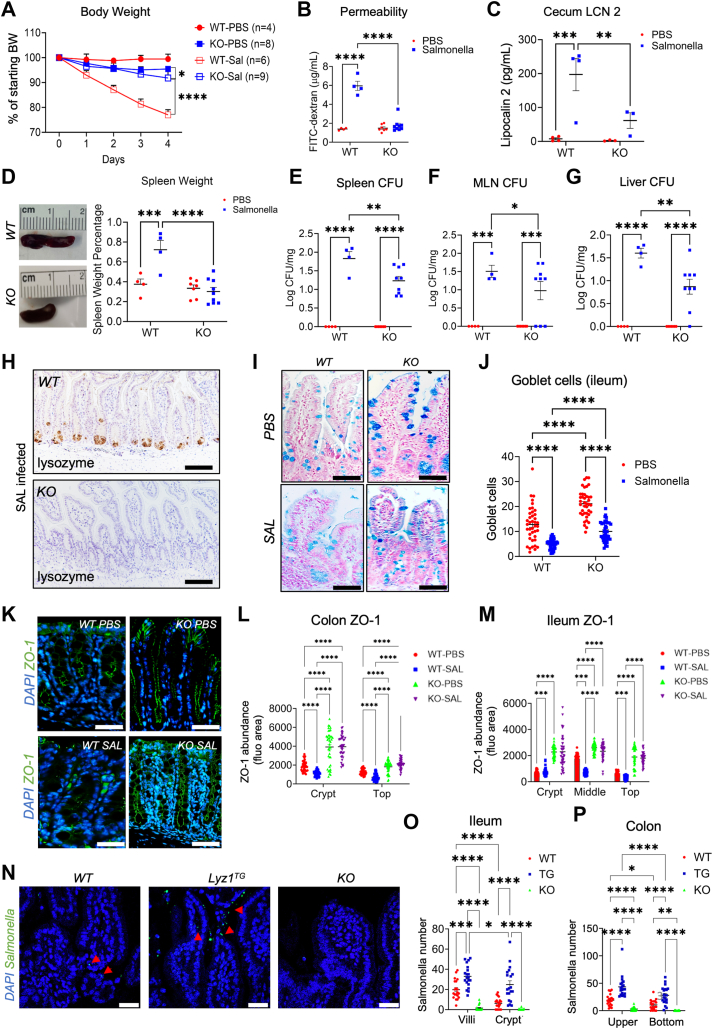
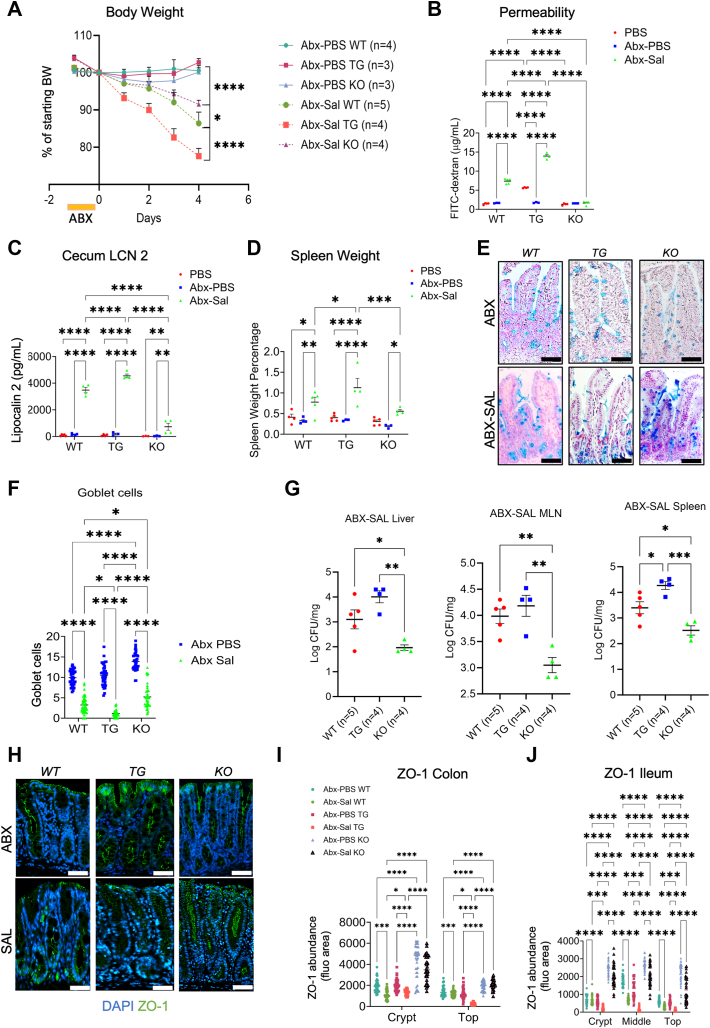
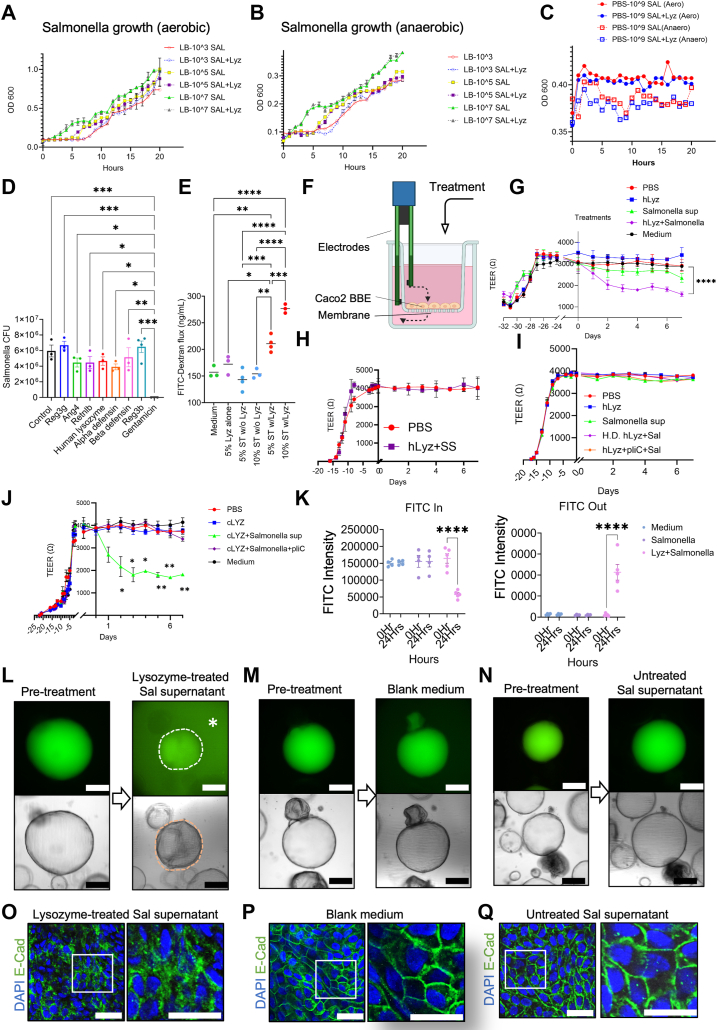
Lysozyme is a β-1,4-glycosidase that hydrolyzes the polysaccharide backbone of bacterial cell walls. With an additional bactericidal function mediated by a separate protein domain, lysozyme is considered a uniquely important antimicrobial molecule contributing to the host's innate immune response to infection. Elevated lysozyme production is found in various inflammatory conditions while patients with genetic risks for inflammatory bowel diseases demonstrate abnormal lysozyme expression, granule packaging, and secretion in Paneth cells. However, it remains unclear how a gain- or loss-of-function in host lysozyme may impact the host inflammatory responses to pathogenic infection. We challenged Lyz1 and ectopic Lyz1-expressing (Villin-Lyz1) mice with S. Typhimurium and then comprehensively assessed the inflammatory disease progression. We conducted proteomics analysis to identify molecules derived from human lysozyme-mediated processing of live Salmonella. We examined the barrier-impairing effects of these identified molecules in human intestinal epithelial cell monolayer and enteroids. Lyz1 mice are protected from infection in terms of morbidity, mortality, and barrier integrity, whereas Villin-Lyz1 mice demonstrate exacerbated infection and inflammation. The growth and invasion of Salmonella in vitro are not affected by human or chicken lysozyme, whereas lysozyme encountering of live Salmonella stimulates the release of barrier-disrupting factors, InvE-sipC and Lpp1, which directly or indirectly impair the tight junctions. The direct engagement of host intestinal lysozyme with an enteric pathogen such as Salmonella promotes the release of virulence factors that are barrier-impairing and pro-inflammatory. Controlling lysozyme function may help alleviate the inflammatory progression.
溶菌酶是一种β-1,4-糖苷酶,可水解细菌细胞壁的多糖骨架。溶菌酶具有通过独立的蛋白质结构域介导的额外杀菌功能,被认为是一种独特的重要抗菌分子,有助于宿主对感染的先天免疫反应。在各种炎症情况下会发现溶菌酶产量升高,而具有炎症性肠病遗传风险的患者则表现出潘氏细胞中溶菌酶表达、颗粒包装和分泌的异常。然而,尚不清楚宿主溶菌酶的功能获得或丧失如何影响宿主对致病感染的炎症反应。我们用鼠伤寒沙门氏菌挑战 Lyz1 和异位表达 Lyz1(Villin-Lyz1)的小鼠,然后全面评估炎症疾病的进展。我们进行蛋白质组学分析以鉴定来自人溶菌酶介导的活沙门氏菌加工的分子。我们检查了这些鉴定出的分子在人肠上皮细胞单层和类器官中的屏障破坏作用。在发病率、死亡率和屏障完整性方面,Lyz1 小鼠受到感染的保护,而 Villin-Lyz1 小鼠则表现出感染和炎症的加剧。活 Salmonella 刺激屏障破坏因子 InvE-sipC 和 Lpp1 的释放,而体外 Salmonella 的生长和侵袭不受人或鸡溶菌酶的影响,这些因子直接或间接破坏紧密连接。宿主肠道溶菌酶与沙门氏菌等肠道病原体的直接相互作用促进了释放具有屏障破坏和促炎作用的毒力因子。控制溶菌酶的功能可能有助于减轻炎症的进展。