Sung Soo-Eun, Lim Ju-Hyeon, Kang Kyung-Ku, Choi Joo-Hee, Lee Sijoon, Sung Minkyoung, Park Wook-Tae, Kim Young-In, Seo Min-Soo, Lee Gun Woo
Preclinical Research Center, Daegu-Gyeongbuk Medical Innovation Foundation (K-MEDI hub), Daegu, 41061, Republic of Korea.
Korea Biome Research Lab, Kolmar Korea Holdings, 61Heolleungro 8-gil, Seoul, 06800, Republic of Korea.
Clin Proteomics. 2024 Jun 2;21(1):39. doi: 10.1186/s12014-024-09489-2.
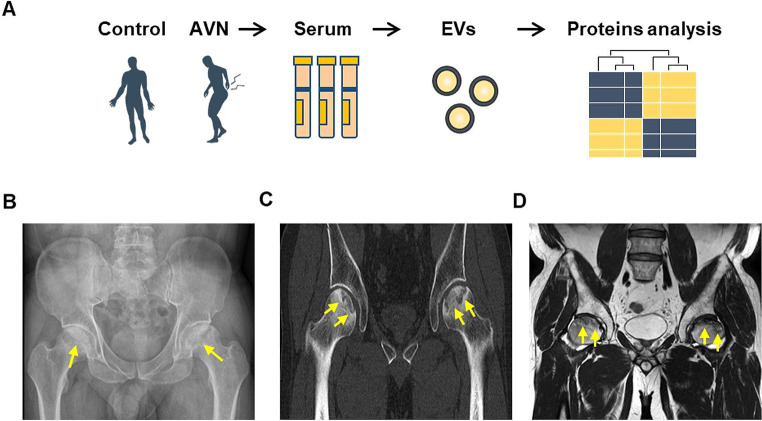
Avascular necrosis (AVN) is a medical condition characterized by the destruction of bone tissue due to a diminished blood supply. When the rate of tissue destruction surpasses the rate of regeneration, effective treatment becomes challenging, leading to escalating pain, arthritis, and bone fragility as the disease advances. A timely diagnosis is imperative to prevent and initiate proactive treatment for osteonecrosis. We explored the potential of differentially expressed proteins in serum-derived extracellular vesicles (EVs) as biomarkers for AVN of the femoral head in humans. We analyzed the genetic material contained in serum-derived exosomes from patients for early diagnosis, treatment, and prognosis of avascular necrosis.
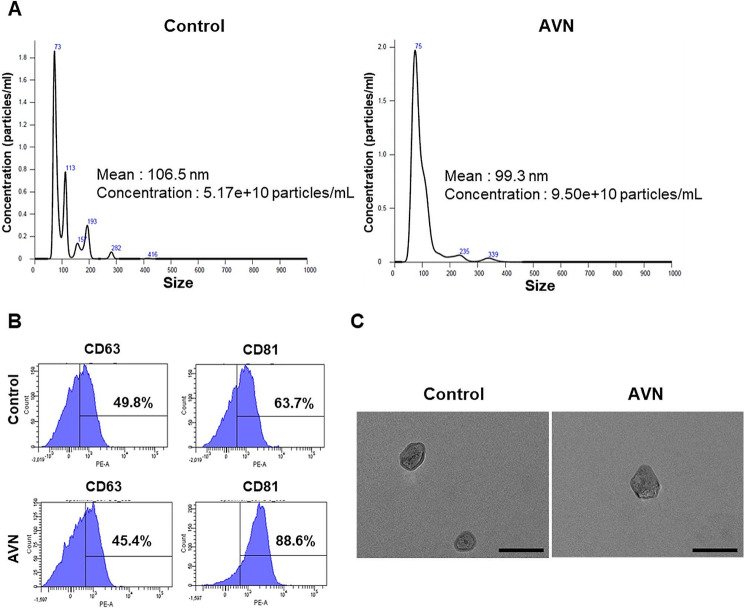
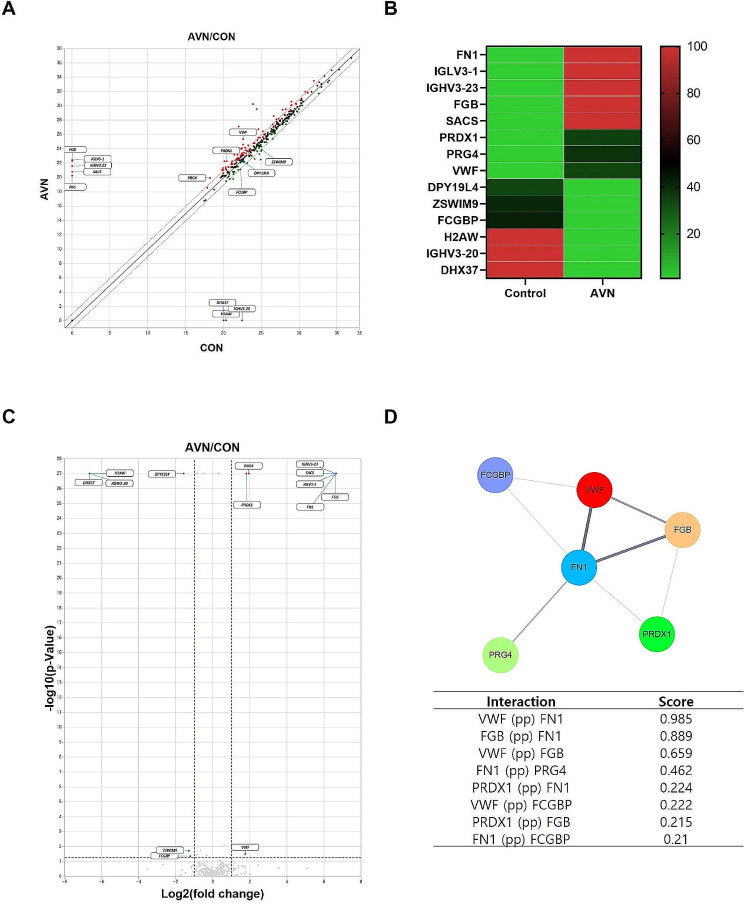
EVs were isolated from the serum of both patients with AVN and a control group of healthy individuals. Proteomic analyses were conducted to compare the expression patterns of these proteins by proteomic analysis using LC-MS/MS.
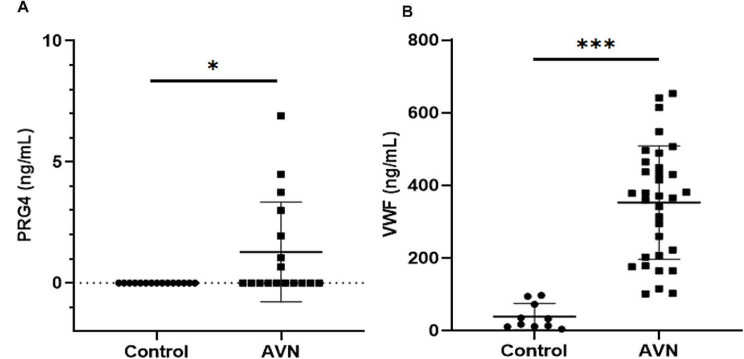
Our results show that the levels of IGHV3-23, FN1, VWF, FGB, PRG4, FCGBP, and ZSWIM9 were upregulated in the EVs of patients with AVN compared with those of healthy controls. ELISA results showed that VWF and PRG4 were significantly upregulated in the patients with AVN.
These findings suggest that these EV proteins could serve as promising biomarkers for the early detection and diagnosis of AVN. Early diagnosis is paramount for effective treatment, and the identification of new osteonecrosis biomarkers is essential to facilitate swift diagnosis and proactive intervention. Our study provides novel insights into the identification of AVN-related biomarkers that can enhance clinical management and treatment outcomes.
缺血性坏死(AVN)是一种由于血液供应减少导致骨组织破坏的病症。当组织破坏速度超过再生速度时,有效治疗变得具有挑战性,随着疾病进展会导致疼痛加剧、关节炎和骨质脆弱。及时诊断对于预防和启动股骨头坏死的积极治疗至关重要。我们探讨了血清来源的细胞外囊泡(EVs)中差异表达蛋白作为人类股骨头AVN生物标志物的潜力。我们分析了患者血清来源外泌体中所含的遗传物质,用于缺血性坏死的早期诊断、治疗和预后评估。
从AVN患者和健康个体对照组的血清中分离出EVs。通过使用液相色谱-串联质谱(LC-MS/MS)进行蛋白质组学分析,比较这些蛋白质的表达模式。
我们的结果表明,与健康对照组相比,AVN患者的EVs中IGHV3-23、FN1、VWF、FGB、PRG4、FCGBP和ZSWIM9的水平上调。酶联免疫吸附测定(ELISA)结果显示,AVN患者中VWF和PRG4显著上调。
这些发现表明,这些EV蛋白可作为AVN早期检测和诊断的有前景的生物标志物。早期诊断对于有效治疗至关重要,识别新的骨坏死生物标志物对于促进快速诊断和积极干预至关重要。我们的研究为识别可改善临床管理和治疗结果的AVN相关生物标志物提供了新的见解。