Yan Lei, Chen Chu, Wang Lingling, Hong Hongxiang, Wu Chunshuai, Huang Jiayi, Jiang Jiawei, Chen Jiajia, Xu Guanhua, Cui Zhiming
The First People's Hospital of Nantong, The Second Affiliated Hospital of Nantong University, Research Institute for Spine and Spinal Cord Disease of Nantong University, Nantong, Jiangsu 226019, P.R. China.
Exp Ther Med. 2024 May 22;28(1):292. doi: 10.3892/etm.2024.12581. eCollection 2024 Jul.
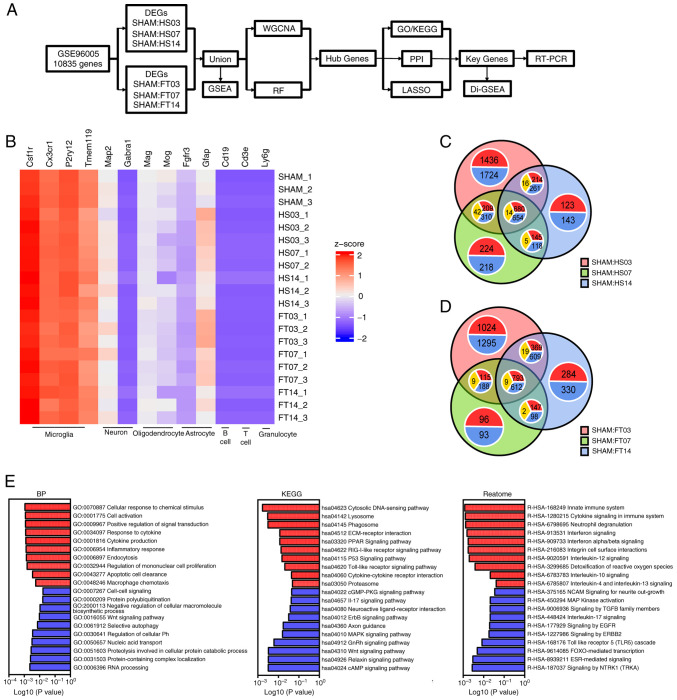
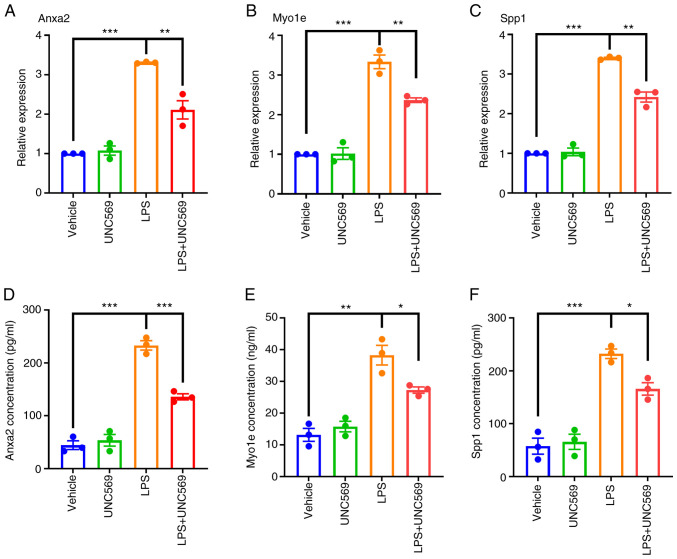
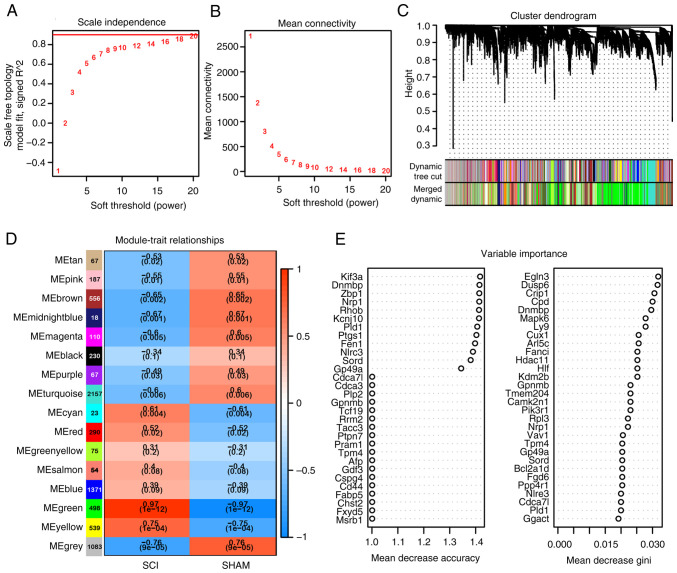
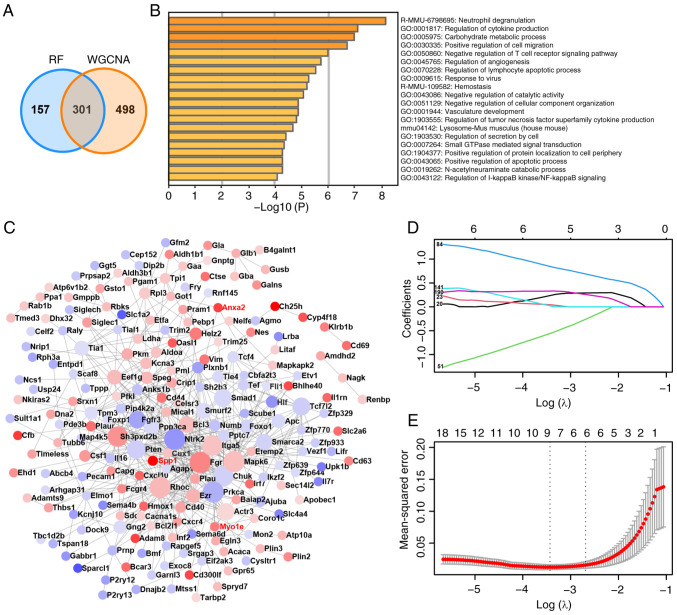
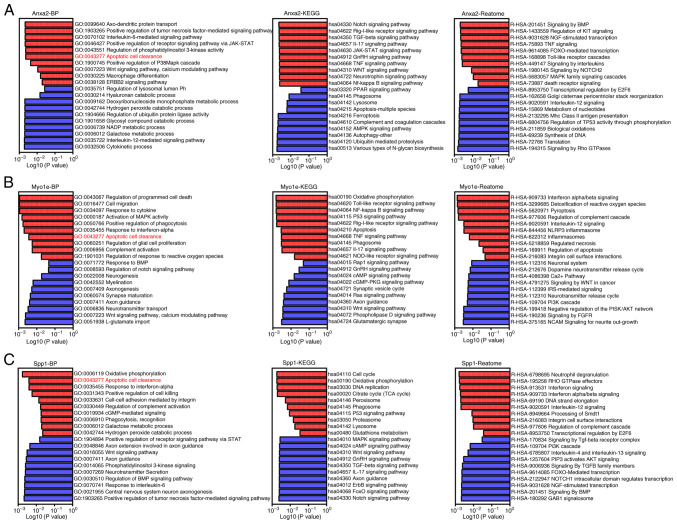
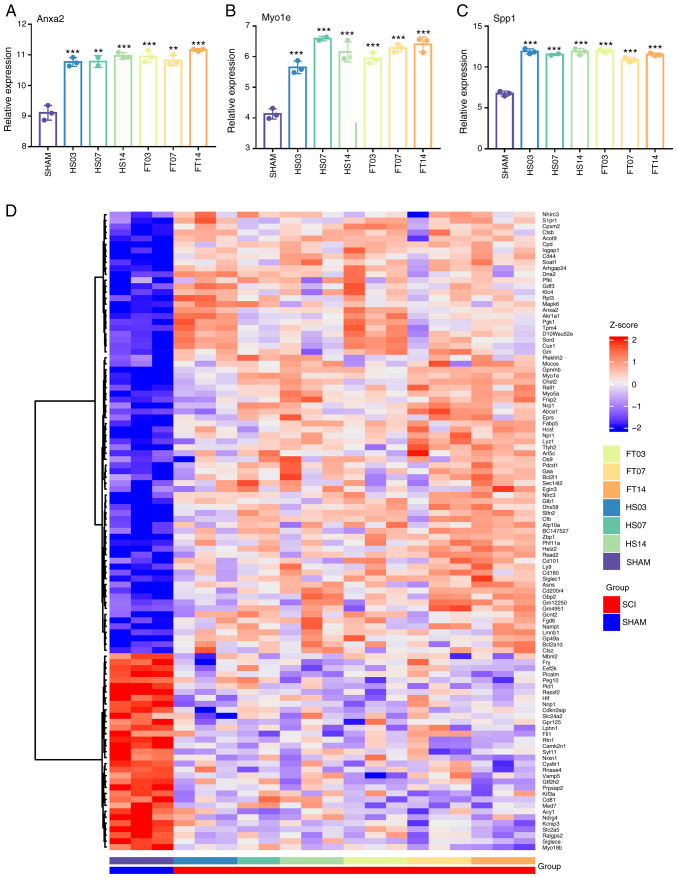
Spinal cord injury (SCI) is a severe neurological complication following spinal fracture, which has long posed a challenge for clinicians. Microglia play a dual role in the pathophysiological process after SCI, both beneficial and detrimental. The underlying mechanisms of microglial actions following SCI require further exploration. The present study combined three different machine learning algorithms, namely weighted gene co-expression network analysis, random forest analysis and least absolute shrinkage and selection operator analysis, to screen for differentially expressed genes in the GSE96055 microglia dataset after SCI. It then used protein-protein interaction networks and gene set enrichment analysis with single genes to investigate the key genes and signaling pathways involved in microglial function following SCI. The results indicated that microglia not only participate in neuroinflammation but also serve a significant role in the clearance mechanism of apoptotic cells following SCI. Notably, bioinformatics analysis and lipopolysaccharide + UNC569 (a MerTK-specific inhibitor) stimulation of BV2 cell experiments showed that the expression levels of Anxa2, Myo1e and Spp1 in microglia were significantly upregulated following SCI, thus potentially involved in regulating the clearance mechanism of apoptotic cells. The present study suggested that Anxa2, Myo1e and Spp1 may serve as potential targets for the future treatment of SCI and provided a theoretical basis for the development of new methods and drugs for treating SCI.
脊髓损伤(SCI)是脊柱骨折后一种严重的神经并发症,长期以来一直给临床医生带来挑战。小胶质细胞在SCI后的病理生理过程中发挥着双重作用,既有有益的一面,也有有害的一面。SCI后小胶质细胞作用的潜在机制需要进一步探索。本研究结合了三种不同的机器学习算法,即加权基因共表达网络分析、随机森林分析和最小绝对收缩和选择算子分析,以筛选SCI后GSE96055小胶质细胞数据集中的差异表达基因。然后利用蛋白质-蛋白质相互作用网络和单基因基因集富集分析来研究SCI后参与小胶质细胞功能的关键基因和信号通路。结果表明,小胶质细胞不仅参与神经炎症,而且在SCI后凋亡细胞的清除机制中也发挥着重要作用。值得注意的是,生物信息学分析以及脂多糖+UNC569(一种MerTK特异性抑制剂)对BV2细胞的刺激实验表明,SCI后小胶质细胞中Anxa2、Myo1e和Spp1的表达水平显著上调,因此可能参与调节凋亡细胞的清除机制。本研究表明,Anxa2、Myo1e和Spp1可能作为未来治疗SCI的潜在靶点,并为开发治疗SCI的新方法和药物提供了理论依据。