Zhang Xinzhu, Wang Yameng, Zhang Wanze, Wang Binhao, Zhao Zitong, Ma Ning, Song Jianshi, Tian Jiaming, Cai Jianning, Zhang Xiaolin
Department of Epidemiology and Statistics, School of Public Health, Hebei Medical University, Hebei Province Key Laboratory of Environment and Human Health, Shijiazhuang, China.
Department of Epidemic Control and Prevention, Center for Disease Prevention and Control of Shijiazhuang City, Shijiazhuang, China.
Heliyon. 2024 May 18;10(11):e31250. doi: 10.1016/j.heliyon.2024.e31250. eCollection 2024 Jun 15.
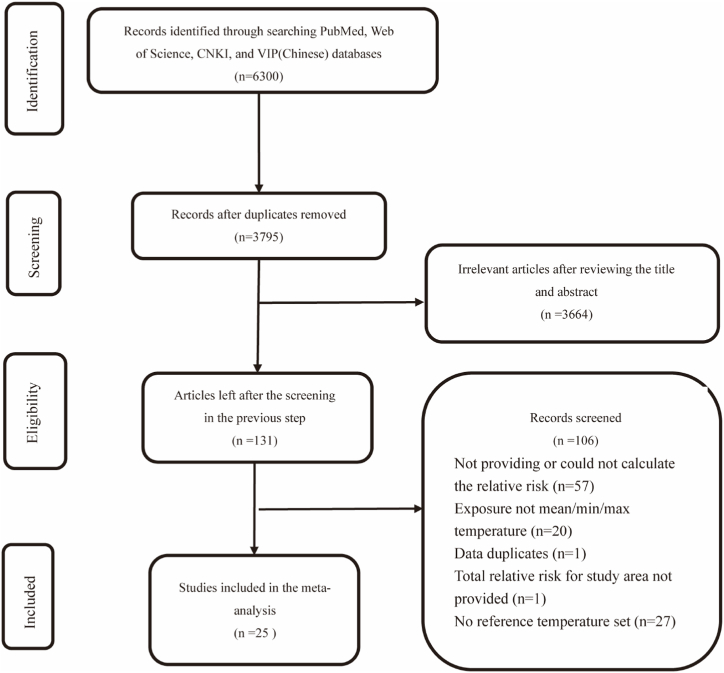
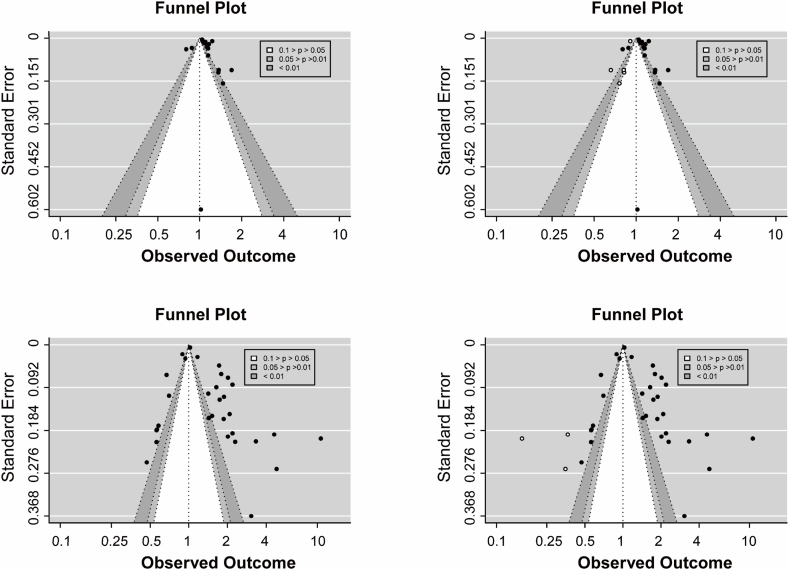
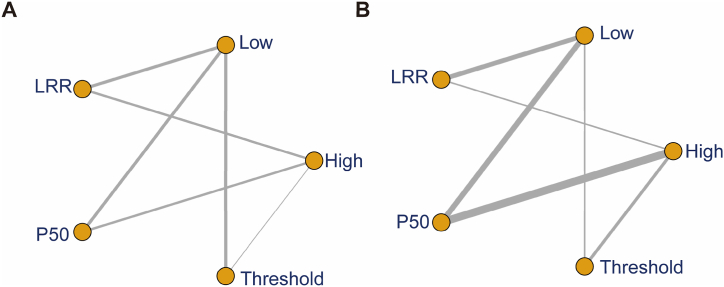
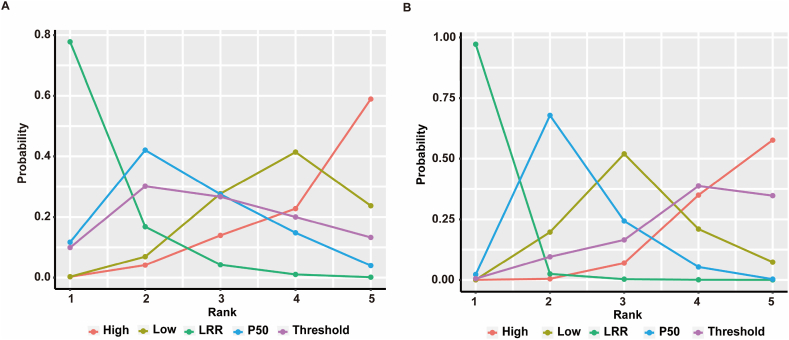
This study aimed to ascertain the delayed effects of various exposure temperatures on infectious diarrhea. We performed a Bayesian random-effects network meta-analysis to calculate relative risks () with 95 % confidence intervals (95 % CI). The heterogeneity was analyzed by subgroup analysis. There were 25 cross-sectional studies totaling 6858735 patients included in this analysis, with 12 articles each investigating the effects of both hyperthermia and hypothermia. Results revealed that both high temperature (single = 1.22, 95%CI:1.04-1.44, cum = 2.96, 95%CI:1.60-5.48, P < 0.05) and low temperature (single = 1.17, 95%CI:1.02-1.37, cum = 2.19, 95%CI:1.33-3.64, P < 0.05) significantly increased the risk of infectious diarrhea, while high temperature caused greater. As-sociations with strengthening in bacillary dysentery were found for high temperatures (cum = 2.03, 95%CI:1.41-3.01, < 0.05; single = 1.17, 95%CI:0.90-1.62, > 0.05), while the statistical significance of low temperatures in lowering bacterial dysentery had vanished. This investigation examined that high temperature and low temperature were the conditions that posed the greatest risk for infectious diarrhea. This research offers fresh perspectives on preventing infectious diarrhea and will hopefully enlighten future studies on the impact of temperature management on infectious diarrhea.
本研究旨在确定不同暴露温度对感染性腹泻的延迟影响。我们进行了一项贝叶斯随机效应网络荟萃分析,以计算相对风险(RR)及95%置信区间(95%CI)。通过亚组分析来分析异质性。本分析纳入了25项横断面研究,共计6858735例患者,其中12篇文章分别研究了高温和低温的影响。结果显示,高温(单次RR = 1.22,95%CI:1.04 - 1.44,累积RR = 2.96,95%CI:1.60 - 5.48,P < 0.05)和低温(单次RR = 1.17,95%CI:1.02 - 1.37,累积RR = 2.19,95%CI:1.33 - 3.64,P < 0.05)均显著增加感染性腹泻风险,且高温导致的风险更高。高温与细菌性痢疾的关联增强(累积RR = 2.03,95%CI:1.41 - 3.01,P < 0.05;单次RR = 1.17,95%CI:0.90 - 1.62,P > 0.05),而低温降低细菌性痢疾的统计学意义已消失。本调查表明,高温和低温是感染性腹泻风险最大的条件。本研究为预防感染性腹泻提供了新的视角,并有望为未来关于温度管理对感染性腹泻影响的研究提供启示。