Wang Kaijun, Ma Jie, Li Yunxia, Han Qi, Yin Zhangzheng, Zhou Miao, Luo Minyi, Chen Jiayi, Xia Siting
College of Animal Science and Technology, State Key Laboratory for Conservation and Utilization of Subtropical Agro-bioresources, Guangxi University, Nanning, Guangxi, China.
Animal Nutritional Genome and Germplasm Innovation Research Center, College of Animal Science and Technology, Hunan Agricultural University, Changsha, Hunan, China.
Front Nutr. 2022 Nov 3;9:1024722. doi: 10.3389/fnut.2022.1024722. eCollection 2022.
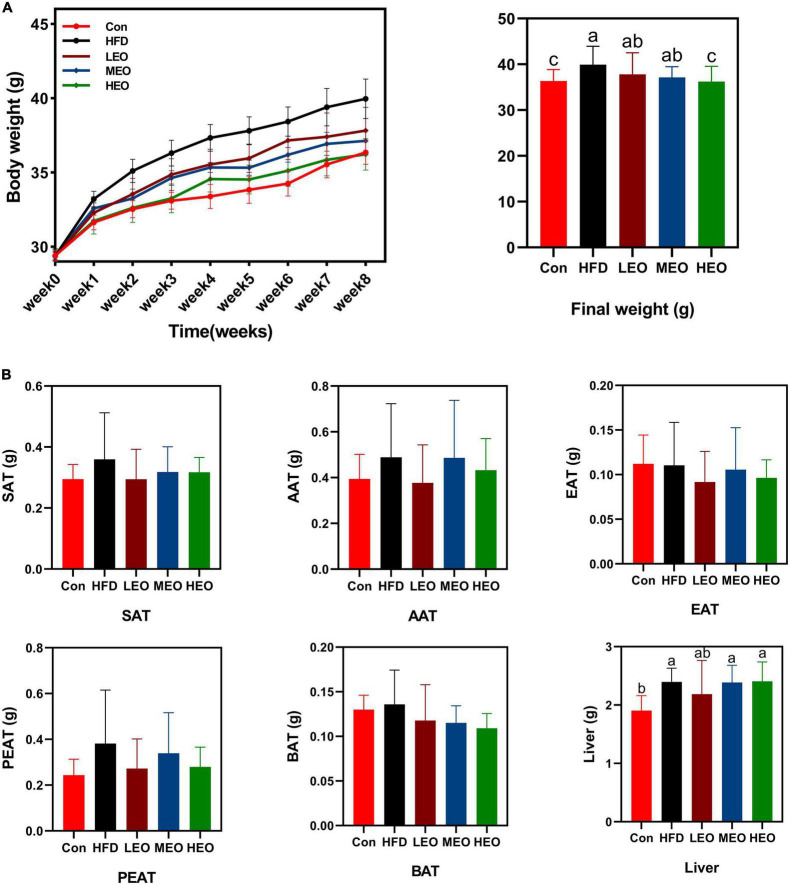
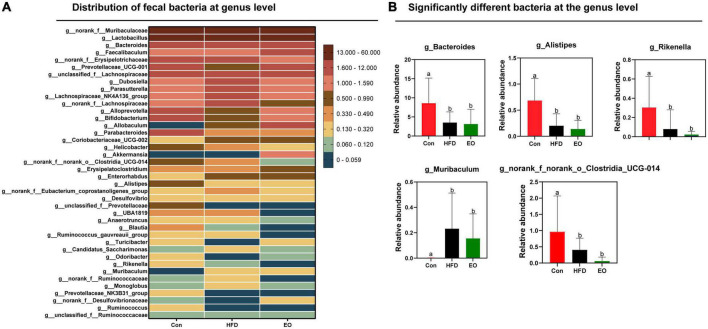
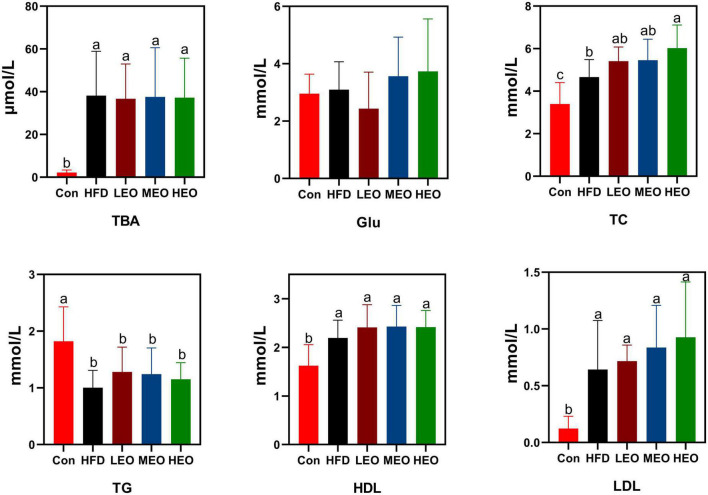
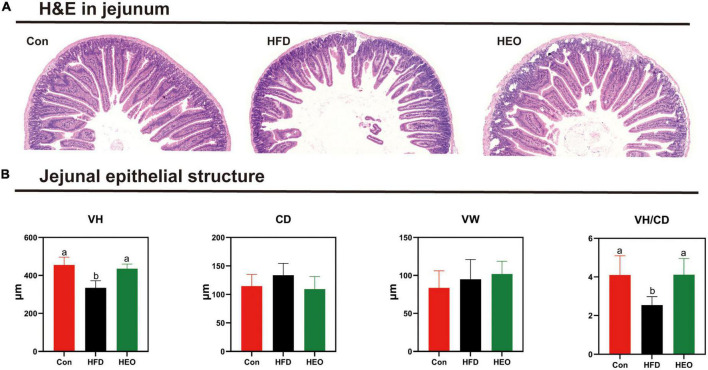
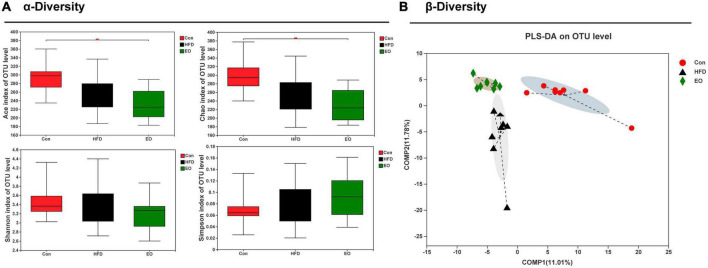
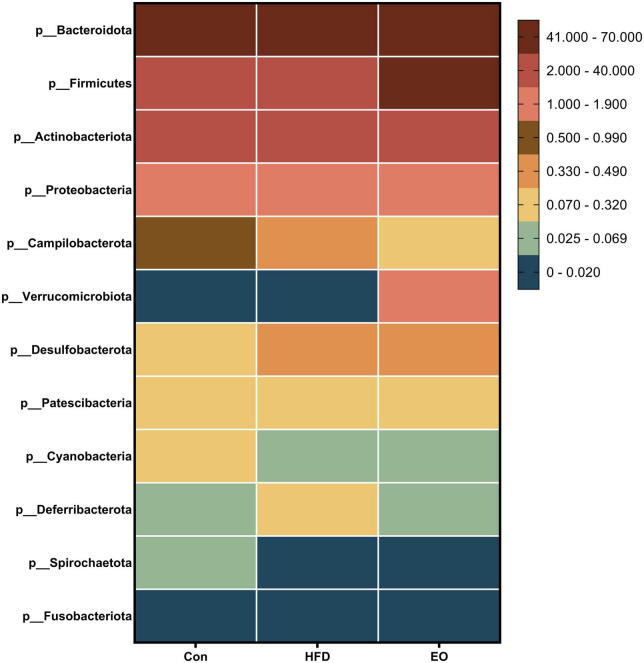
Artemisia argyi leaf is a well-known species in traditional Chinese medicine, and its essential oil (AAEO) has been identified to exert various physiological activities. The aim of this study was to investigate the effects of AAEO on lipid metabolism and the potential microbial role in high-fat diet (HFD)-fed mice. A total of 50 male mice were assigned to five groups for feeding with a control diet (Con), a high-fat diet (HFD), and the HFD plus the low (LEO), medium (MEO), and high (HEO) doses of AAEO. The results demonstrated that dietary HFD markedly increased the body weight gain compared with the control mice ( < 0.05), while mice in the HEO group showed a lower body weight compared to the HFD group ( < 0.05). The weight of fatty tissues and serum lipid indexes (TBA, HDL, and LDL levels) were increased in response to dietary HFD, while there was no significant difference in AAEO-treated mice ( < 0.05). The jejunal villus height was dramatically decreased in HFD-fed mice compared with the control mice, while HEO resulted in a dramatically higher villus height than that in the HFD group ( < 0.05). Microbial α-diversity was not changed in this study, but β-diversity indicated that microbial compositions differed in control, HFD, and EO subjects. At the genus level, the relative abundance of was greater ( < 0.05) in the feces of the Con group when compared to the HFD and EO groups. On the contrary, the abundance of was lower in the Con group compared to the HFD and EO groups ( < 0.05). Although the in the EO group was lower than that in the HFD group, there was no statistically notable difference between the HFD and EO groups ( > 0.05). Simultaneously, the relative abundance of ( < 0.05) and ( < 0.05) was also dramatically higher in the Con group than in the HFD and EO groups. The abundance of was lower in the HFD or EO group than in the Con group ( < 0.05). In conclusion, the results suggested that HEO could affect body weight and lipid metabolism without gut microbes in ICR mice, and it was beneficial for the structure of the jejunal epithelial tissue.
艾叶是中药中一种广为人知的植物,其精油(AAEO)已被证实具有多种生理活性。本研究旨在探讨AAEO对高脂饮食(HFD)喂养小鼠脂质代谢的影响以及潜在的微生物作用。总共50只雄性小鼠被分为五组,分别给予对照饮食(Con)、高脂饮食(HFD)以及添加低剂量(LEO)、中剂量(MEO)和高剂量(HEO)AAEO的高脂饮食。结果表明,与对照小鼠相比,饮食HFD显著增加了体重增加(<0.05),而HEO组小鼠的体重低于HFD组(<0.05)。饮食HFD导致脂肪组织重量和血清脂质指标(TBA、HDL和LDL水平)升高,而AAEO处理的小鼠则无显著差异(<0.05)。与对照小鼠相比,HFD喂养的小鼠空肠绒毛高度显著降低,而HEO导致绒毛高度显著高于HFD组(<0.05)。本研究中微生物α多样性未发生变化,但β多样性表明对照、HFD和EO组的微生物组成存在差异。在属水平上,与HFD组和EO组相比,Con组粪便中 的相对丰度更高(<0.05)。相反,与HFD组和EO组相比,Con组中 的丰度较低(<0.05)。虽然EO组中的 低于HFD组,但HFD组和EO组之间无统计学显著差异(>0.05)。同时,Con组中 (<0.05)和 (<0.05)的相对丰度也显著高于HFD组和EO组。HFD组或EO组中 的丰度低于Con组(<0.05)。总之,结果表明HEO可在无肠道微生物的情况下影响ICR小鼠的体重和脂质代谢,并且对空肠上皮组织的结构有益。