Ministry for Primary Industries, Upper Hutt, New Zealand.
Department of Ecosystem & Public Health, Faculty of Veterinary Medicine, University of Calgary, Calgary, Alberta, Canada.
PLoS One. 2024 Jun 3;19(6):e0303756. doi: 10.1371/journal.pone.0303756. eCollection 2024.
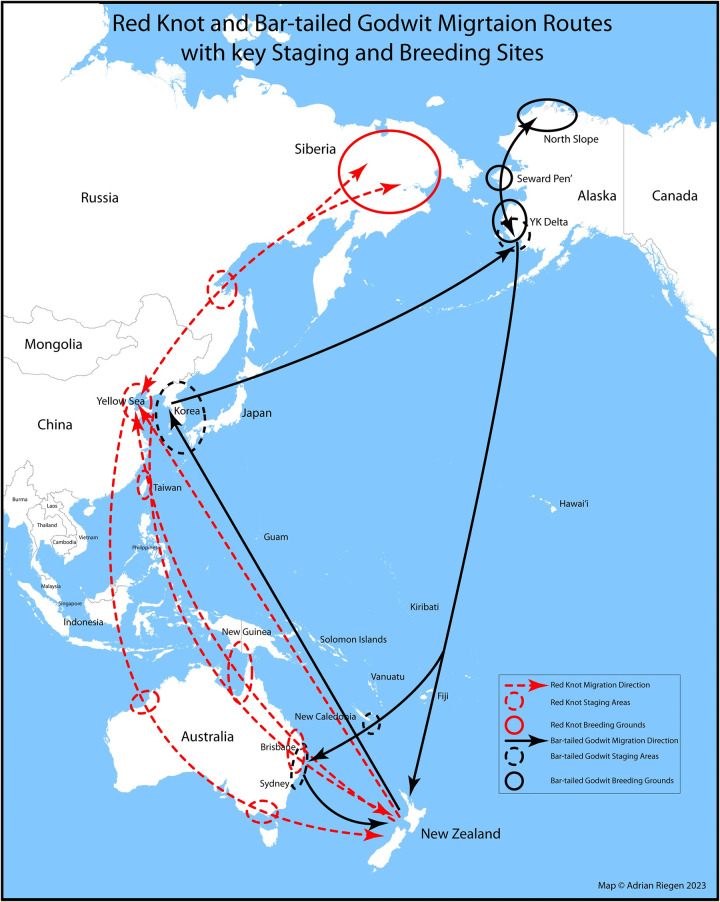
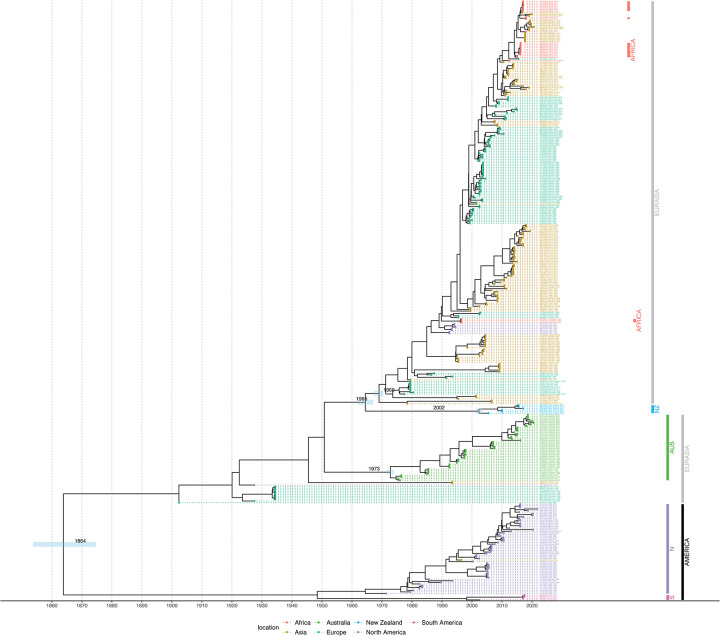
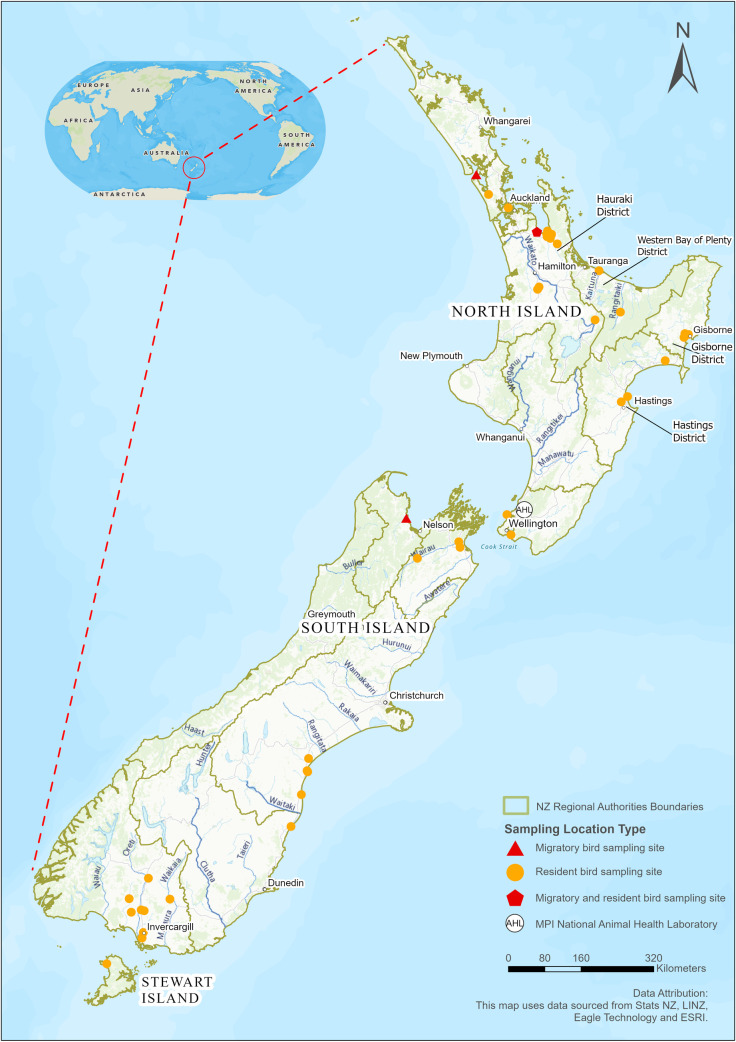
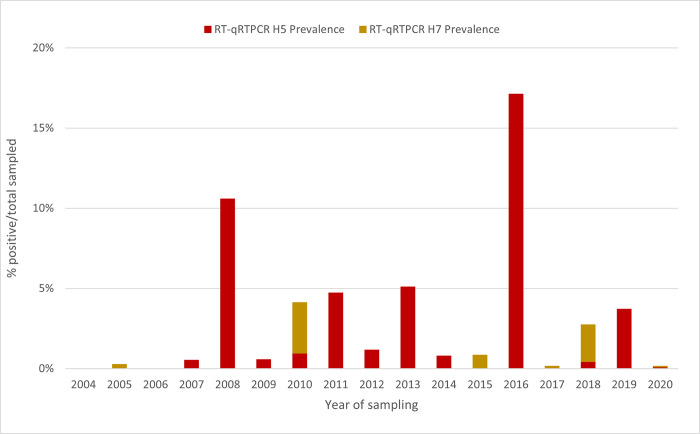
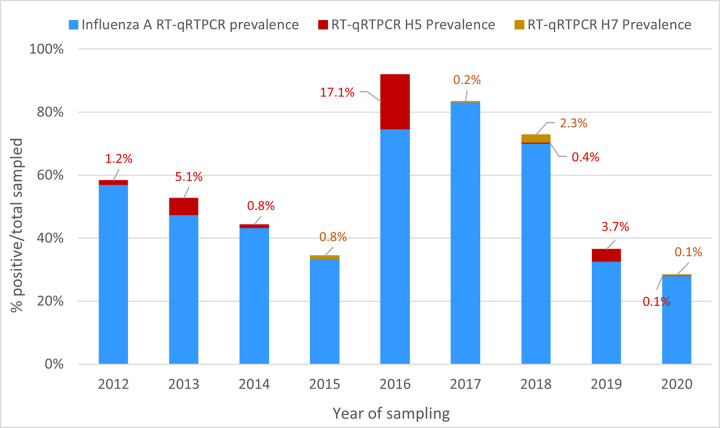
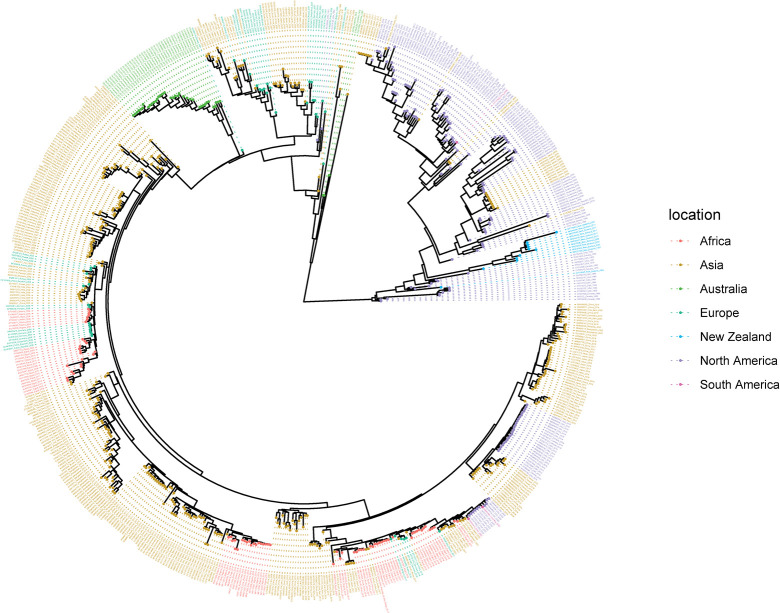
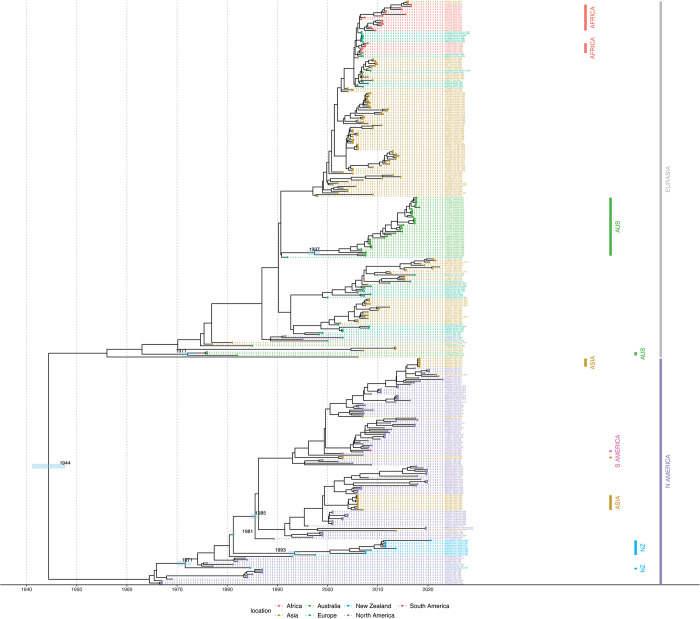
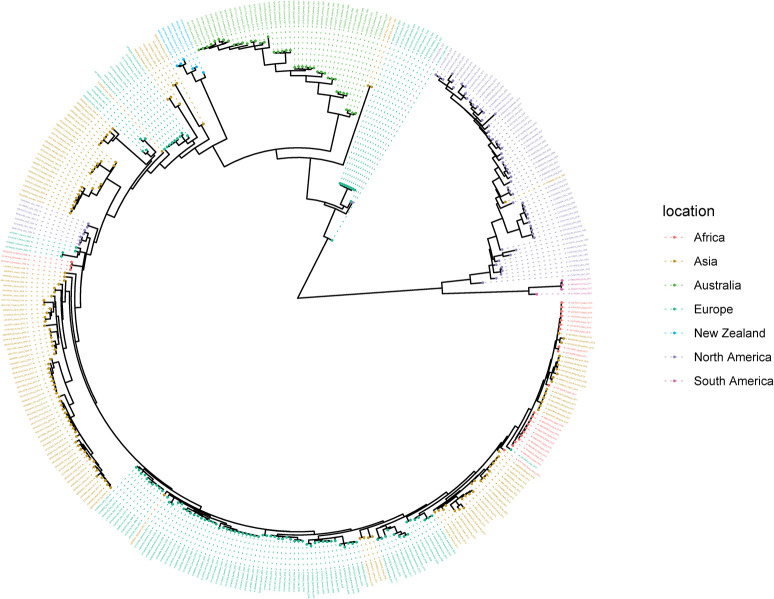
The rapid spread of highly pathogenic avian influenza (HPAI) A (H5N1) viruses in Southeast Asia in 2004 prompted the New Zealand Ministry for Primary Industries to expand its avian influenza surveillance in wild birds. A total of 18,693 birds were sampled between 2004 and 2020, including migratory shorebirds (in 2004-2009), other coastal species (in 2009-2010), and resident waterfowl (in 2004-2020). No avian influenza viruses (AIVs) were isolated from cloacal or oropharyngeal samples from migratory shorebirds or resident coastal species. Two samples from red knots (Calidris canutus) tested positive by influenza A RT-qPCR, but virus could not be isolated and no further characterization could be undertaken. In contrast, 6179 samples from 15,740 mallards (Anas platyrhynchos) tested positive by influenza A RT-qPCR. Of these, 344 were positive for H5 and 51 for H7. All H5 and H7 viruses detected were of low pathogenicity confirmed by a lack of multiple basic amino acids at the hemagglutinin (HA) cleavage site. Twenty H5 viruses (six different neuraminidase [NA] subtypes) and 10 H7 viruses (two different NA subtypes) were propagated and characterized genetically. From H5- or H7-negative samples that tested positive by influenza A RT-qPCR, 326 AIVs were isolated, representing 41 HA/NA combinations. The most frequently isolated subtypes were H4N6, H3N8, H3N2, and H10N3. Multivariable logistic regression analysis of the relations between the location and year of sampling, and presence of AIV in individual waterfowl showed that the AIV risk at a given location varied from year to year. The H5 and H7 isolates both formed monophyletic HA groups. The H5 viruses were most closely related to North American lineages, whereas the H7 viruses formed a sister cluster relationship with wild bird viruses of the Eurasian and Australian lineages. Bayesian analysis indicates that the H5 and H7 viruses have circulated in resident mallards in New Zealand for some time. Correspondingly, we found limited evidence of influenza viruses in the major migratory bird populations visiting New Zealand. Findings suggest a low probability of introduction of HPAI viruses via long-distance bird migration and a unique epidemiology of AIV in New Zealand.
2004 年,高致病性禽流感(HPAI)A(H5N1)病毒在东南亚的迅速传播促使新西兰初级产业部扩大了对野生鸟类的禽流感监测。在 2004 年至 2020 年间,共采集了 18693 只鸟类样本,包括迁徙性涉禽(2004-2009 年)、其他沿海物种(2009-2010 年)和留鸟水禽(2004-2020 年)。从迁徙性涉禽或留鸟沿海物种的泄殖腔或口咽样本中未分离到禽流感病毒(AIVs)。从红腹滨鹬(Calidris canutus)中分离到的 2 个样本通过流感 A RT-qPCR 检测呈阳性,但无法分离到病毒,也无法进行进一步的特征分析。相比之下,15740 只野鸭(Anas platyrhynchos)的 6179 个样本通过流感 A RT-qPCR 检测呈阳性。其中,344 个为 H5 阳性,51 个为 H7 阳性。所有检测到的 H5 和 H7 病毒均为低致病性病毒,这是通过缺乏血凝素(HA)裂解位点的多个碱性氨基酸来确认的。从流感 A RT-qPCR 检测呈阳性但 H5 和 H7 均为阴性的样本中,共分离出 326 株 AIV,代表 41 种 HA/NA 组合。分离到的亚型中最常见的是 H4N6、H3N8、H3N2 和 H10N3。通过多变量逻辑回归分析个体水禽采样地点和年份与 AIV 存在的关系表明,在给定地点,AIV 的风险每年都有所不同。H5 和 H7 分离株均形成单系 HA 组。H5 病毒与北美的谱系最为密切相关,而 H7 病毒与欧亚和澳大利亚谱系的野生鸟类病毒形成姐妹聚类关系。贝叶斯分析表明,H5 和 H7 病毒在新西兰的留鸟中已经循环了一段时间。相应地,我们在访问新西兰的主要候鸟群体中发现了有限的流感病毒证据。研究结果表明,通过远距离鸟类迁徙引入高致病性禽流感病毒的可能性较低,新西兰的 AIV 具有独特的流行病学特征。