Xu Wenfei, Smart Michael, Tilahun Nebiyou, Askari Sajad, Dennis Zachary, Li Houpu, Levinson David
Department of City and Regional Planning, Cornell University, Ithaca, NY 14853.
Edward J. Bloustein School of Planning and Public Policy, Rutgers University, New Brunswick, NJ 08901.
Proc Natl Acad Sci U S A. 2024 Jun 11;121(24):e2402547121. doi: 10.1073/pnas.2402547121. Epub 2024 Jun 3.
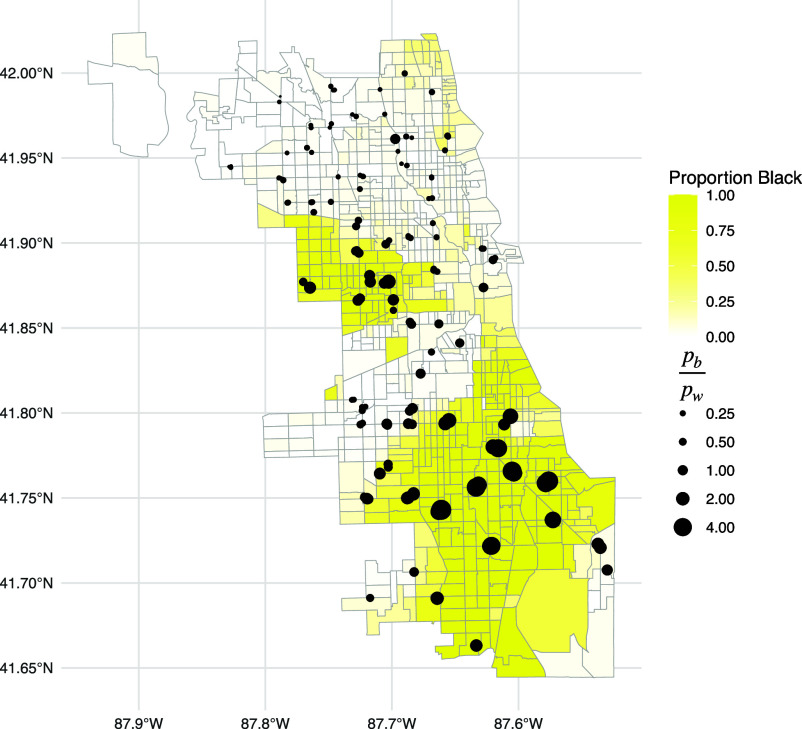
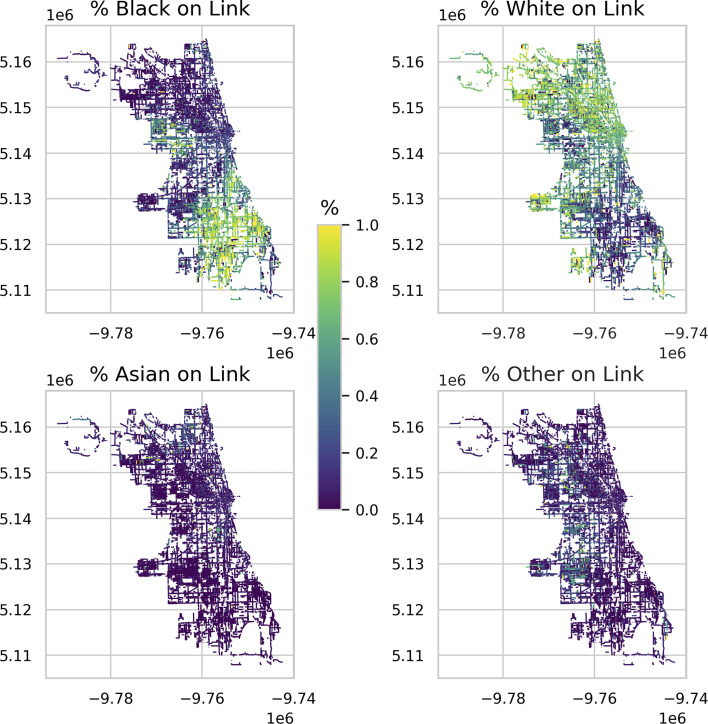
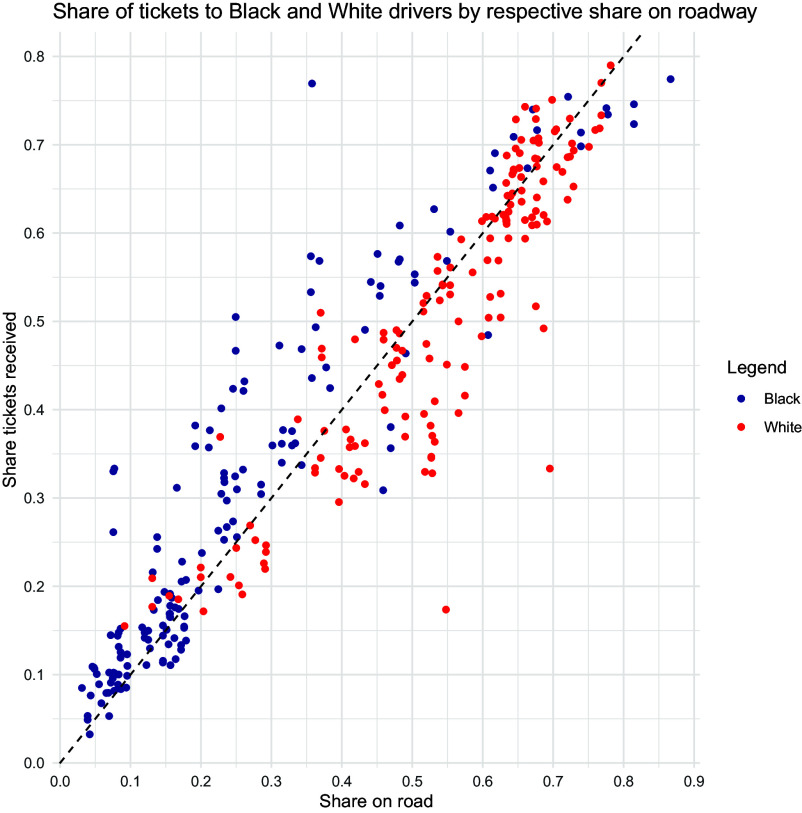
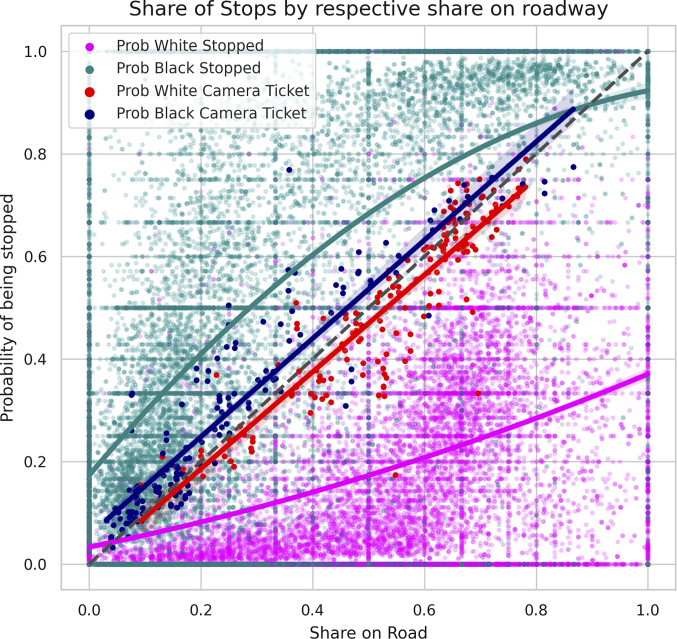
This paper exploits the potential of Global Positioning System datasets sourced from mobile phones to estimate the racial composition of road users, leveraging data from their respective Census block group. The racial composition data encompasses approximately 46 million trips in the Chicago metropolitan region. The research focuses on the relationship between camera tickets and racial composition of drivers vs. police stops for traffic citations and the racial composition in these locations. Black drivers exhibit a higher likelihood of being ticketed by automated speed cameras and of being stopped for moving violations on roads, irrespective of the proportion of White drivers present. The research observes that this correlation attenuates as the proportion of White drivers on the road increases. The citation rate measured by cameras better matches the racial composition of road users on the links with cameras than do stops by police officers. This study therefore presents an important contribution to understanding racial disparities in moving violation stops, with implications for policy interventions and social justice reforms.
本文利用来自手机的全球定位系统数据集的潜力,通过其各自人口普查街区组的数据来估计道路使用者的种族构成。种族构成数据涵盖了芝加哥大都市区约4600万次出行。该研究聚焦于摄像头罚单与司机种族构成之间的关系,以及因交通罚单而被警察拦下的情况与这些地点的种族构成之间的关系。黑人司机被自动测速摄像头开罚单以及因在路上违规行驶而被拦下的可能性更高,无论当时路上白人司机的比例如何。研究发现,随着路上白人司机比例的增加,这种相关性会减弱。与警察拦停相比,摄像头测量的罚单率与设有摄像头路段的道路使用者种族构成更匹配。因此,本研究为理解交通违规拦停中的种族差异做出了重要贡献,对政策干预和社会正义改革具有启示意义。