McClintock Thomas, Fiddes Catherine, Harris Shalee, Embleton Nicholas, Lin Luling, Bloomfield Frank H, Muelbert Mariana
Liggins Institute, University of Auckland, Auckland, New Zealand.
Newcastle Upon Tyne Hospitals NHS Foundation Trust, Newcastle upon Tyne, UK.
Pediatr Res. 2025 Jan;97(1):81-91. doi: 10.1038/s41390-024-03309-x. Epub 2024 Jun 6.
There is an increasing acceptance and use of donor human milk (DHM) in healthy infants. This review investigates the benefits and risks of mothers' own milk (MOM) supplementation with DHM compared to infant formula (IF) in moderate-late preterm (MLP) and early term (ET) infants.
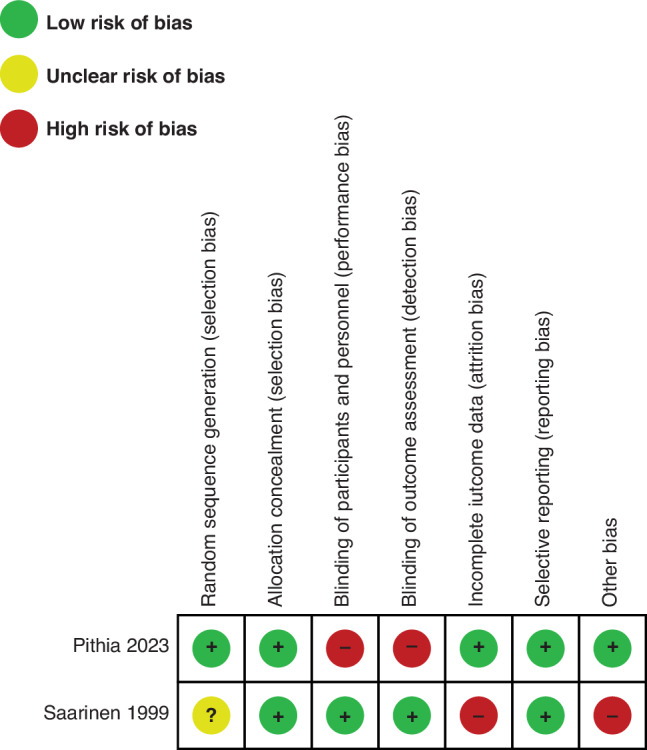
MEDLINE, EMBASE, CINAHL, Scopus, Cochrane CENTRAL and clinical trial registries were searched for studies published up to September 2023. The primary outcome was rates of exclusive breastfeeding (EBF). Certainty of evidence was assessed using GRADE framework. RoB1 and EPHPP were used to assess risk of bias for controlled trials and observational studies, respectively.
Eleven studies involving total of 10,147 infants and six ongoing trials were identified. Studies were of low quality, and the certainty of evidence was assessed as very low. Three studies suggested benefits of DHM compared to IF on EBF at discharge, while two suggested no difference. No clear effect was observed on EBF duration, any breastfeeding, hypoglycemia and morbidity. No health risks were reported.
The effect of supplementing MOM with DHM instead of IF on EBF and other health outcomes is unclear. High-quality studies are required to determine the potential benefits or risks of DHM supplementation in this population.
We identified 11 relevant studies reporting on supplementation of mothers' own milk (MOM) with donor human milk (DHM) compared to infant formula (IF). Studies were of low quality, had heterogeneous outcome definitions and were geographically limited; all except two were observational studies. Limited evidence showed no clear difference on rates of exclusive breastfeeding and other health outcomes. No potential risks were reported. The increasing acceptance and use of DHM in healthy infants highlights the need for future high-quality studies.
健康婴儿对捐赠人乳(DHM)的接受度和使用量日益增加。本综述调查了在中度晚期早产儿(MLP)和足月儿(ET)中,与婴儿配方奶粉(IF)相比,用DHM补充母亲自身乳汁(MOM)的益处和风险。
检索MEDLINE、EMBASE、CINAHL、Scopus、Cochrane CENTRAL和临床试验注册库,查找截至2023年9月发表的研究。主要结局是纯母乳喂养(EBF)率。使用GRADE框架评估证据的确定性。分别使用RoB1和EPHPP评估对照试验和观察性研究的偏倚风险。
共纳入11项研究,涉及10147名婴儿,另有6项正在进行的试验。研究质量较低,证据确定性被评估为极低。三项研究表明,与IF相比,DHM在出院时对EBF有好处,而两项研究表明没有差异。在EBF持续时间、任何形式的母乳喂养、低血糖和发病率方面未观察到明显影响。未报告健康风险。
用DHM而非IF补充MOM对EBF和其他健康结局的影响尚不清楚。需要高质量的研究来确定在该人群中补充DHM的潜在益处或风险。
我们确定了11项相关研究,报告了与婴儿配方奶粉(IF)相比,用捐赠人乳(DHM)补充母亲自身乳汁(MOM)的情况。研究质量较低,结局定义各异,且地域有限;除两项外,其余均为观察性研究。有限的证据表明,在纯母乳喂养率和其他健康结局方面没有明显差异。未报告潜在风险。健康婴儿对DHM的接受度和使用量日益增加,凸显了未来进行高质量研究的必要性。