Moreira-Monteagudo Marta, Leirós-Rodríguez Raquel, Marqués-Sánchez Pilar
Faculty of Physical Therapy, Universidade de Vigo, Campus a Xunqueira, s/n, 36005 Pontevedra, Spain.
SALBIS Research Group, Faculty of Health Sciences, University of León, Astorga Ave. s/n, 24401 Ponferrada, Spain.
Children (Basel). 2022 Jan 24;9(2):150. doi: 10.3390/children9020150.
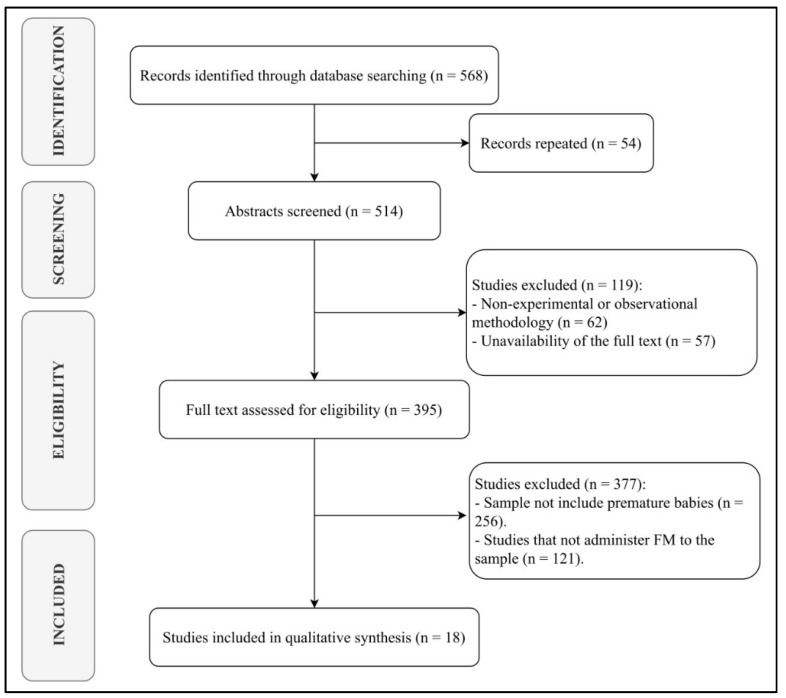
The preterm baby is born at a critical period for the growth and development of the gastrointestinal and neuromotor systems. Breast milk is the food of choice for infants during the first months of life, as it provides multiple short- and long-term benefits to preterm and sick newborns. Despite this, breastfeeding is often nutritionally insufficient, requiring the addition of fortifiers. In other cases, it is important to ensure the necessary nutrients and calories, which can be provided by formula milk or pasteurized and fortified donated human milk. However, the specific guidelines for the use of formula milk have not yet been determined. Therefore, a systematic search was considered necessary in order to identify the effects of feeding with formula milk in preterm infants. A systematic search in Scopus, Medline, Pubmed, Cinahl, ClinicalTrials and Web of Science with the terms Infant Formula and Infant Premature was conducted. A total of 18 articles were selected, of which, eight were experimental and ten were observational studies. Among the objectives of the analyzed investigations, we distinguished nine that compared the effects of feeding with formula milk, breast milk and donated human milk, five that evaluated the effects of different compositions of formula milk and/or fortifiers and four investigations that compared the effects of formula milk and donated human milk. In conclusion, when breast milk is insufficient or unavailable, formula milk is a good nutritional option, due to its higher caloric density and protein content. Nevertheless, the preterm infant's diet should incorporate breast milk to reduce the incidence of morbidities such as necrotizing enterocolitis and sepsis (related to hospital handling of fortifiers and formula milk).
早产儿出生于胃肠和神经运动系统生长发育的关键时期。母乳是婴儿出生后最初几个月的首选食物,因为它对早产和患病新生儿具有多种短期和长期益处。尽管如此,母乳喂养往往在营养上不足,需要添加强化剂。在其他情况下,确保提供必要的营养和热量很重要,这可以通过配方奶或巴氏杀菌及强化的捐赠母乳来实现。然而,使用配方奶的具体指南尚未确定。因此,为了确定配方奶喂养对早产儿的影响,有必要进行系统的检索。我们在Scopus、Medline、Pubmed、Cinahl、ClinicalTrials和Web of Science中使用“婴儿配方奶粉”和“早产婴儿”等术语进行了系统检索。共筛选出18篇文章,其中8篇为实验性研究,10篇为观察性研究。在分析的研究目标中,我们区分出9项比较了配方奶喂养、母乳喂养和捐赠母乳的效果,5项评估了不同配方奶成分和/或强化剂的效果,4项研究比较了配方奶和捐赠母乳的效果。总之,当母乳不足或无法获得时,配方奶因其较高的热量密度和蛋白质含量是一种良好的营养选择。然而,早产儿的饮食应包含母乳,以降低诸如坏死性小肠结肠炎和败血症等疾病的发生率(与医院对强化剂和配方奶的处理有关)。