Key Laboratory for Animal Genetics and Molecular Breeding of Jiangsu Province, College of Animal Science and Technology, Yangzhou University, Yangzhou, 225009, China.
International Joint Research Laboratory in Universities of Jiangsu Province of China for Domestic Animal Germplasm Resources and Genetic Improvement, Yangzhou University, Yangzhou, 225009, China.
Sci Rep. 2024 Jun 6;14(1):13043. doi: 10.1038/s41598-024-63850-x.
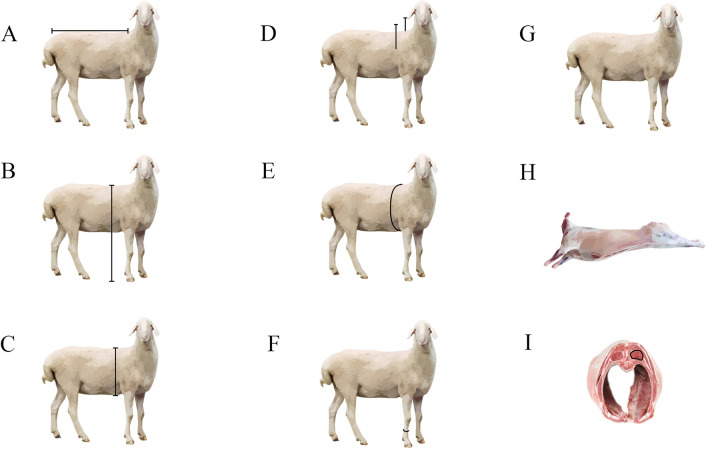
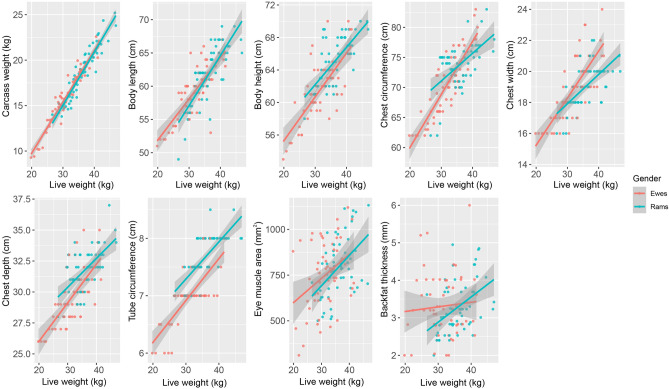
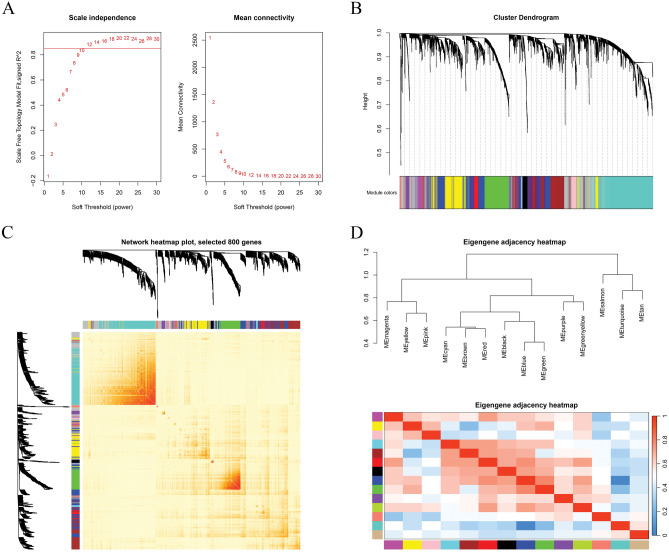
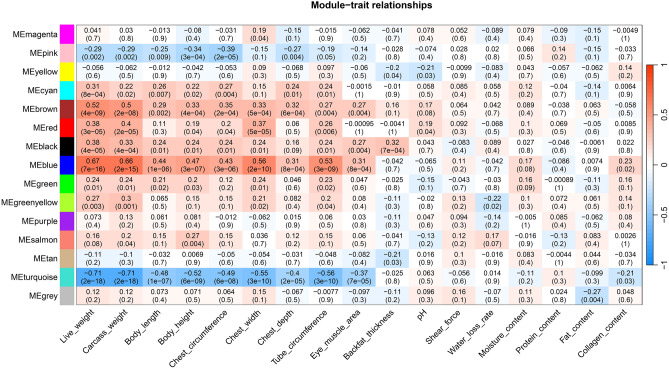
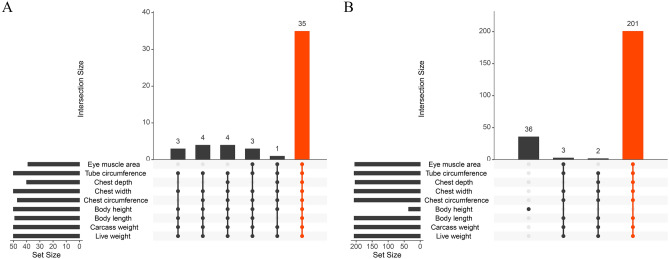
Hu sheep are a unique breed in our country with great reproductive potential, the extent of whose breeding has been steadily rising in recent years. The study subjects in this experiment were 8-month-old Hu sheep (n = 112). First of all, the growth performance, slaughter performance and meat quality of their eye muscle quality were assessed, meanwhile their live weight, carcass weight, body length, body height, chest circumference, chest depth and tube circumference were respectively 33.81 ± 5.47 kg, 17.43 ± 3.21 kg, 60.36 ± 4.41 cm, 63.25 ± 3.88 cm, 72.03 ± 5.02 cm, 30.70 ± 2.32 cm and 7.36 ± 0.56 cm, with a significant difference between rams and ewes (P < 0.01). Following that, transcriptome sequencing was done, and candidate genes related to growth performance were identified using the weighted co-expression network analysis (WGCNA) approach, which was used to identified 15 modules, with the turquoise and blue modules having the strongest association with growth and slaughter performance, respectively. We discovered hub genes such as ARHGAP31, EPS8, AKT3, EPN1, PACS2, KIF1C, C12H1orf115, FSTL1, PTGFRN and IFIH1 in the gene modules connected with growth and slaughter performance. Our research identifies the hub genes associated with the growth and slaughter performance of Hu sheep, which play an important role in their muscle growth, organ and cartilage development, blood vessel development and energy metabolic pathways. Our findings might lead to the development of potentially-useful biomarkers for the selection of growth and slaughterer performance-related attributes of sheep and other livestock.
湖羊是我国特有的品种,具有巨大的繁殖潜力,近年来其繁殖规模稳步上升。本实验的研究对象为 8 月龄湖羊(n=112)。首先评估了其眼肌品质的生长性能、屠宰性能和肉质,同时测量了其活重、胴体重、体斜长、体高、胸围、胸深和管围,分别为 33.81±5.47kg、17.43±3.21kg、60.36±4.41cm、63.25±3.88cm、72.03±5.02cm、30.70±2.32cm 和 7.36±0.56cm,公母羊之间存在显著差异(P<0.01)。随后进行了转录组测序,利用加权共表达网络分析(WGCNA)方法鉴定与生长性能相关的候选基因,共鉴定出 15 个模块,其中绿松石和蓝色模块与生长和屠宰性能的关联最强。我们在与生长和屠宰性能相关的基因模块中发现了 ARHGAP31、EPS8、AKT3、EPN1、PACS2、KIF1C、C12H1orf115、FSTL1、PTGFRN 和 IFIH1 等枢纽基因。本研究确定了与湖羊生长和屠宰性能相关的枢纽基因,这些基因在肌肉生长、器官和软骨发育、血管发育以及能量代谢途径中发挥重要作用。我们的研究结果可能为选择绵羊和其他家畜的生长和屠宰性能相关性状提供潜在有用的生物标志物。