Department of General Surgery, Chongqing Hospital of Traditional Chinese Medicine, Chongqing, 400021, China.
Department of Hepatobiliary Surgery, Guangxi Medical University Cancer Hospital, Nanning, Guangxi Province, 530021, China.
BMC Cancer. 2024 Jun 6;24(1):691. doi: 10.1186/s12885-024-12453-w.
The potential efficacy of metformin in breast cancer (BC) has been hotly discussed but never conclusive. This genetics-based study aimed to evaluate the relationships between metformin targets and BC risk.
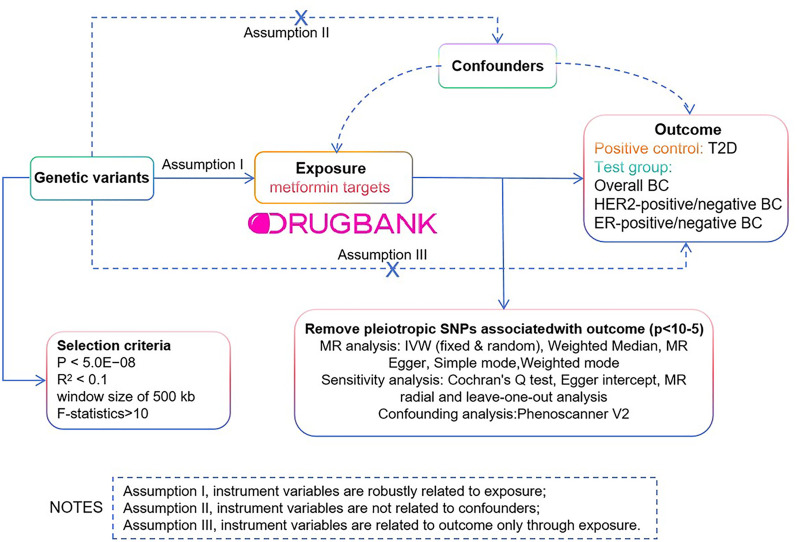
Metformin targets from DrugBank and genome-wide association study (GWAS) data from IEU OpenGWAS and FinnGen were used to investigate the breast cancer (BC)-metformin causal link with various Mendelian Randomization (MR) methods (e.g., inverse-variance-weighting). The genetic association between type 2 diabetes (T2D) and the drug target of metformin was also analyzed as a positive control. Sensitivity and pleiotropic tests ensured reliability.
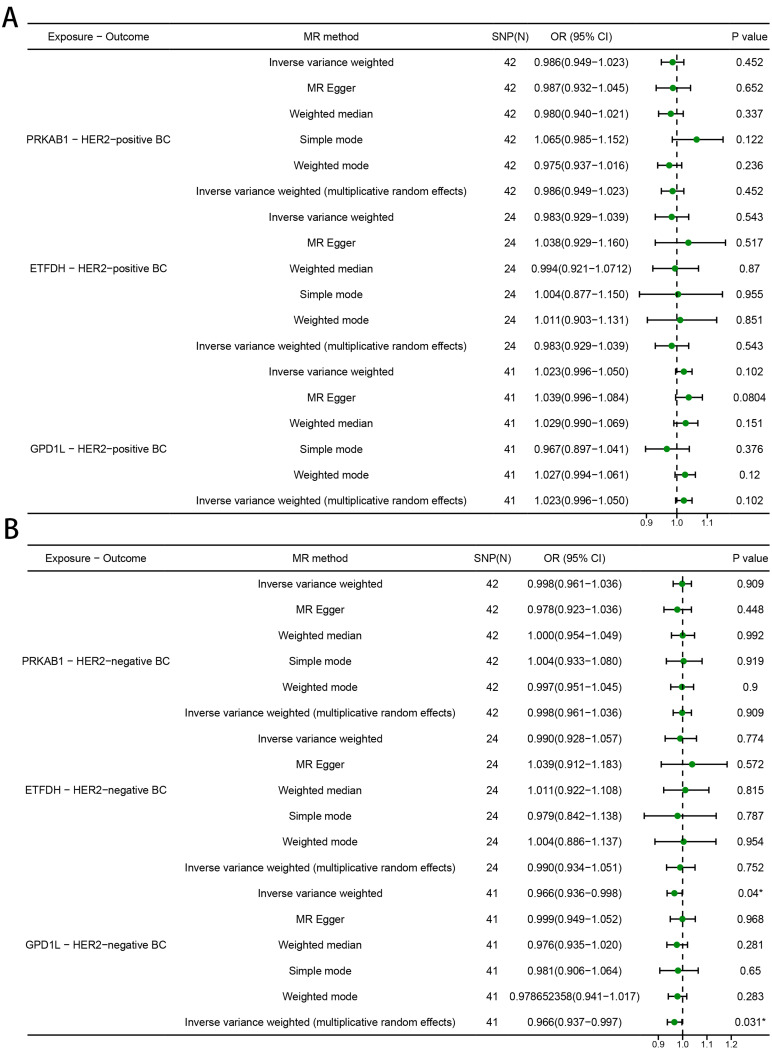
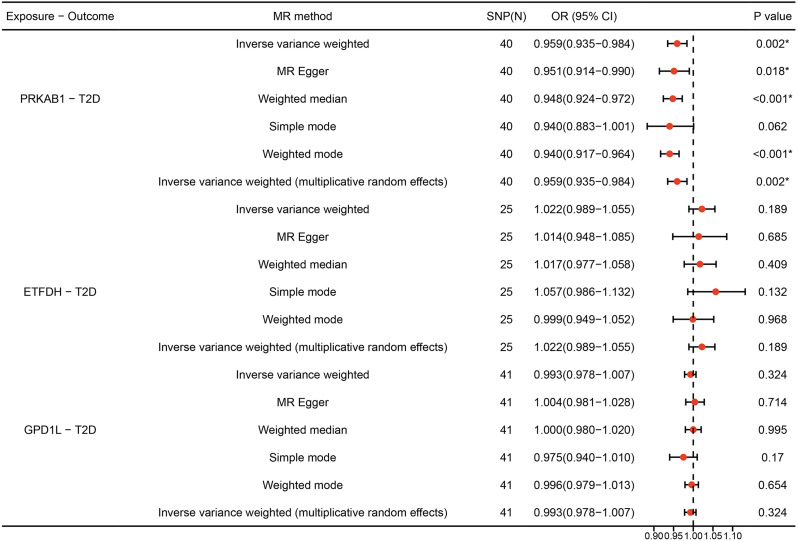
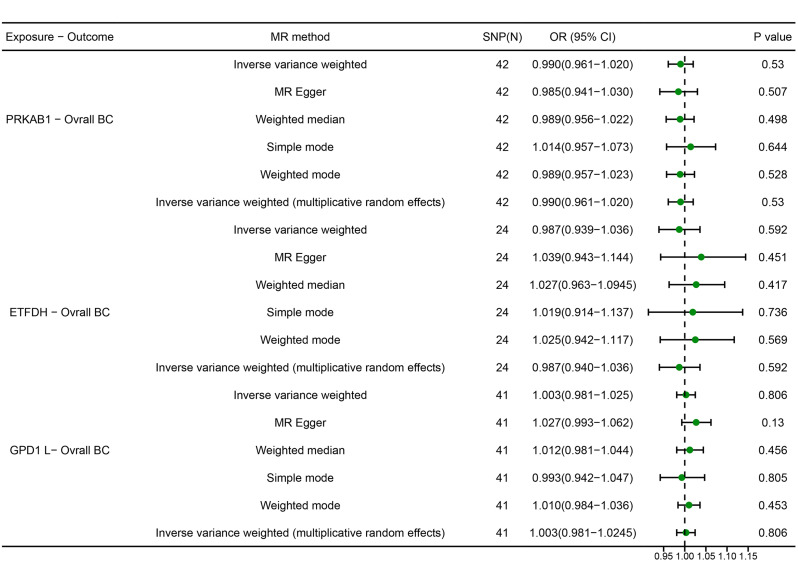
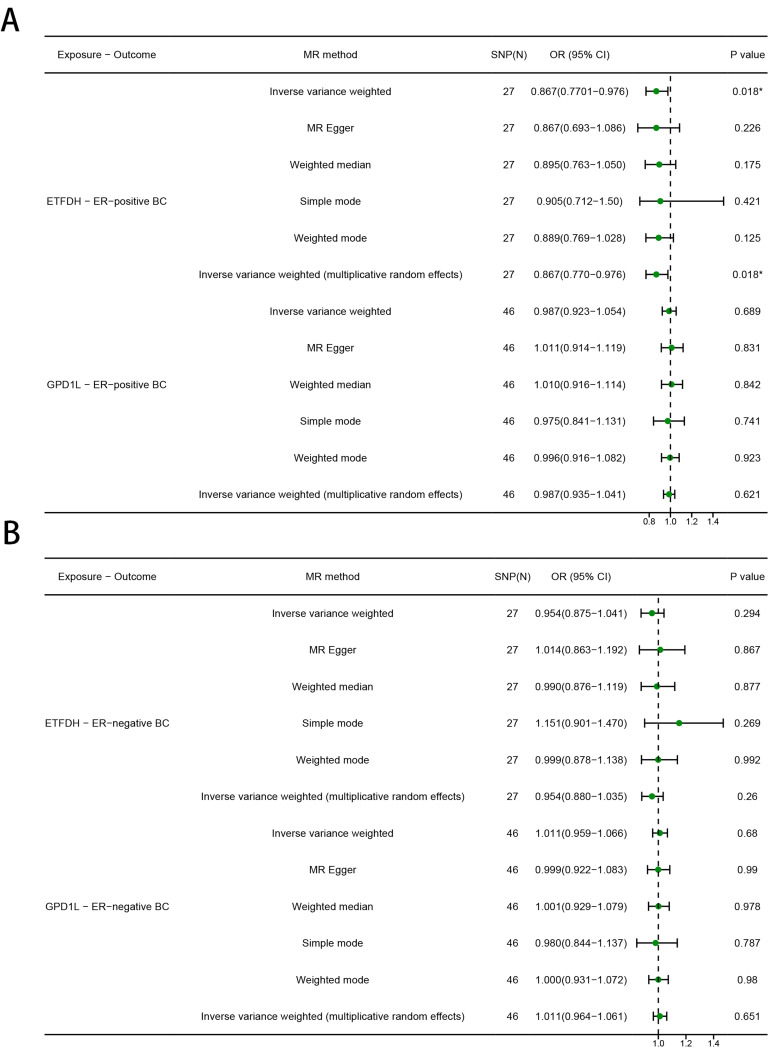
The primary targets of metformin are PRKAB1, ETFDH and GPD1L. We found a causal association between PRKAB1 and T2D (odds ratio [OR] 0.959, P = 0.002), but no causal relationship was observed between metformin targets and overall BC risk (PRKAB1: OR 0.990, P = 0.530; ETFDH: OR 0.986, P = 0.592; GPD1L: OR 1.002, P = 0.806). A noteworthy causal relationship was observed between ETFDH and estrogen receptor (ER)-positive BC (OR 0.867, P = 0.018), and between GPD1L and human epidermal growth factor receptor 2 (HER2)-negative BC (OR 0.966, P = 0.040). Other group analyses did not yield positive results.
The star target of metformin, PRKAB1, does not exhibit a substantial causal association with the risk of BC. Conversely, metformin, acting as an inhibitor of ETFDH and GPD1L, may potentially elevate the likelihood of developing ER-positive BC and HER2-negative BC. Consequently, it is not advisable to employ metformin as a standard supplementary therapy for BC patients without T2D.
二甲双胍在乳腺癌(BC)中的潜在疗效一直备受热议,但尚无定论。本项基于遗传学的研究旨在评估二甲双胍作用靶点与 BC 风险之间的关系。
利用 DrugBank 中的二甲双胍作用靶点以及 IEU OpenGWAS 和 FinnGen 中的全基因组关联研究(GWAS)数据,采用多种孟德尔随机化(MR)方法(如逆方差加权法)探究 BC-二甲双胍因果关联。还分析了 2 型糖尿病(T2D)与二甲双胍药物靶点之间的遗传关联,作为阳性对照。采用敏感性和多效性检验确保结果的可靠性。
二甲双胍的主要作用靶点是 PRKAB1、ETFDH 和 GPD1L。我们发现 PRKAB1 与 T2D 之间存在因果关系(比值比 [OR] 0.959,P=0.002),但二甲双胍作用靶点与总体 BC 风险之间不存在因果关系(PRKAB1:OR 0.990,P=0.530;ETFDH:OR 0.986,P=0.592;GPD1L:OR 1.002,P=0.806)。值得注意的是,ETFDH 与雌激素受体(ER)阳性 BC 之间存在因果关系(OR 0.867,P=0.018),GPD1L 与人类表皮生长因子受体 2(HER2)阴性 BC 之间存在因果关系(OR 0.966,P=0.040)。其他分组分析未得出阳性结果。
二甲双胍的主要作用靶点 PRKAB1 与 BC 风险之间不存在显著的因果关联。相反,作为 ETFDH 和 GPD1L 抑制剂的二甲双胍,可能会增加 ER 阳性 BC 和 HER2 阴性 BC 的发病风险。因此,对于不伴有 T2D 的 BC 患者,不建议将二甲双胍作为标准的辅助治疗药物。