Rafieizonooz Mahdi, Jang Hyounseung, Kim Jimin, Kim Chang-Soo, Kim Taehoon, Wi Seunghwan, Banihashemi Saeed, Khankhaje Elnaz
Architectural Engineering Program, School of Architecture, Seoul National University of Science and Technology, 232 Gongneung-ro, Gongneung-dong, Nowon-gu, Seoul, 01811, South Korea.
School of Built Environment, Faculty of Design, Architecture and Building, University of Technology Sydney, 15 Broadway, Ultimo, NSW, Australia.
Heliyon. 2024 May 23;10(11):e31720. doi: 10.1016/j.heliyon.2024.e31720. eCollection 2024 Jun 15.
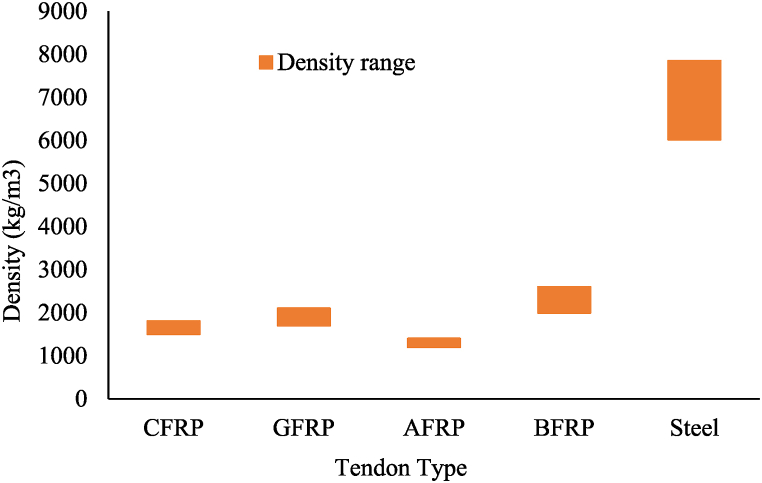
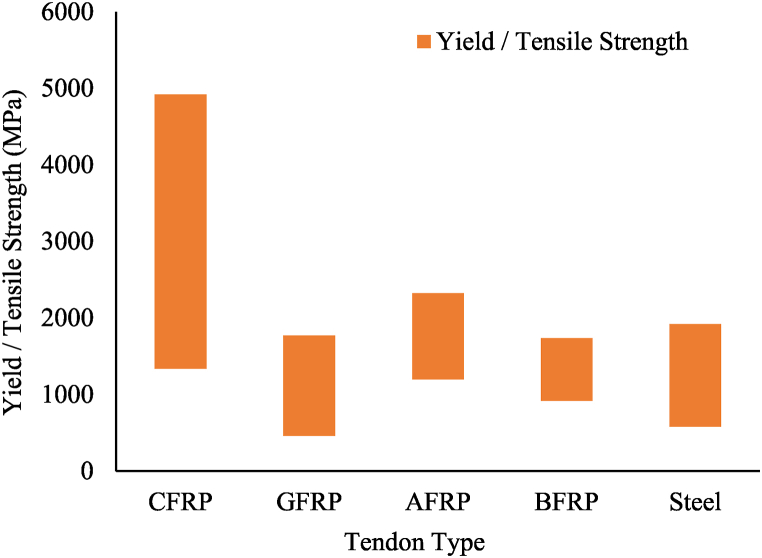
The primary drawback of concrete lies in its low tensile strength, prompting the development of various solutions to enhance this aspect. A notable approach is the utilization of Prestressed Reinforced Concrete (PRC) with tendons, aimed at bolstering its tensile strength. As the use of diverse tendon types in the PRC continues to surge, a review becomes imperative to delve into this evolution. Therefore, this study delved into the engineering characteristics, performance, and evolution of different tendon varieties, encompassing both steel and composite options. Despite certain drawbacks associated with employing composite materials such as Fiber Reinforced Polymer (FRP) tendons - such as heightened costs, limited availability of composite materials, and intricate manufacturing processes - there are distinct advantages and merits to incorporating FRP composite tendons in the realm of construction. In this respect, Carbon FRP tendons exhibited superior strength, comparable to their steel counterparts. Glass FRP tendons, lacking metallic components, possessed non-magnetic properties, rendering them resistant to corrosion. Additionally, Aramid FRP tendons boasted low flammability and exceptional resistance to elevated temperatures. Lastly, Basalt FRP tendons offered sustainability, rust resistance, and non-corrosiveness. The findings derived from this review study serve as a valuable resource for researchers seeking to advance the applications of steel tendons and FRP composite materials within the construction industry.
混凝土的主要缺点在于其抗拉强度低,这促使人们开发各种解决方案来增强这一方面。一种显著的方法是使用带有预应力筋的预应力钢筋混凝土(PRC),旨在提高其抗拉强度。随着PRC中各种类型预应力筋的使用持续激增,进行一次综述以深入研究这一发展过程变得势在必行。因此,本研究深入探讨了不同种类预应力筋的工程特性、性能及发展情况,包括钢质和复合材质的选项。尽管使用复合材料(如纤维增强聚合物(FRP)预应力筋)存在一些缺点,如成本增加、复合材料供应有限以及制造工艺复杂,但在建筑领域采用FRP复合预应力筋也有明显的优势和优点。在这方面,碳纤维FRP预应力筋表现出与钢质预应力筋相当的卓越强度。玻璃纤维FRP预应力筋不含金属成分,具有非磁性特性,使其具有抗腐蚀能力。此外,芳纶纤维FRP预应力筋具有低可燃性和出色的耐高温性能。最后,玄武岩纤维FRP预应力筋具有可持续性、防锈性和无腐蚀性。这项综述研究得出的结果为寻求推动钢质预应力筋和FRP复合材料在建筑行业应用的研究人员提供了宝贵的资源。