Wang Dawei, Nie Xinxiao, Zhou Yaxi, Ye Jiade, Yu Peng, Hu Yixin, Jin Xiaodong
Educational Development Research Center of Southern Xinjiang, Kashi University, China.
School of Psychology, Central China Normal University, China.
Heliyon. 2024 May 24;10(11):e31801. doi: 10.1016/j.heliyon.2024.e31801. eCollection 2024 Jun 15.
With the spread of COVID-19, concerns regarding its adverse effects have arisen. Based on affect regulation theory and construal level theory, this study explored how COVID-19 affects intertemporal choice in the health and economy domains, self-other differences for intertemporal choice were also inspected. The study examined whether psychological safety can moderate the relationship between COVID-19 and intertemporal choice.
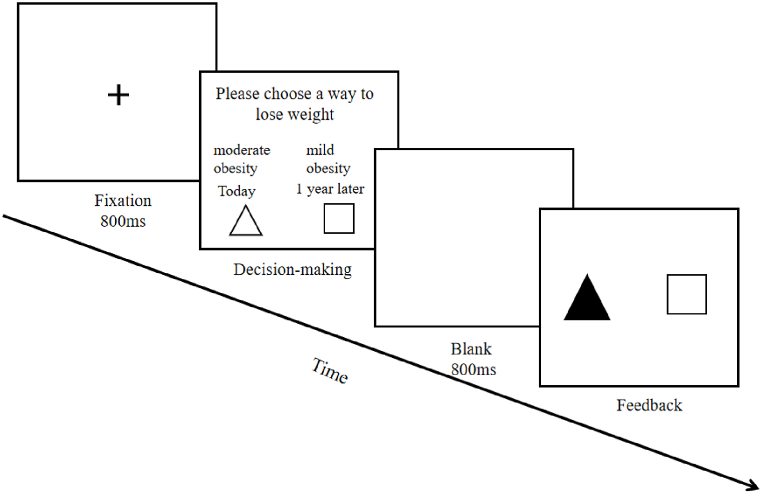
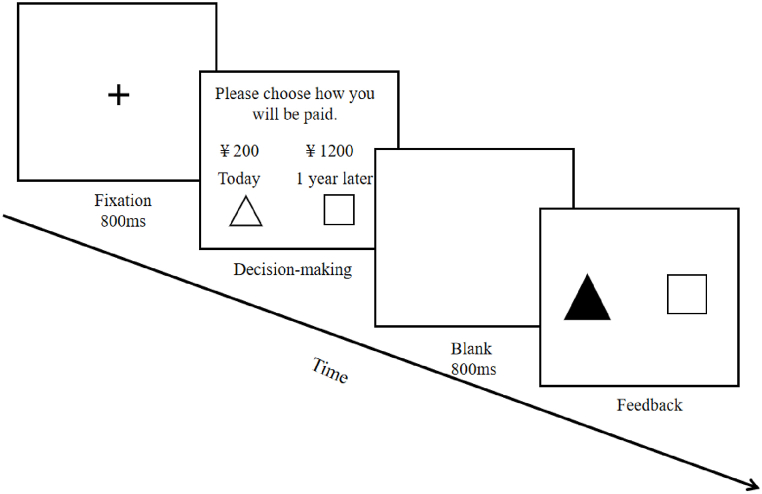
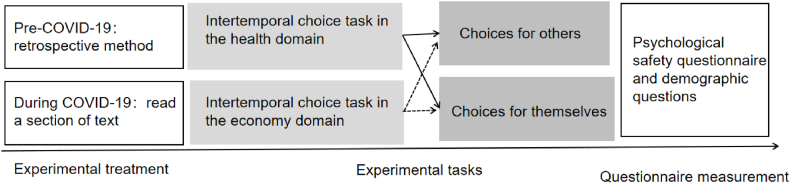
A 2 (COVID-19 status: pre-COVID-19, during-COVID-19) × 2 (decision maker role: decision for self, decision for others) × 2 (domain: health, economy) three-factor hybrid experiment was employed.
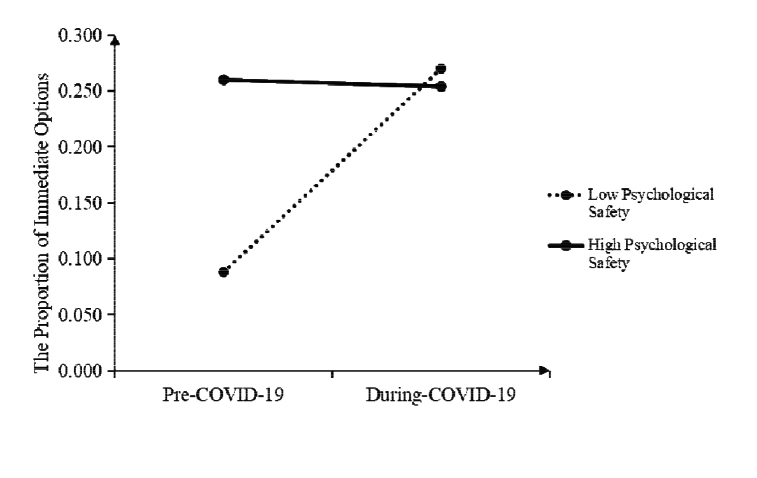
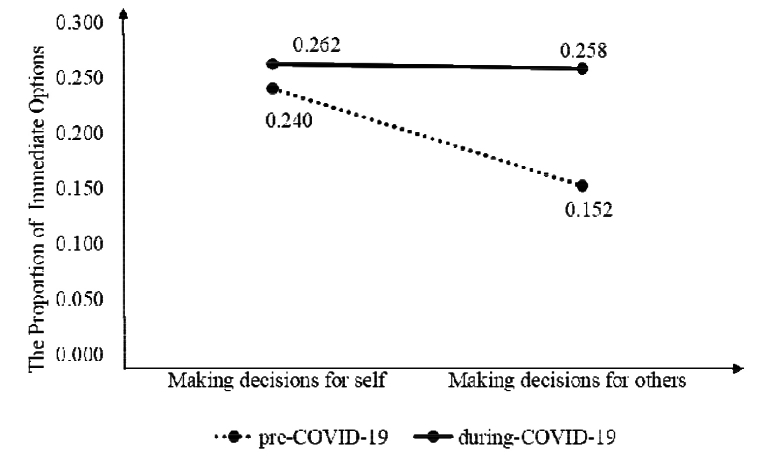
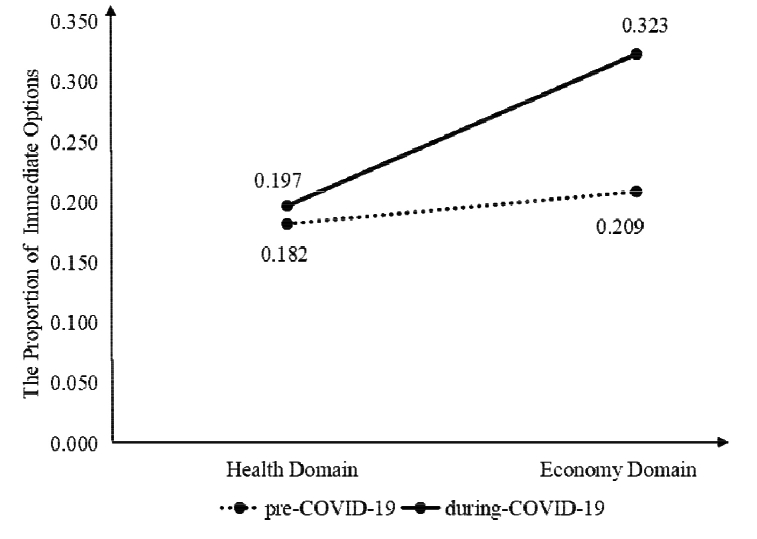
(1) Individuals in during-COVID-19 condition preferred more immediate options. (2) Delayed options were preferred more in the health domain. Preference for immediate money options enhanced during than before COVID-19. However, COVID-19 status did not affect choices related to health. (3) Delayed options were preferred more when making intertemporal choices for others than for oneself under the pre-COVID-19 condition. Self-other differences for intertemporal choice disappeared during COVID-19. (4) Psychological safety moderated the effect of COVID-19 on intertemporal choice.
During COVID-19, individuals' impulsive preference of intertemporal choice increased. COVID-19 affected intertemporal choice regarding economy and the self-other differences for intertemporal choice. Psychological safety could buffer the effect of COVID-19 on intertemporal choice.
This study can provide empirical evidence to affect regulation theory and level of explanation theory as well as guide individuals in making scientific decisions in health and economic domains under public health emergencies.
随着新冠疫情的蔓延,人们对其负面影响产生了担忧。基于情感调节理论和解释水平理论,本研究探讨了新冠疫情如何影响健康和经济领域的跨期选择,同时也考察了跨期选择中的自我-他人差异。本研究还检验了心理安全感是否能够调节新冠疫情与跨期选择之间的关系。
采用了一个2(新冠疫情状态:疫情前、疫情期间)×2(决策者角色:为自己决策、为他人决策)×2(领域:健康、经济)的三因素混合实验。
(1)处于疫情期间的个体更倾向于选择更即时的选项。(2)在健康领域,人们更倾向于选择延迟选项。与疫情前相比,疫情期间对即时金钱选项的偏好增强。然而,新冠疫情状态并未影响与健康相关的选择。(3)在疫情前的情况下,为他人做出跨期选择时比为自己做出选择时更倾向于延迟选项。在新冠疫情期间,跨期选择中的自我-他人差异消失了。(4)心理安全感调节了新冠疫情对跨期选择的影响。
在新冠疫情期间,个体跨期选择的冲动性偏好增加。新冠疫情影响了经济领域的跨期选择以及跨期选择中的自我-他人差异。心理安全感可以缓冲新冠疫情对跨期选择的影响。
本研究可以为情感调节理论和解释水平理论提供实证依据,并指导个体在突发公共卫生事件下在健康和经济领域做出科学决策。