Department of Pharmacology, University of Oxford, Oxford, UK.
School of Biomedical Sciences, Faculty of Medicine, University of Queensland, St Lucia, Australia.
J Extracell Vesicles. 2022 Jan;11(1):e12190. doi: 10.1002/jev2.12190.
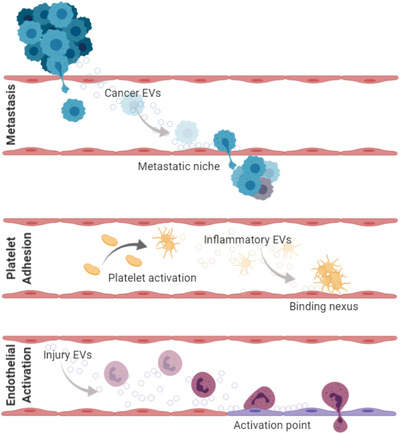
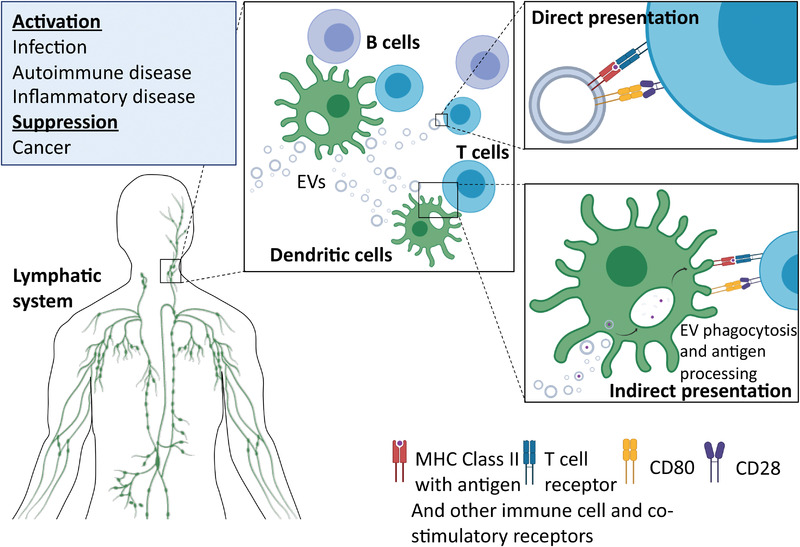
It is clear from Part I of this series that extracellular vesicles (EVs) play a critical role in maintaining the homeostasis of most, if not all, normal physiological systems. However, the majority of our knowledge about EV signalling has come from studying them in disease. Indeed, EVs have consistently been associated with propagating disease pathophysiology. The analysis of EVs in biofluids, obtained in the clinic, has been an essential of the work to improve our understanding of their role in disease. However, to interfere with EV signalling for therapeutic gain, a more fundamental understanding of the mechanisms by which they contribute to pathogenic processes is required. Only by discovering how the EV populations in different biofluids change-size, number, and physicochemical composition-in clinical samples, may we then begin to unravel their functional roles in translational models in vitro and in vivo, which can then feedback to the clinic. In Part II of this review series, the functional role of EVs in pathology and disease will be discussed, with a focus on in vivo evidence and their potential to be used as both biomarkers and points of therapeutic intervention.
从本系列的第一部分可以清楚地看出,细胞外囊泡(EVs)在维持大多数(如果不是全部)正常生理系统的内稳态方面起着至关重要的作用。然而,我们对 EV 信号的大多数了解都来自于对其在疾病中的研究。事实上,EV 一直与传播疾病的病理生理学有关。从临床上获得的生物流体中 EV 的分析一直是我们提高对其在疾病中作用的理解的工作的重要组成部分。然而,为了通过干预 EV 信号来获得治疗效果,需要更深入地了解它们在致病过程中发挥作用的机制。只有发现不同生物流体中的 EV 群体在临床样本中如何变化——大小、数量和物理化学组成,我们才能开始解开它们在体外和体内转化模型中的功能作用,然后再将其反馈到临床。在本综述系列的第二部分中,将讨论 EV 在病理学和疾病中的功能作用,重点讨论体内证据及其作为生物标志物和治疗干预点的潜力。