Department of Child and Adolescent Psychiatry, Psychotherapy and Psychosomatics, University Hospital, RWTH University Aachen, Aachen, Germany.
Department of Child and Adolescent Psychiatry, Psychotherapy and Psychosomatics, LVR-University Hospital, Essen, Germany.
Neuroendocrinology. 2024;114(10):907-920. doi: 10.1159/000539316. Epub 2024 Jun 8.
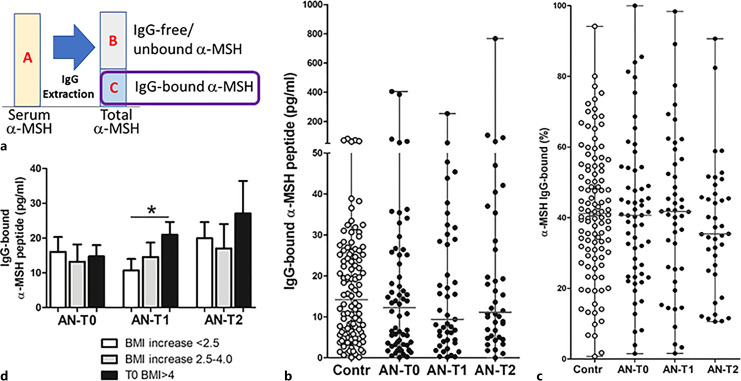
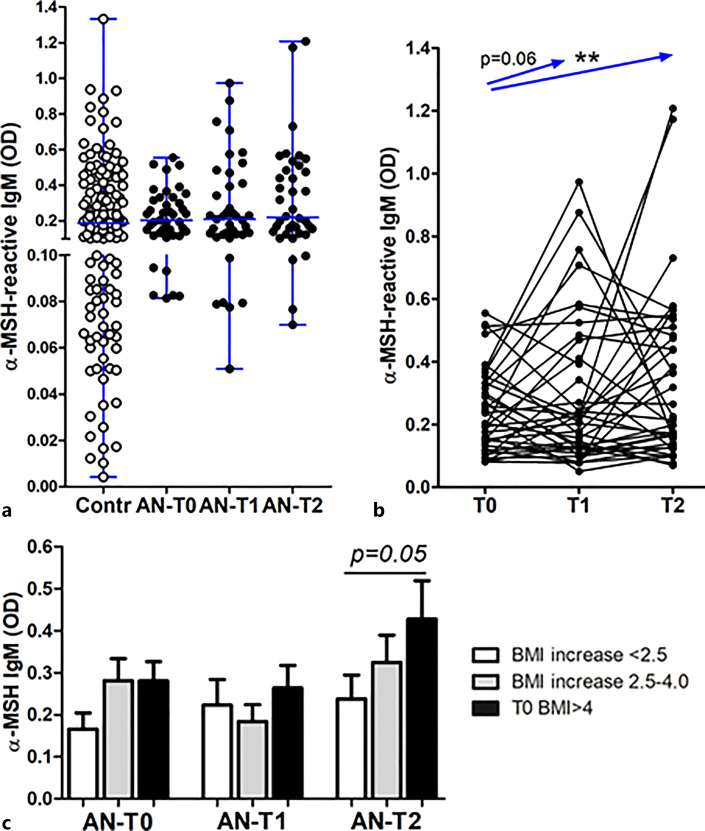
Immunoglobulins (Ig) reactive with α-melanocyte-stimulating hormone (α-MSH), an anorexigenic neuropeptide, are present in humans and were previously associated with eating disorders. In this longitudinal study involving patients with anorexia nervosa (AN), we determined whether α-MSH in serum is bound to IgG and analyzed long-term dynamics of both α-MSH peptide and α-MSH-reactive Ig in relation to changes in BMI and gut microbiota composition.
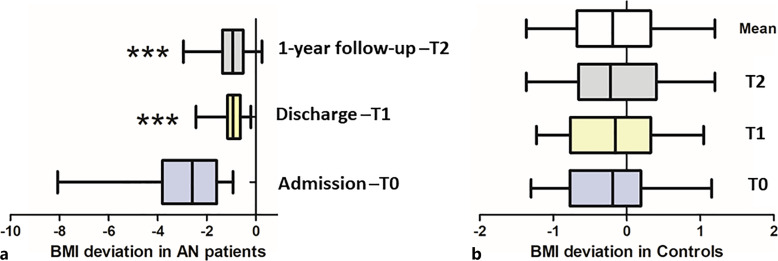
The study included 64 adolescents with a restrictive form of AN, whose serum samples were collected at hospital admission, discharge, and during a 1-year follow-up visit and 41 healthy controls, all females.
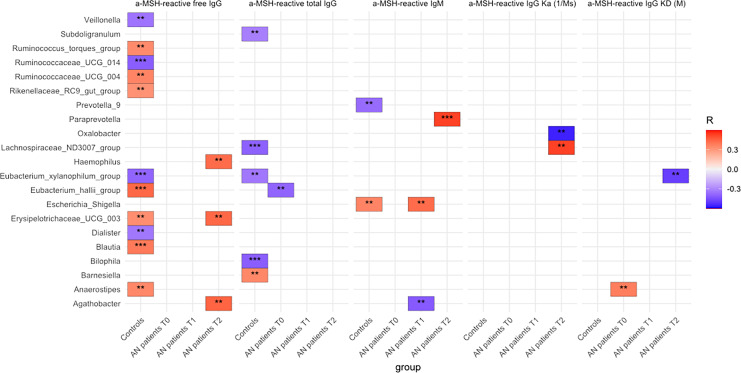
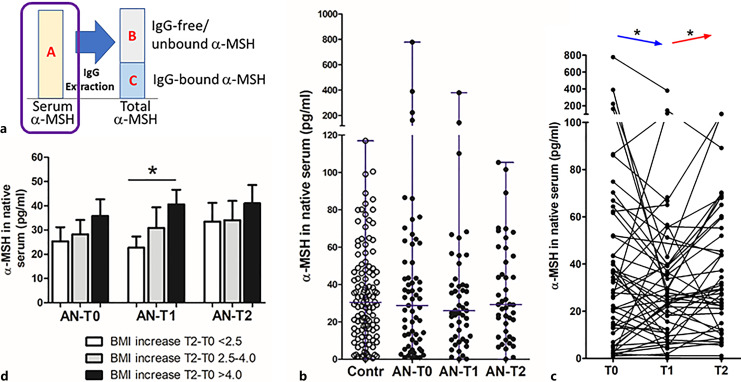
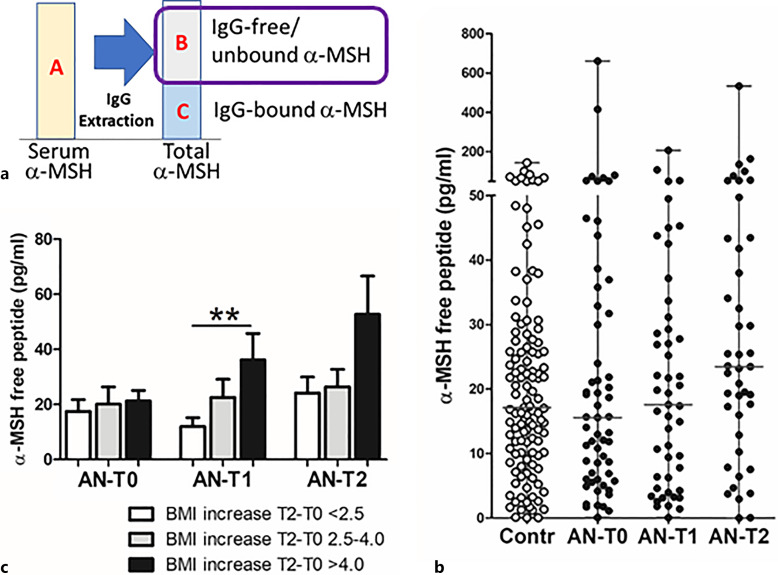
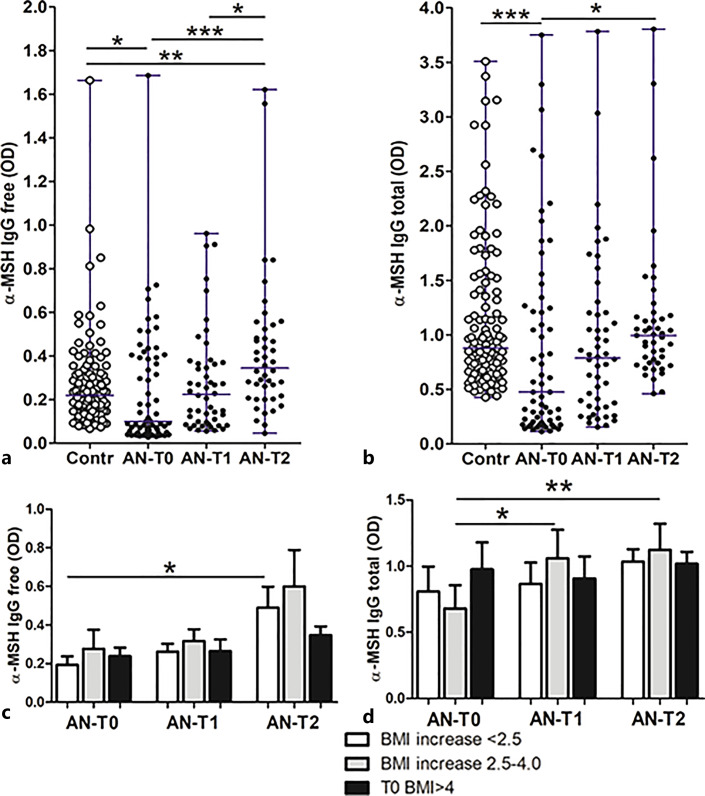
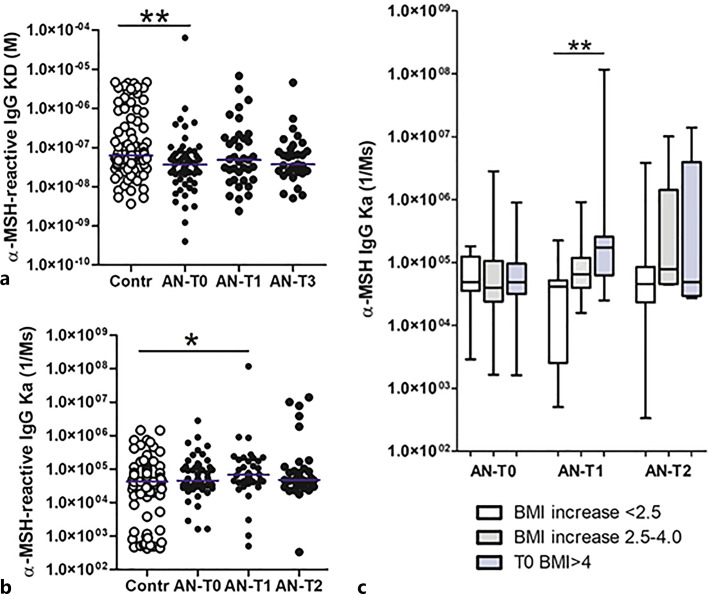
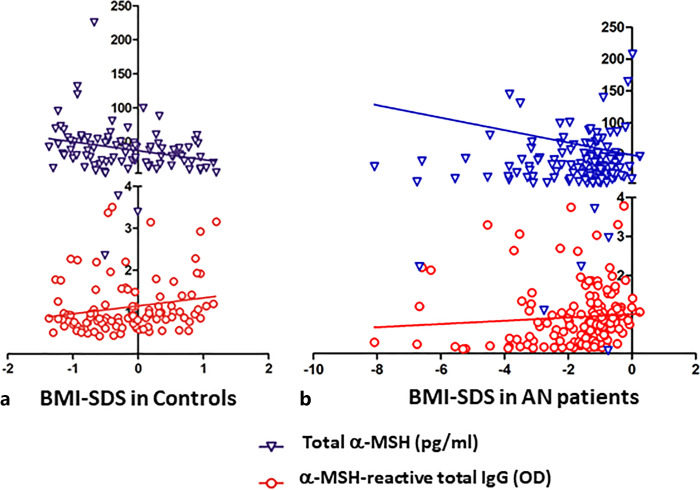
We found that in both study groups, approximately 40% of serum α-MSH was reversibly bound to IgG and that levels of α-MSH-reactive IgG but not of α-MSH peptide in patients with AN were low at hospital admission but recovered 1 year later. Total IgG levels were also low at admission. Moreover, BMI-standard deviation score correlated positively with α-MSH IgG in both groups studied but negatively with α-MSH peptide only in controls. Significant correlations between the abundance of specific bacterial taxa in the gut microbiota and α-MSH peptide and IgG levels were found in both study groups, but they were more frequent in controls.
We conclude that IgG in the blood plays a role as an α-MSH-binding protein, whose characteristics are associated with BMI in both patients with AN and controls. Furthermore, the study suggests that low production of α-MSH-reactive IgG during the starvation phase in patients with AN may be related to altered gut microbiota composition.
与厌食性神经肽 α-促黑素细胞激素 (α-MSH) 反应的免疫球蛋白 (Ig) 存在于人体中,先前与饮食失调有关。在这项涉及神经性厌食症 (AN) 患者的纵向研究中,我们确定了血清中 α-MSH 是否与 IgG 结合,并分析了与 BMI 变化和肠道微生物群落组成相关的 α-MSH 肽和 α-MSH 反应性 Ig 的长期动态。
该研究纳入了 64 名患有限制型 AN 的青少年,他们的血清样本在入院、出院和 1 年随访时采集,并纳入了 41 名健康对照者,均为女性。
我们发现,在两个研究组中,约 40%的血清 α-MSH 可被 IgG 可逆结合,并且 AN 患者入院时的 α-MSH 反应性 IgG 水平较低,但 1 年后恢复正常。入院时总 IgG 水平也较低。此外,BMI 标准差评分与两组研究中 α-MSH IgG 呈正相关,但仅在对照组中与 α-MSH 肽呈负相关。在两组研究中都发现肠道微生物群落中特定细菌类群的丰度与 α-MSH 肽和 IgG 水平之间存在显著相关性,但在对照组中更为频繁。
我们得出结论,血液中的 IgG 作为一种 α-MSH 结合蛋白发挥作用,其特征与 AN 患者和对照组的 BMI 相关。此外,研究表明,AN 患者饥饿期 α-MSH 反应性 IgG 产量低可能与肠道微生物群落组成改变有关。