Inserm UMR1073, Nutrition, Gut and Brain Laboratory, 76183, Rouen, France.
Institute for Research and Innovation in Biomedicine (IRIB), University of Rouen Normandy, 76000, Rouen, France.
Transl Psychiatry. 2019 Feb 12;9(1):87. doi: 10.1038/s41398-019-0422-9.
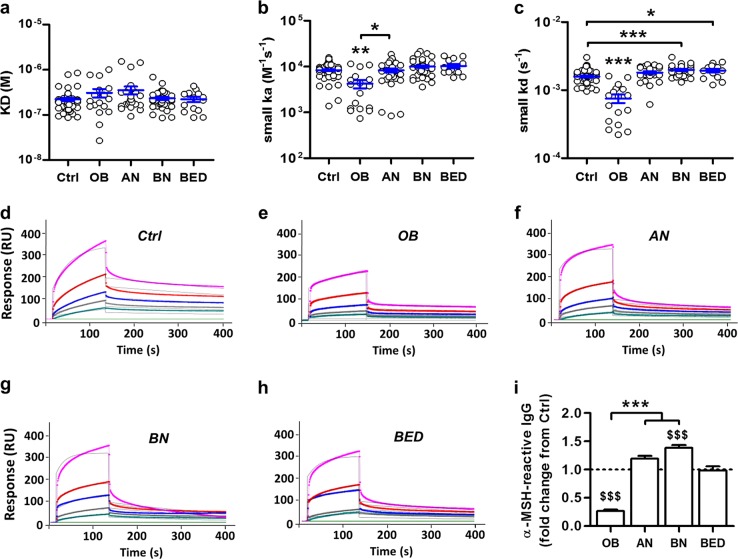
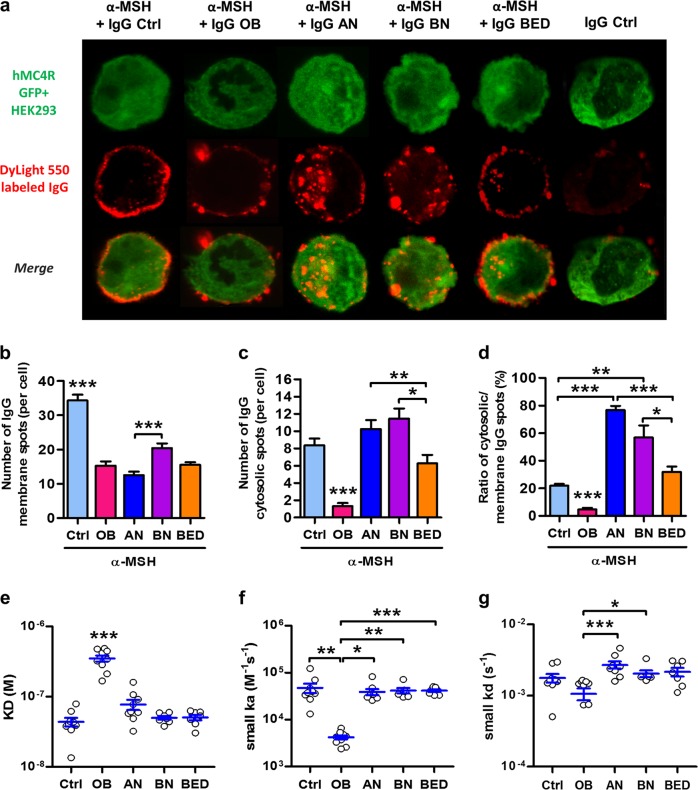
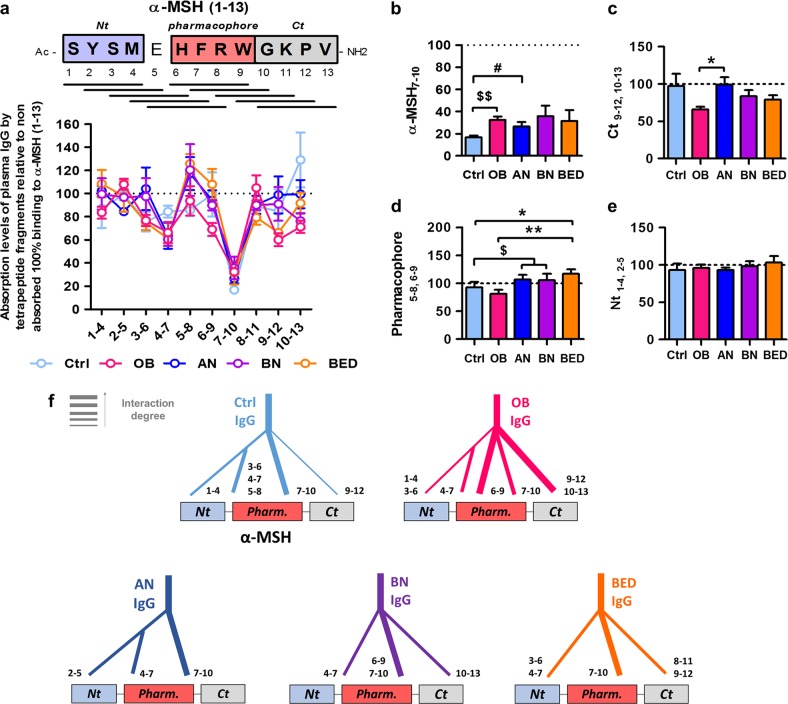
Melanocortin 4 receptor (MC4R) plays a key role in regulation of appetite activated by its main ligand α-melanocyte-stimulating hormone (α-MSH) in both central and peripheral targets. α-MSH also binds to circulating immunoglobulins (Igs) but the functional significance of such immune complexes (ICs) in MC4R signaling in normal and pathological conditions of altered appetite has remained unknown. To address this question, we analyzed plasma levels, affinity kinetics, and binding epitopes of α-MSH-reactive IgG extracted from plasma samples of female patients with hyperphagic obesity, anorexia nervosa, bulimia nervosa, binge-eating disorder, and healthy controls. Ability of α-MSH/IgG IC to bind and activate human MC4R were studied in vitro and to influence feeding behavior in vivo in rodents. We found that α-MSH-reactive IgG were low in obese but increased in anorectic and bulimic patients and displayed different epitope and kinetics of IC formation. Importantly, while α-MSH/IgG IC from all subjects were binding and activating MC4R, the receptor binding affinity was decreased in obesity. Additionally, α-MSH/IgG IC had lower MC4R-mediated cAMP activation threshold as compared with α-MSH alone in all but not obese subjects. Furthermore, the cellular internalization rate of α-MSH/IgG IC by MC4R-expressing cells was decreased in obese but increased in patients with anorexia nervosa. Moreover, IgG from obese patients prevented central anorexigenic effect of α-MSH. These findings reveal that MC4R is physiologically activated by IC formed by α-MSH/IgG and that different levels and molecular properties of α-MSH-reactive IgG underlie biological activity of such IC relevant to altered appetite in obesity and eating disorders.
黑素皮质素 4 受体 (MC4R) 在其主要配体 α-促黑素细胞激素 (α-MSH) 激活的食欲调节中发挥关键作用,这种作用在中枢和外周靶点中均存在。α-MSH 还与循环免疫球蛋白 (Igs) 结合,但在食欲改变的正常和病理条件下,这种免疫复合物 (IC) 在 MC4R 信号传导中的功能意义仍然未知。为了解决这个问题,我们分析了从患有暴食性肥胖、神经性厌食症、神经性贪食症、暴食障碍和健康对照女性患者的血浆样本中提取的 α-MSH 反应性 IgG 的血浆水平、亲和动力学和结合表位。我们在体外研究了 α-MSH/IgG IC 结合和激活人 MC4R 的能力,并在体内啮齿动物中研究了其对摄食行为的影响。我们发现,肥胖患者的 α-MSH 反应性 IgG 水平较低,但厌食症和贪食症患者的 IgG 水平升高,且 IC 形成的表位和动力学不同。重要的是,虽然所有研究对象的 α-MSH/IgG IC 都能结合和激活 MC4R,但肥胖患者的受体结合亲和力降低。此外,与单独的 α-MSH 相比,除肥胖患者外,所有研究对象的 α-MSH/IgG IC 具有更低的 MC4R 介导的 cAMP 激活阈值。此外,MC4R 表达细胞对 α-MSH/IgG IC 的细胞内化率在肥胖患者中降低,但在神经性厌食症患者中增加。此外,肥胖患者的 IgG 可阻止 α-MSH 的中枢厌食作用。这些发现表明,MC4R 被 α-MSH/IgG 形成的 IC 生理性激活,而肥胖和饮食失调中与食欲改变相关的这种 IC 的生物学活性取决于 α-MSH 反应性 IgG 的不同水平和分子特性。