Department of Surgery, RCSI University of Medicine and Health Sciences, Dublin, Ireland.
School of Pharmacy and Biomolecular Sciences, RCSI University of Medicine and Health Sciences, Dublin, Ireland.
J Natl Cancer Inst. 2024 Oct 1;116(10):1632-1644. doi: 10.1093/jnci/djae091.
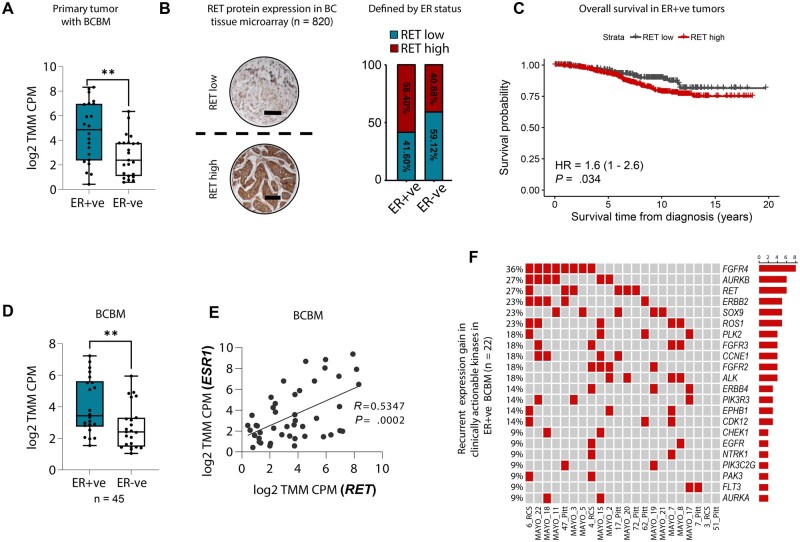
Breast cancer brain metastasis is a rising occurrence, necessitating a better understanding of the mechanisms involved for effective management. Breast cancer brain metastases diverge notably from the primary tumor, with gains in kinase and concomitant losses of steroid signaling observed. In this study, we explored the role of the kinase receptor RET in promoting breast cancer brain metastases and provide a rationale for targeting this receptor.
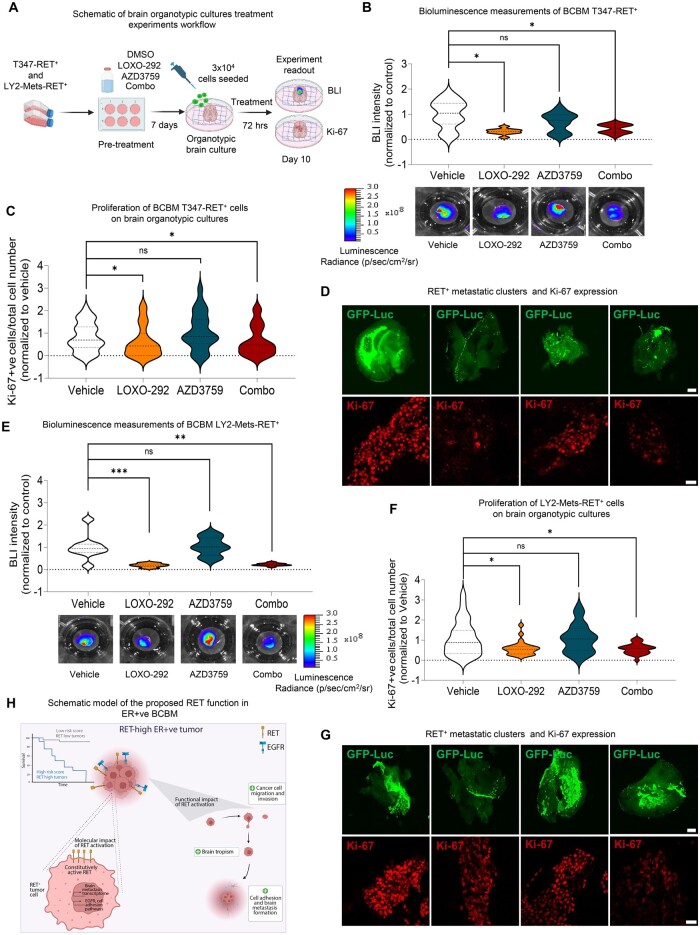
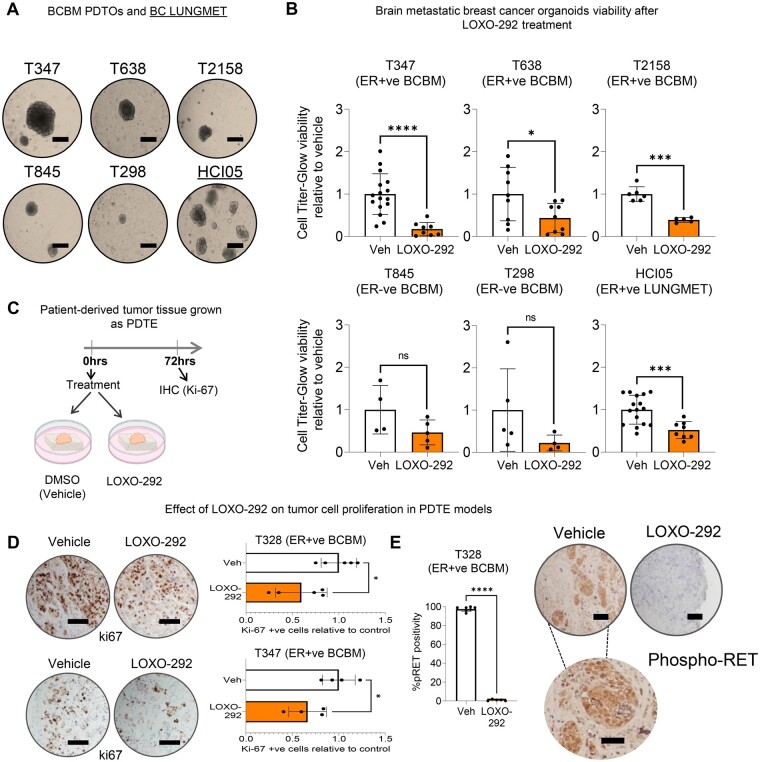
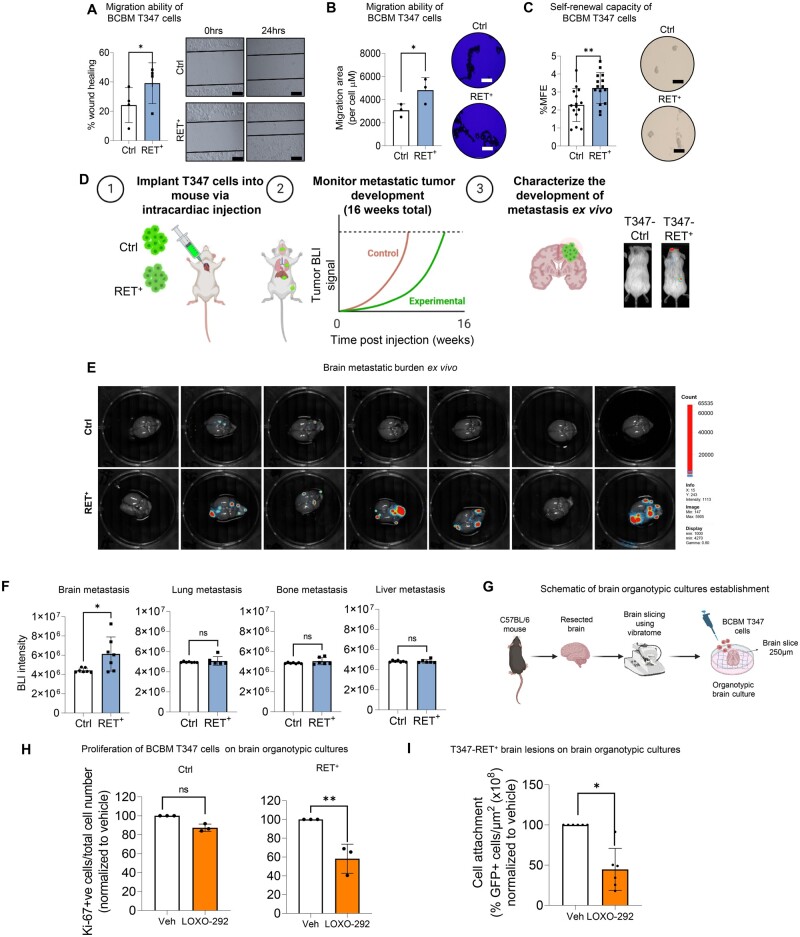
RET expression was characterized in a cohort of patients with primary and brain metastatic tumors. RET functionality was assessed using pharmacological inhibition and gene silencing in patient-derived brain metastatic tumor explants and in vivo models, organoid models, and brain organotypic cultures. RNA sequencing was used to uncover novel brain metastatic relevant RET mechanisms of action.
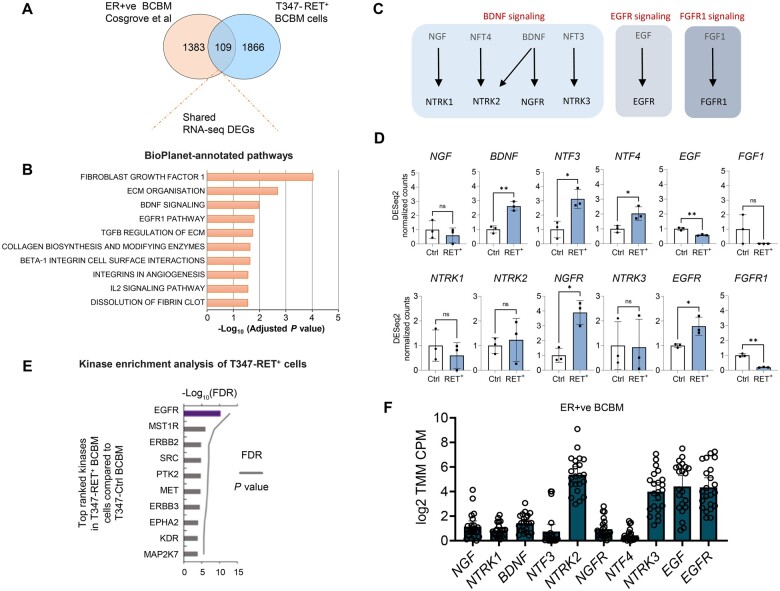
A statistically significant enrichment of RET in brain metastases was observed in estrogen receptor-positive breast cancer, where it played a role in promoting cancer cell adhesion, survival, and outgrowth in the brain. In vivo, RET overexpression enhanced brain metastatic competency in patient-derived models. At a mechanistic level, RET overexpression was found to enhance the activation of gene programs involved in cell adhesion, requiring EGFR cooperation to deliver a pro-brain metastatic phenotype.
Our results illustrate, for the first time, the role of RET in regulating colonization and outgrowth of breast cancer brain metastasis and provide data to support the use of RET inhibitors in the management strategy for patients with breast cancer brain metastases.
乳腺癌脑转移的发生率正在上升,因此需要更好地了解相关机制,以便进行有效的管理。乳腺癌脑转移与原发性肿瘤有显著差异,激酶活性增强,同时甾体信号丢失。在这项研究中,我们探讨了激酶受体 RET 在促进乳腺癌脑转移中的作用,并为靶向该受体提供了依据。
在一组原发性和脑转移性肿瘤患者中,对 RET 的表达进行了特征描述。在患者来源的脑转移性肿瘤外植体和体内模型、类器官模型和脑器官型培养物中,使用药理学抑制和基因沉默来评估 RET 的功能。利用 RNA 测序揭示了 RET 在乳腺癌脑转移中的新作用机制。
在雌激素受体阳性的乳腺癌中,观察到 RET 在脑转移中显著富集,它在促进癌细胞在大脑中的黏附、存活和生长中发挥作用。在体内,RET 过表达增强了患者来源模型中的脑转移能力。在机制水平上,发现 RET 过表达增强了参与细胞黏附的基因程序的激活,需要 EGFR 合作才能产生有利于脑转移的表型。
我们的研究结果首次阐明了 RET 在调节乳腺癌脑转移的定植和生长中的作用,并提供了支持使用 RET 抑制剂来管理乳腺癌脑转移患者的依据。