Department of Physical Medicine and Rehabilitation, Motion Analysis Laboratory, Spaulding Rehabilitation Hospital and Harvard Medical School, Charlestown, MA, 300 1st Avenue 02129, USA.
Jenks Vestibular Physiology Laboratory, Massachusetts Eye and Ear Infirmary, Harvard Medical School, Boston, MA, USA.
Sci Rep. 2024 Jun 9;14(1):13229. doi: 10.1038/s41598-024-63946-4.
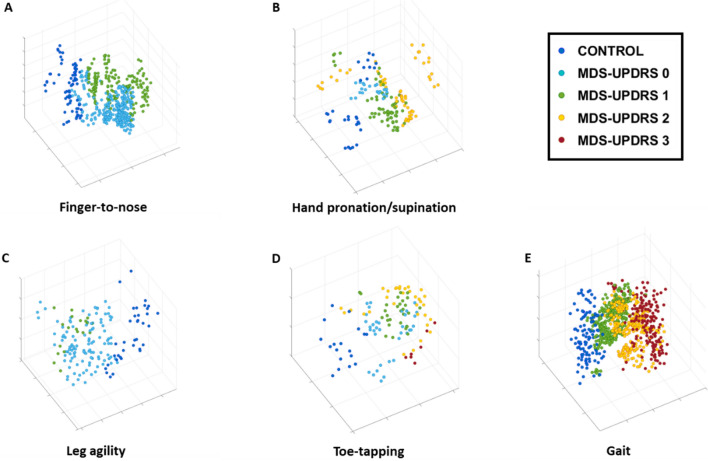
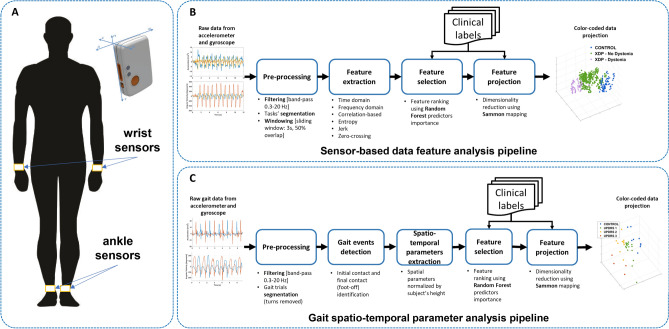
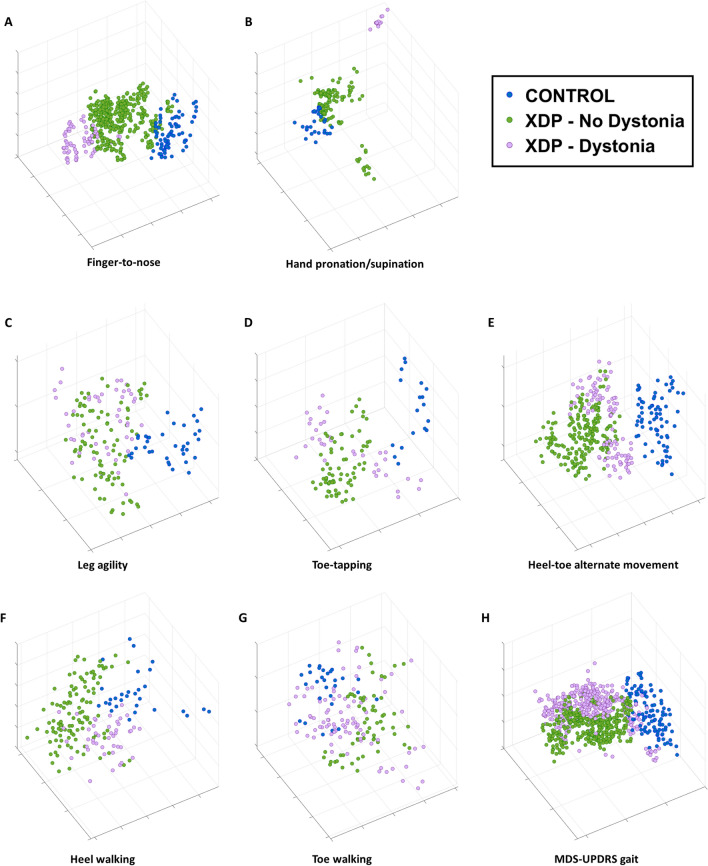
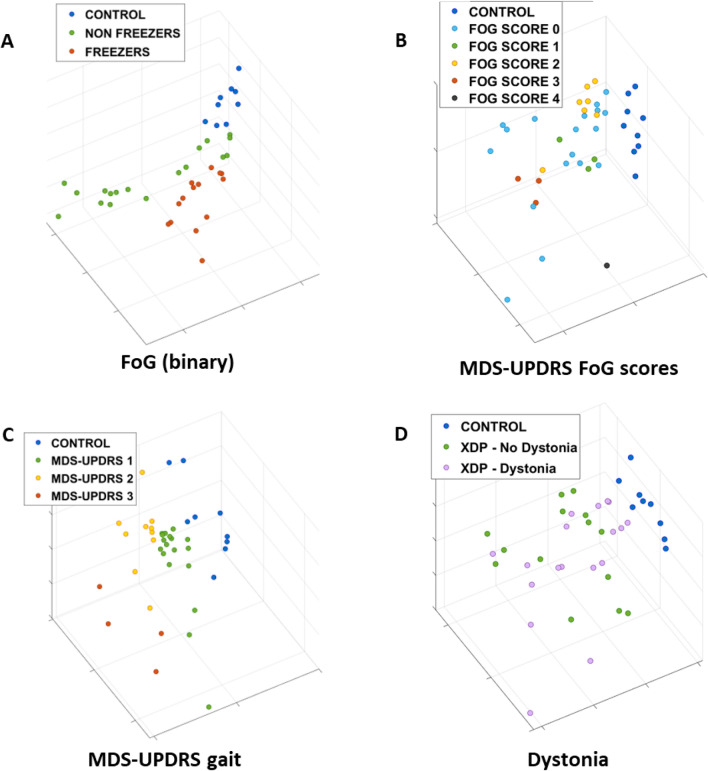
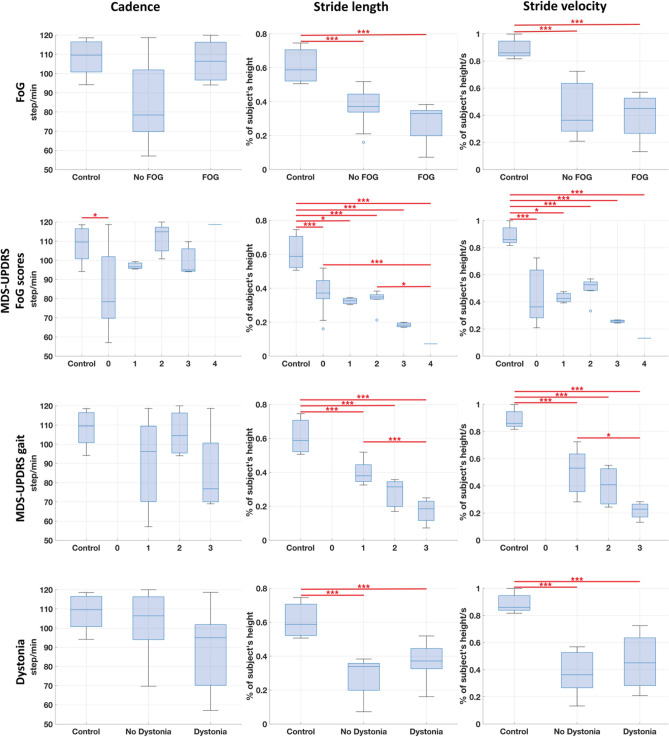
X-linked dystonia parkinsonism (XDP) is a neurogenetic combined movement disorder involving both parkinsonism and dystonia. Complex, overlapping phenotypes result in difficulties in clinical rating scale assessment. We performed wearable sensor-based analyses in XDP participants to quantitatively characterize disease phenomenology as a potential clinical trial endpoint. Wearable sensor data was collected from 10 symptomatic XDP patients and 3 healthy controls during a standardized examination. Disease severity was assessed with the Unified Parkinson's Disease Rating Scale Part 3 (MDS-UPDRS) and Burke-Fahn-Marsden dystonia scale (BFM). We collected sensor data during the performance of specific MDS-UPDRS/BFM upper- and lower-limb motor tasks, and derived data features suitable to estimate clinical scores using machine learning (ML). XDP patients were at varying stages of disease and clinical severity. ML-based algorithms estimated MDS-UPDRS scores (parkinsonism) and dystonia-specific data features with a high degree of accuracy. Gait spatio-temporal parameters had high discriminatory power in differentiating XDP patients with different MDS-UPDRS scores from controls, XDP freezing of gait, and dystonic/non-dystonic gait. These analyses suggest the feasibility of using wearable sensor data for deriving reliable clinical score estimates associated with both parkinsonian and dystonic features in a complex, combined movement disorder and the utility of motion sensors in quantifying clinical examination.
X 连锁型肌张力障碍帕金森病(XDP)是一种涉及帕金森病和肌张力障碍的神经遗传混合运动障碍。复杂、重叠的表型导致临床评分量表评估困难。我们对 XDP 参与者进行了基于可穿戴传感器的分析,以定量描述疾病表现,作为潜在的临床试验终点。从 10 名有症状的 XDP 患者和 3 名健康对照者在标准化检查期间收集了可穿戴传感器数据。使用统一帕金森病评定量表第 3 部分(MDS-UPDRS)和 Burke-Fahn-Marsden 肌张力障碍量表(BFM)评估疾病严重程度。我们在执行特定的 MDS-UPDRS/BFM 上下肢运动任务期间收集了传感器数据,并使用机器学习(ML)从数据中提取适合估计临床评分的特征。XDP 患者处于不同的疾病和临床严重程度阶段。基于 ML 的算法能够非常准确地估计 MDS-UPDRS 评分(帕金森病)和特定于肌张力障碍的数据特征。步态时空参数在区分具有不同 MDS-UPDRS 评分的 XDP 患者与对照组、XDP 冻结步态以及肌张力障碍/非肌张力障碍步态方面具有很高的区分能力。这些分析表明,使用可穿戴传感器数据来推导出与复杂混合运动障碍中的帕金森病和肌张力障碍特征相关的可靠临床评分估计是可行的,运动传感器在量化临床检查方面具有实用性。