Naseri-Karimi Nazanin, Vatandoost Hassan, Mehdi Sedaghat Mohammad, Moosa-Kazemi Seyed Hassan, Amidi Fardin, Ali Oshaghi Mohammad
Department of Vector Biology and Control of Diseases, School of Public Health, Tehran University of Medical Sciences, Tehran, Iran.
Department of Anatomy, School of Medicine, Tehran University of Medical Sciences, Tehran, Iran.
J Arthropod Borne Dis. 2023 Sep 30;17(3):214-228. doi: 10.18502/jad.v17i3.14983. eCollection 2023 Sep.
flies are smooth, low upkeep and safe model organisms, they can be effortlessly used in different fields of life sciences like genomics, biotechnology, genetics, disease model, and -based approaches to fight vectors and the pathogens they transmit.
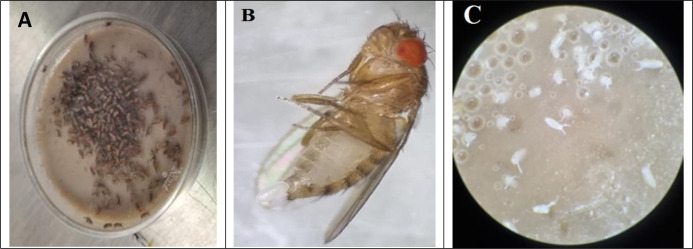
Fruit fly specimens were collected in 25 districts (14 provinces) of Iran and their morphological recognition was proven by molecular analysis based on sequence homology of mitochondrial COI barcode region. Essential information and specific requirements ere provided for laboratory rearing of .
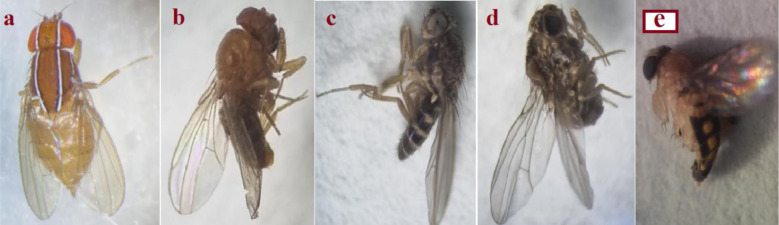
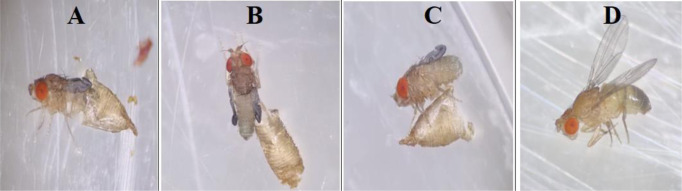
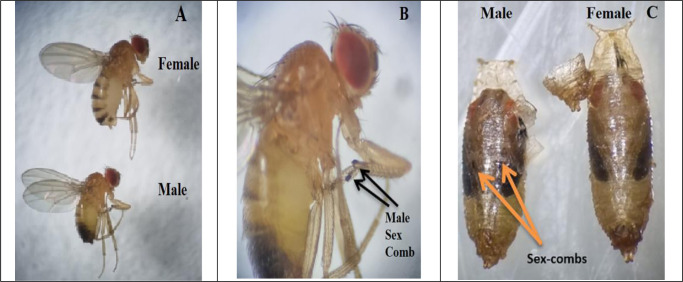
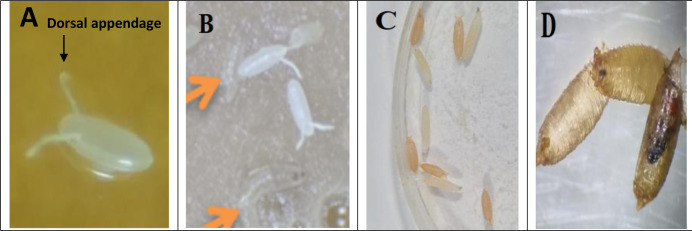
colonies were found in 23 out of 25 districts. Also, five related species coincident with were reported in this study including , , (Diptera: Drosophilidae), and (Diptera: Phoridae). The Iranian molecular signature and their rearing techniques have been described here. The complete life cycle, from (egg to adult), takes approximately 8 days at 25 °C. Some biological points have been presented with highlighting capturing, rearing, culturing, and embryo collection along with primitive recognition and segregation between females and males have been presented. A recipe for culture media and the quantity of various ingredients have been provided.
This is the first report on the and species for the country. Results of this study provide efficient and effective rearing procedures which are requirement for both small-scale for facilitating entomological research and large-scale use in justifiable vector control management such as disease model or Dengue control.
果蝇是体表光滑、易于饲养且安全的模式生物,可轻松应用于生命科学的不同领域,如基因组学、生物技术、遗传学、疾病模型以及基于疾病模型的方法来对抗病媒及其传播的病原体。
在伊朗的25个地区(14个省份)采集果蝇标本,并通过基于线粒体COI条形码区域序列同源性的分子分析来证实其形态识别。提供了果蝇实验室饲养的基本信息和具体要求。
在25个地区中的23个地区发现了果蝇种群。此外,本研究报告了与果蝇相关的5个物种,包括[具体物种1]、[具体物种2]、[具体物种3](双翅目:果蝇科)和[具体物种4](双翅目:蚤蝇科)。这里描述了伊朗果蝇的分子特征及其饲养技术。在25℃下,从卵到成虫的完整生命周期大约需要8天。介绍了一些生物学要点,重点强调了捕获、饲养、培养和胚胎收集,以及雌雄果蝇的初步识别和区分。提供了培养基配方和各种成分的用量。
这是该国关于[果蝇物种1]和[果蝇物种2]的首次报告。本研究结果提供了高效且有效的饲养程序,这对于促进昆虫学研究所需的小规模饲养以及在合理的病媒控制管理(如疾病模型或登革热控制)中的大规模应用都是必要的。