Hepatitis B Foundation, Doylestown, PA, USA.
Coalition to Eradicate Viral Hepatitis in Asia Pacific, Singapore, Singapore.
BMC Public Health. 2024 Jun 11;24(1):1575. doi: 10.1186/s12889-024-18918-8.
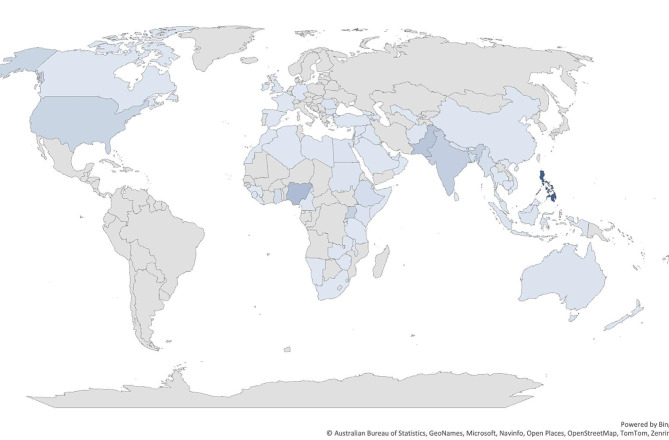
Over 250 million individuals live with chronic hepatitis B (CHB) infection worldwide. A significant proportion of these people often face discrimination defined as the unjust, unfair, or prejudicial treatment of a person on the grounds of their hepatitis B status. Hepatitis B related discrimination has not been widely documented in the literature. This study aims to describe the lived experience of discrimination, document its impact, and shed light on its consequences. A hepatitis B discrimination registry was launched to record self-reported discrimination associated with hepatitis B. The registry included brief demographic questions (age, gender, country of origin), discrimination-specific questions (where, when, and how discrimination occurred), and open-ended questions to detail specific experiences. The registry was distributed to hepatitis B patient/people-focused listservs, social media networks, and community-based organizations around the globe. Descriptive data were analyzed including comparative analysis by country and type of discrimination occurring along with qualitative data (open-ended responses) which were analyzed using thematic analysis techniques A total of 569 individuals responded to the survey between May 2021 and December 2023. Individuals identified as residing in the Philippines (34%; N = 194), Nigeria (11%; N = 60), Pakistan (8%; N = 45), India (6%, N = 34), Uganda (5%; N = 31), the United States of America (4%, N = 26), Ghana (3%; N = 15), Ethiopia (2%; N = 14), and other countries in smaller number with a total of 65 countries reported discrimination at least by one individual. Of these, 461 individuals shared details about their experiences of discrimination with most relating to restrictions on access to work visas, followed by in-country hepatitis B-related employment restrictions, educational-based discrimination, discrimination within the community and health facilities, and the emotional impact of hepatitis B discrimination. This is the largest primary collection of hepatitis B-associated discrimination events and highlights how hepatitis B discrimination clearly has a significant impact on individuals' lives and limits economic opportunities regardless of physical symptoms. Such impacts likely act as barriers to diagnosis and engagement in care, so need to be addressed to achieve the global hepatitis B elimination goals. The data highlight a need for global, national responses and more systematic responses to discrimination experienced by people with hepatitis B.
全世界有超过 2.5 亿人患有慢性乙型肝炎(CHB)感染。这些人中的很大一部分经常面临歧视,这种歧视被定义为基于乙型肝炎状况对个人进行不公正、不公平或有偏见的待遇。乙型肝炎相关歧视在文献中并未得到广泛记录。本研究旨在描述歧视的经历,记录其影响,并阐明其后果。启动了乙型肝炎歧视登记处,以记录与乙型肝炎相关的自我报告歧视。该登记处包括简要的人口统计问题(年龄、性别、原籍国)、歧视特定问题(歧视发生的地点、时间和方式)和详细具体经历的开放式问题。该登记处分发给全球各地的乙型肝炎患者/以人群为中心的邮件列表、社交媒体网络和社区组织。对描述性数据进行了分析,包括按国家和发生的歧视类型进行比较分析,以及使用主题分析技术对开放式回答(开放式回答)进行的定性数据进行分析。共有 569 人在 2021 年 5 月至 2023 年 12 月期间对该调查做出了回应。个人身份识别为居住在菲律宾(34%;N=194)、尼日利亚(11%;N=60)、巴基斯坦(8%;N=45)、印度(6%;N=34)、乌干达(5%;N=31)、美利坚合众国(4%;N=26)、加纳(3%;N=15)、埃塞俄比亚(2%;N=14)和其他较小国家的人报告了歧视,至少有一个人报告了歧视。在这些人中,有 461 人分享了他们遭受歧视经历的详细信息,其中大多数涉及对工作签证的获取限制,其次是国内与乙型肝炎相关的就业限制、教育方面的歧视、社区和卫生设施内的歧视以及乙型肝炎歧视的情绪影响。这是乙型肝炎相关歧视事件的最大原始收集,突出了乙型肝炎歧视如何明显影响个人的生活并限制经济机会,无论身体症状如何。这种影响可能成为诊断和参与护理的障碍,因此需要解决,以实现全球乙型肝炎消除目标。这些数据突显了需要采取全球、国家对策以及更系统地应对乙型肝炎患者所经历的歧视。