Operative Research Unit of Orthopaedic and Trauma Surgery, Department of Orthopaedic and Trauma Surgery, Fondazione Policlinico Universitario Campus Bio-Medico, Via Alvaro del Portillo 200, 00128, Rome, Italy.
Research Unit of Orthopaedic and Trauma Surgery, Department of Medicine and Surgery, Università Campus Bio-Medico di Roma, Via Alvaro del Portillo, 00128, Rome, Italy.
Musculoskelet Surg. 2024 Dec;108(4):403-415. doi: 10.1007/s12306-024-00828-y. Epub 2024 Jun 12.
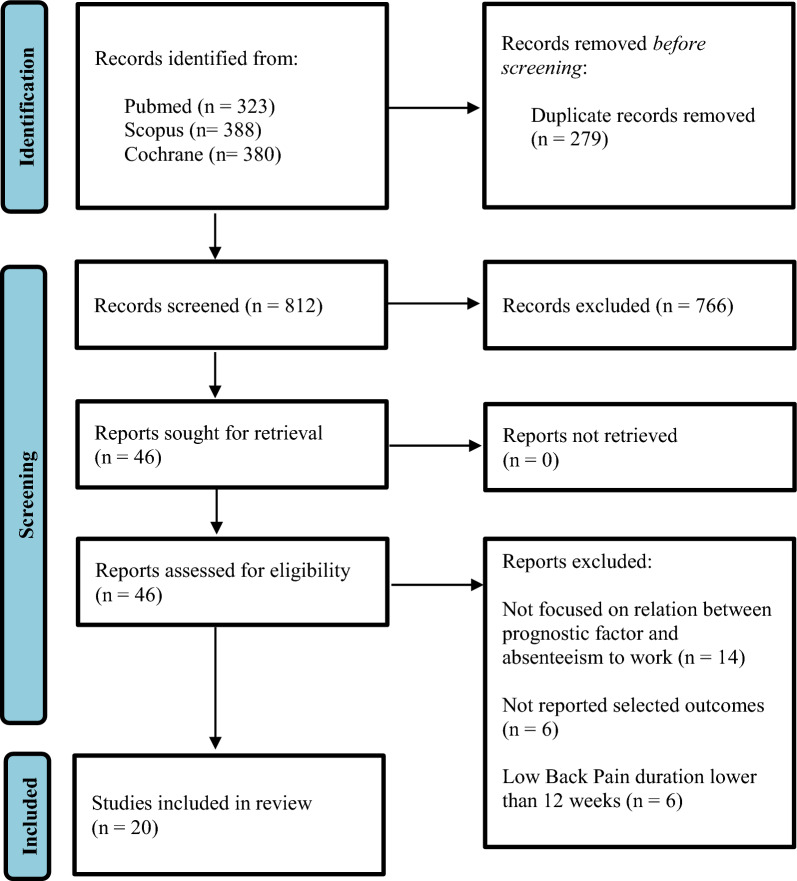
Chronic low back pain (LBP) represents a leading cause of absenteeism from work. An accurate knowledge of complex interactions is essential in understanding the difficulties of return to work (RTW) experienced by workers affected by chronic LBP. This study aims to identify factors related to chronic LBP, the worker, and the psycho-social environment that could predict and influence the duration of an episode of sick leave due to chronic LBP.Studies reporting the relation between prognostic factors and absenteeism from work in patients with LBP were included. The selected studies were grouped by prognostic factors. The results were measured in absolute terms, relative terms, survival curve, or duration of sick leave. The level of evidence was defined by examining the quality and the appropriateness of findings across studies in terms of significance and direction of relationship for each prognostic factor.A total of 20 studies were included. Prognostic factors were classified in clinical, psycho-social, and social workplace, reaching a total of 31 constructs. Global conditions with less favorable repercussions on worker's lives resulted in a delay in time to RTW. Older age, female, higher pain or disability, depression, higher physical work demands, and abuse of smoke and alcohol have shown strong level of evidence for negative outcomes.High global health well-being, great socioeconomic status, and good mental health conditions are decisive in RTW outcomes. Interventions that aim at RTW of employee's sick-listed with LBP should focus on psycho-social aspects, health behaviors, and workplace characteristics.
慢性下背痛(LBP)是导致工人缺勤的主要原因之一。准确了解复杂的相互作用对于理解受慢性 LBP 影响的工人重返工作岗位(RTW)所面临的困难至关重要。本研究旨在确定与慢性 LBP、工人和心理社会环境相关的因素,这些因素可以预测和影响因慢性 LBP 而导致的病假持续时间。
纳入了报告与 LBP 患者缺勤相关的预后因素的研究。所选研究按预后因素进行分组。结果以绝对值、相对值、生存曲线或病假持续时间来衡量。通过检查每项预后因素的研究在意义和关系方向上的质量和适当性,定义证据水平。
共纳入 20 项研究。预后因素分为临床、心理社会和社会工作场所,共涉及 31 个结构。对工人生活产生不利影响的整体状况导致 RTW 时间延迟。年龄较大、女性、较高的疼痛或残疾、抑郁、较高的体力工作要求以及吸烟和酗酒的滥用,对负面结果有很强的证据支持。
较高的整体健康幸福感、较高的社会经济地位和良好的心理健康状况对 RTW 结果具有决定性作用。旨在使患有 LBP 的员工重返工作岗位的干预措施应侧重于心理社会方面、健康行为和工作场所特征。