Gebreslasie Kahsay Zenebe, Beyene Abrahaley Welay, Dewey Rebecca Susan, Gebrehawerya Tewelde
Department of Midwifery, College of Health Sciences, Mekelle University, Mekelle, Ethiopia.
Departments of Midwifery, College of Medicine and Health Sciences, Axum University, Axum, Ethiopia.
PLoS One. 2024 Jun 13;19(6):e0304510. doi: 10.1371/journal.pone.0304510. eCollection 2024.
Maternity waiting homes are residential facilities, located near a qualified healthcare facility, where pregnant women can await their delivery and be transferred to a nearby healthcare facility shortly before delivery, or earlier if complications arise. Although evidence has shown that maternity waiting homes reduce maternal and neonatal mortality, there is limited information about factors associated with the intention to use maternity waiting homes in the study area. Therefore, the aim of this study was to identify factors associated with intention to use maternity waiting homes among pregnant women.
The study used a community-based cross-sectional study design. Simple random sampling was used to select 399 pregnant women. Data were collected using an interviewer-administered pre-tested structured questionnaire.A binary and multivariate logistic regression analysis was performed.
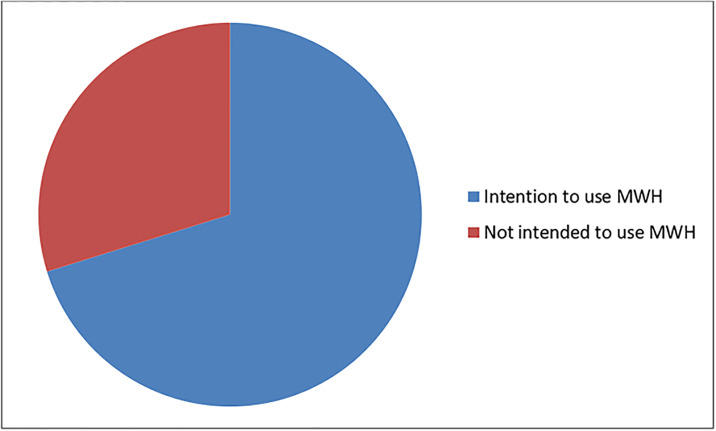
Two hundred and eighty (70.2%) women indicated they intended to use a maternity waiting home during their current pregnancy. Participants' educational status, having experienced a previous institutional delivery, the affordability of food while staying at the maternity waiting home, placing a burden on their attendant, having children in the household who can be cared for by the community or family during the woman's absence, and having household chores covered by their family/community were the factors associated with the intention to use a maternity waiting home.
Relatively few respondents intended to use maternity waiting homes. Empowering women and giving them agency by ensuring their needs are met are important measures necessary to increase the use of maternity waiting homes.
产妇候产之家是位于合格医疗保健机构附近的居住设施,孕妇可在此等待分娩,并在分娩前不久或出现并发症时提前转至附近的医疗保健机构。尽管有证据表明产妇候产之家可降低孕产妇和新生儿死亡率,但关于研究地区与使用产妇候产之家意愿相关的因素的信息有限。因此,本研究的目的是确定孕妇中与使用产妇候产之家意愿相关的因素。
本研究采用基于社区的横断面研究设计。采用简单随机抽样法选取399名孕妇。通过访谈员管理的经过预测试的结构化问卷收集数据。进行二元和多变量逻辑回归分析。
280名(70.2%)女性表示她们打算在本次孕期使用产妇候产之家。参与者的教育程度、曾有过机构分娩经历、在产妇候产之家停留期间食品的可负担性、给陪同人员带来负担、家中有孩子在女性不在时可由社区或家庭照顾以及家庭/社区承担家务是与使用产妇候产之家意愿相关的因素。
打算使用产妇候产之家的受访者相对较少。增强妇女权能并通过确保满足她们的需求给予她们自主权是增加产妇候产之家使用率所需的重要措施。