School of Public Health, College of Medicine and Health Sciences, Arba Minch University, Arba Minch, Ethiopia.
Global Health Institute, Faculty of Medicine & Health Sciences, University of Antwerp, Wilrijk, Belgium.
BMC Pregnancy Childbirth. 2022 Sep 2;22(1):675. doi: 10.1186/s12884-022-04954-y.
Though Ethiopia has expanded Maternity Waiting Homes (MWHs) to reduce maternal and perinatal mortality, the utilization rate is low. To maximize the use of MWH, policymakers must be aware of the barriers and benefits of using MWH. This review aimed to describe the evidence on the barriers and benefits to access and use of MWHs in Ethiopia.
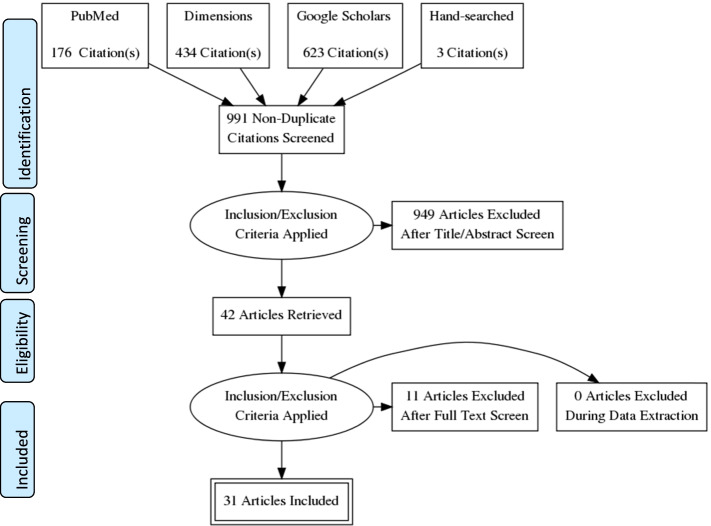
Data were sourced from PubMed, Google Scholars and Dimensions. Thirty-one studies were identified as the best evidence for inclusion in this review. We adopted an integrative review process based on the five-stage process proposed by Whittemore and Knafl.
The key themes identified were the benefits, barriers and enablers of MWH utilization with 10 sub-themes. The themes about benefits of MWHs were lower incidence rate of perinatal death and complications, the low incidence rate of maternal complications and death, and good access to maternal health care. The themes associated with barriers to staying at MWH were distance, transportation, financial costs (higher out-of-pocket payments), the physical aspects of MWHs, cultural constraints and lack of awareness regarding MWHs, women's perceptions of the quality of care at MWHs, and poor provider interaction to women staying at MWH. Enablers to pregnant women to stay at MWHs were availability of MWHs which are attached with obstetric services with quality and compassionate care.
This study synthesized research evidence on MWH implementation, aiming to identify benefits, barriers, and enablers for MWH implementation in Ethiopia. Despite the limited and variable evidence, the implementation of the MWH strategy is an appropriate strategy to improve access to skilled birth attendance in rural Ethiopia.
尽管埃塞俄比亚已经扩大了母婴等候之家(MWH)以降低母婴和围产期死亡率,但利用率仍然很低。为了最大限度地利用 MWH,政策制定者必须了解使用 MWH 的障碍和益处。本综述旨在描述在埃塞俄比亚获得和使用 MWH 的障碍和益处的证据。
数据来源于 PubMed、Google Scholar 和 Dimensions。确定了 31 项研究作为纳入本综述的最佳证据。我们采用了基于 Whittemore 和 Knafl 提出的五阶段过程的综合审查过程。
确定的主要主题是 MWH 使用的益处、障碍和促进因素,有 10 个副标题。与 MWH 益处相关的主题是围产期死亡率和并发症发生率较低、母婴并发症和死亡率较低以及获得良好的产妇保健服务。与留在 MWH 相关的障碍主题是距离、交通、财务成本(更高的自付费用)、MWH 的物理方面、文化限制以及对 MWH 的认识不足、妇女对 MWH 护理质量的看法、以及提供者与留在 MWH 的妇女之间的不良互动。促使孕妇留在 MWH 的促进因素是 MWH 的可用性,它们与具有优质和富有同情心的产科服务相关联。
本研究综合了 MWH 实施的研究证据,旨在确定 MWH 在埃塞俄比亚实施的益处、障碍和促进因素。尽管证据有限且存在差异,但 MWH 战略的实施是改善农村埃塞俄比亚获得熟练接生服务的适当战略。