Kim Ji-Young, Jung Ji-Hye, Jung Soryung, Lee Sanghyuk, Lee Hyang Ah, Ouh Yung-Taek, Hong Seok-Ho
Department of Internal Medicine, School of Medicine, Kangwon National University, Chuncheon, Republic of Korea.
Department of Life Science, Ewha Womans University, Seoul, Republic of Korea.
PLoS One. 2024 Jun 13;19(6):e0299345. doi: 10.1371/journal.pone.0299345. eCollection 2024.
Cervical cancer presents a significant global health challenge, disproportionately impacting underserved populations with limited access to healthcare. Early detection and effective management are vital in addressing this public health concern. This study focuses on Glyoxalase-1 (GLO1), an enzyme crucial for methylglyoxal detoxification, in the context of cervical cancer.
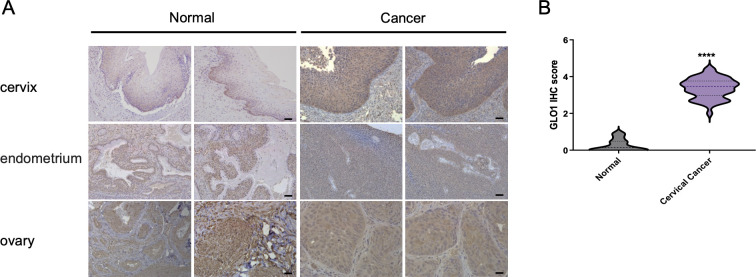
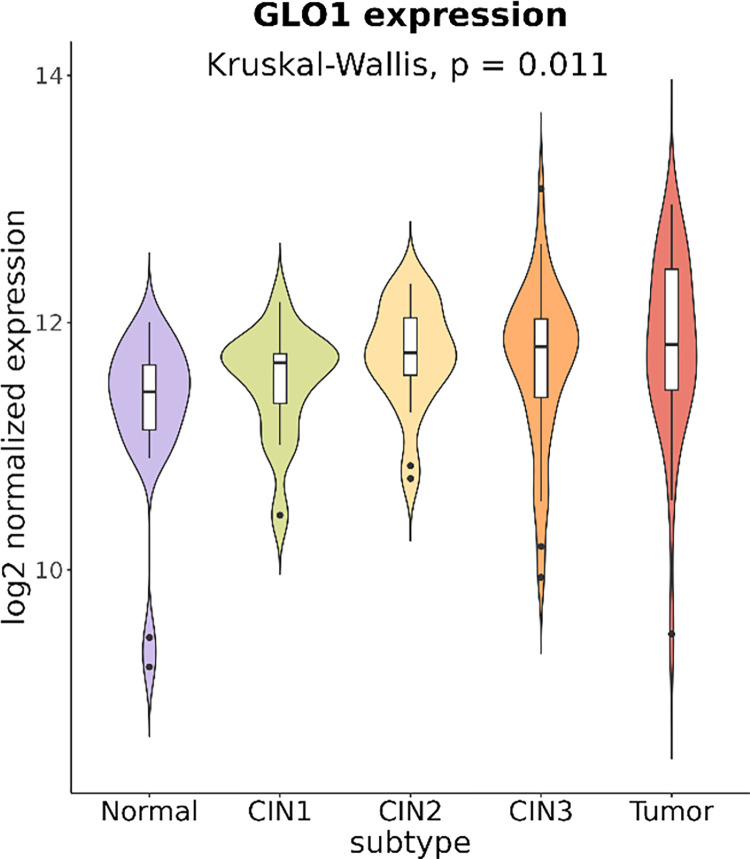
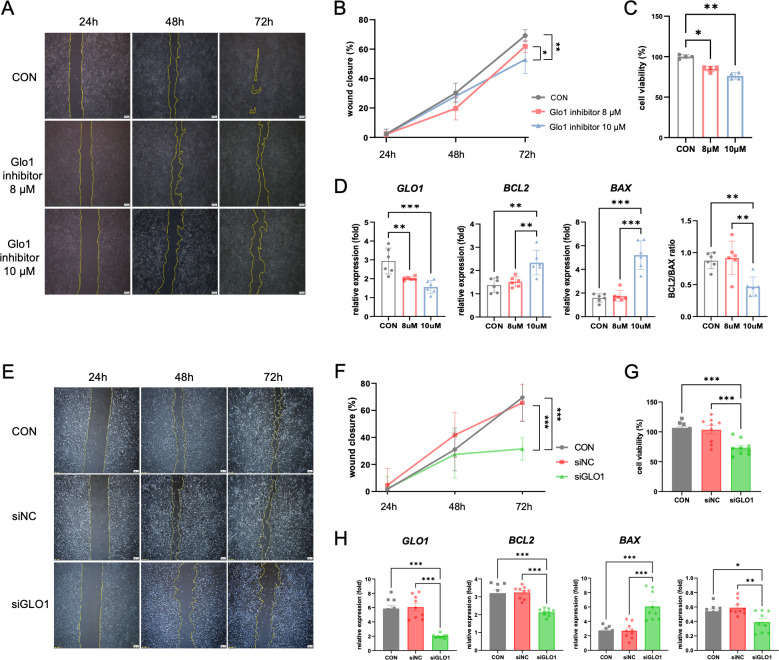
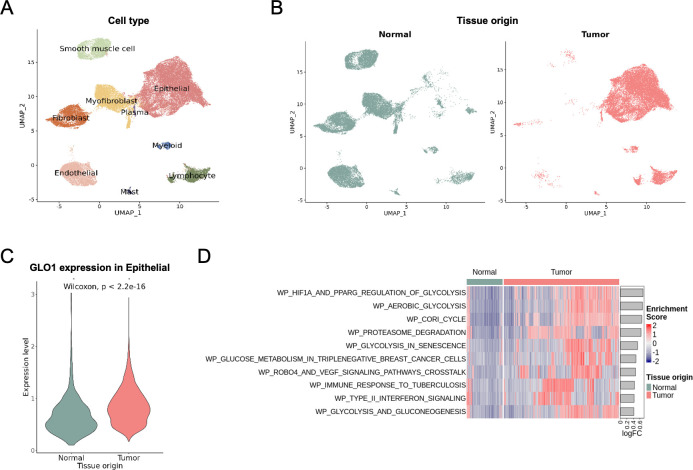
We assessed GLO1 expression in cervical cancer patient samples using immunohistochemistry. In vitro experiments using HeLa cells were conducted to evaluate the impact of GLO1 inhibition on cell viability and migration. Single-cell RNA sequencing (scRNA-seq) and gene set variation analysis were utilized to investigate the role of GLO1 in the metabolism of cervical cancer. Additionally, public microarray data were analyzed to determine GLO1 expression across various stages of cervical cancer.
Our analysis included 58 cervical cancer patients, and showed that GLO1 is significantly upregulated in cervical cancer tissues compared to normal cervical tissues, independent of pathological findings and disease stage. In vitro experiments indicated that GLO1 inhibition by S-p-bromobenzylglutathione cyclopentyl diester decreased cell viability and migration in cervical cancer cell lines. Analyses of scRNA-seq data and public gene expression datasets corroborated the overexpression of GLO1 and its involvement in cancer metabolism, particularly glycolysis. An examination of expression data from precancerous lesions revealed a progressive increase in GLO1 expression from normal tissue to invasive cervical cancer.
This study highlights the critical role of GLO1 in the progression of cervical cancer, presenting it as a potential biomarker and therapeutic target. These findings contribute valuable insights towards personalized treatment approaches and augment the ongoing efforts to combat cervical cancer. Further research is necessary to comprehensively explore GLO1's potential in clinical applications.
宫颈癌是一项重大的全球健康挑战,对医疗服务获取受限的弱势群体影响尤甚。早期检测和有效管理对于应对这一公共卫生问题至关重要。本研究聚焦于乙二醛酶-1(GLO1),这是一种对甲基乙二醛解毒至关重要的酶,研究其在宫颈癌背景下的作用。
我们采用免疫组织化学方法评估了宫颈癌患者样本中GLO1的表达。利用HeLa细胞进行体外实验,以评估GLO1抑制对细胞活力和迁移的影响。运用单细胞RNA测序(scRNA-seq)和基因集变异分析来研究GLO1在宫颈癌代谢中的作用。此外,分析了公开的微阵列数据以确定GLO1在宫颈癌各个阶段的表达情况。
我们的分析纳入了58例宫颈癌患者,结果显示与正常宫颈组织相比,宫颈癌组织中GLO1显著上调,且与病理结果和疾病分期无关。体外实验表明,S -对溴苄基谷胱甘肽环戊酯抑制GLO1可降低宫颈癌细胞系的细胞活力和迁移能力。对scRNA-seq数据和公开基因表达数据集的分析证实了GLO1的过表达及其参与癌症代谢,尤其是糖酵解。对癌前病变表达数据的检查显示,从正常组织到浸润性宫颈癌,GLO1表达呈逐渐增加趋势。
本研究突出了GLO1在宫颈癌进展中的关键作用,表明其可作为潜在的生物标志物和治疗靶点。这些发现为个性化治疗方法提供了有价值的见解,并加强了当前对抗宫颈癌的努力。有必要进一步开展研究以全面探索GLO1在临床应用中的潜力。