Department of Pharmacology and Toxicology, College of Pharmacy and UA Cancer Center, University of Arizona, Tucson, AZ, USA.
Department of Pharmacology and Toxicology, College of Pharmacy and UA Cancer Center, University of Arizona, Tucson, AZ, USA.
Redox Biol. 2021 Feb;39:101838. doi: 10.1016/j.redox.2020.101838. Epub 2020 Dec 17.
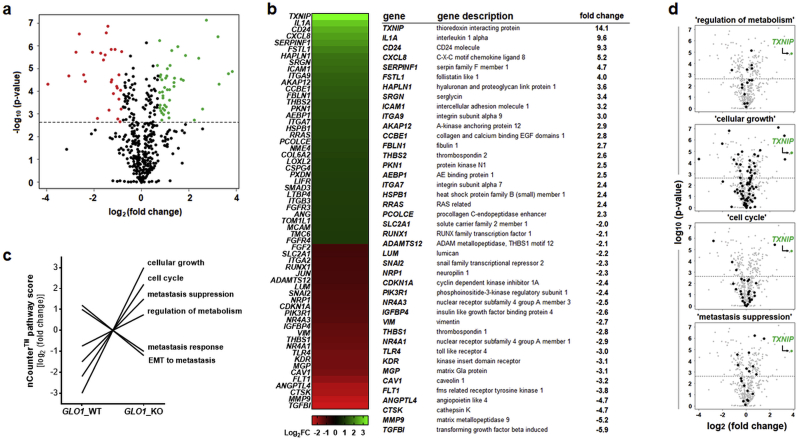
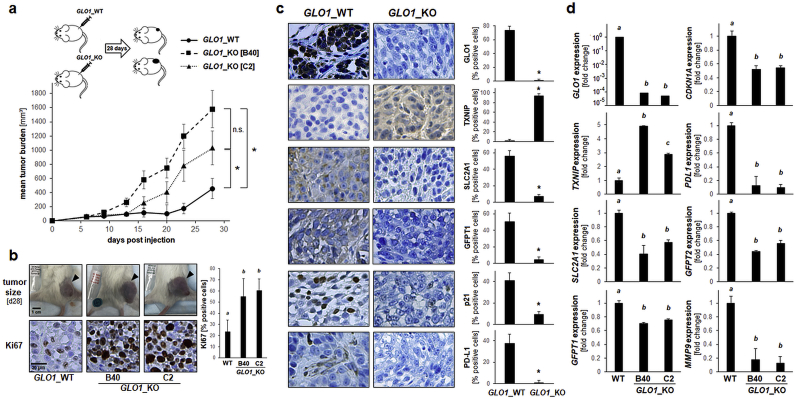
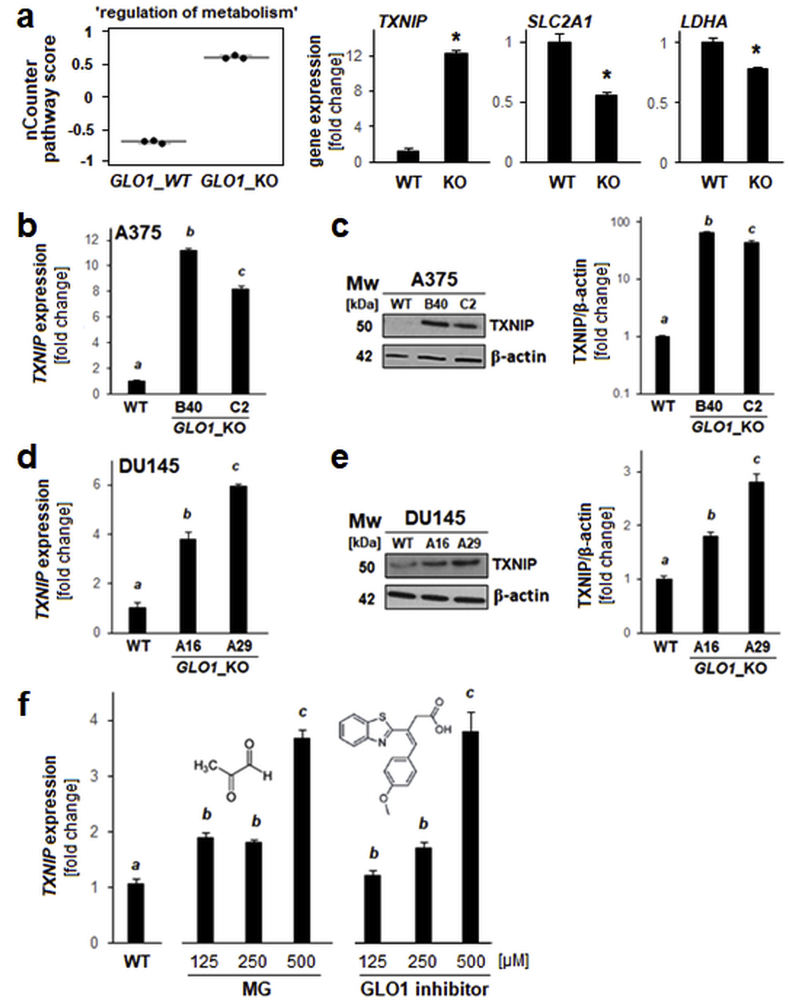
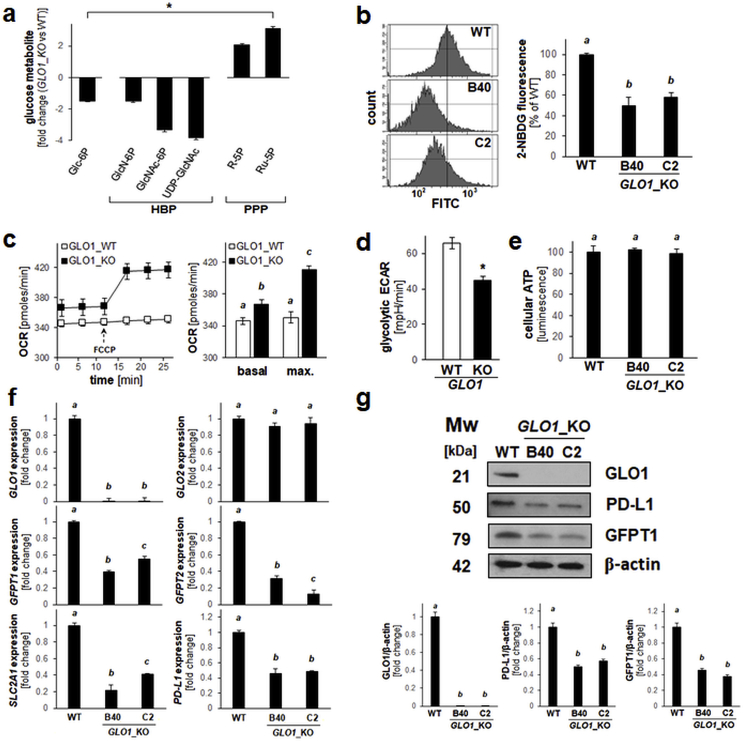
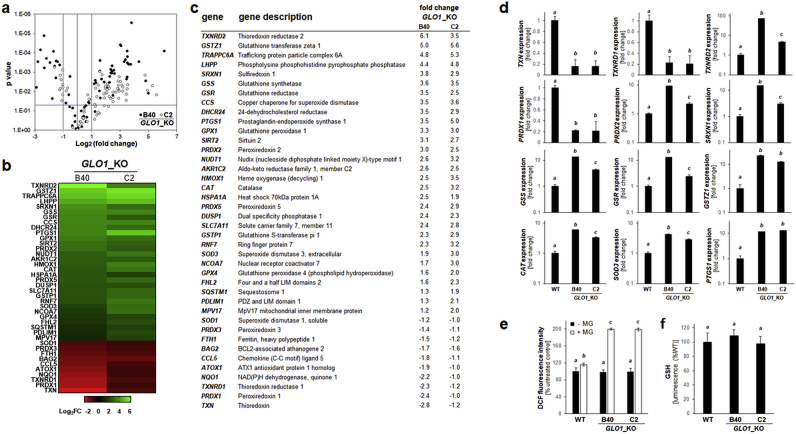
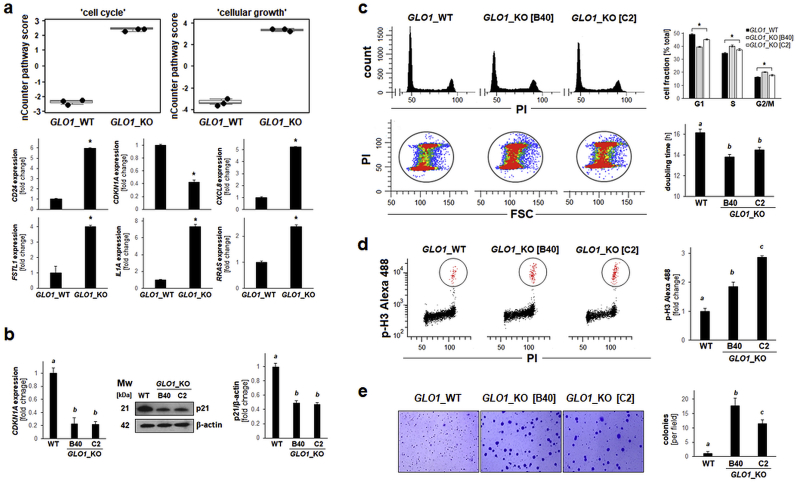
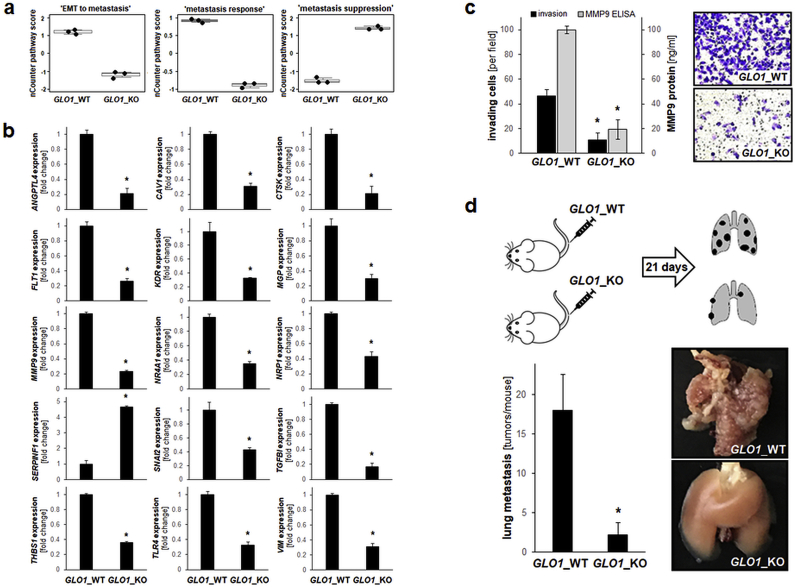
Glyoxalase 1 (encoded by GLO1) is a glutathione-dependent enzyme detoxifying the glycolytic byproduct methylglyoxal (MG), an oncometabolite involved in metabolic reprogramming. Recently, we have demonstrated that GLO1 is overexpressed in human malignant melanoma cells and patient tumors and substantiated a novel role of GLO1 as a molecular determinant of invasion and metastasis in melanoma. Here, employing NanoString™ gene expression profiling (nCounter™ 'PanCancer Progression Panel'), we report that CRISPR/Cas 9-based GLO1 deletion from human A375 malignant melanoma cells alters glucose metabolism and redox homeostasis, observable together with acceleration of tumorigenesis. Nanostring™ analysis identified TXNIP (encoding thioredoxin-interacting protein), a master regulator of cellular energy metabolism and redox homeostasis, displaying the most pronounced expression change in response to GLO1 elimination, confirmed by RT-qPCR and immunoblot analysis. TXNIP was also upregulated in CRISPR/Cas9-engineered DU145 prostate carcinoma cells lacking GLO1, and treatment with MG or a pharmacological GLO1 inhibitor (TLSC702) mimicked GLO1_KO status, suggesting that GLO1 controls TXNIP expression through regulation of MG. GLO1_KO status was characterized by (i) altered oxidative stress response gene expression, (ii) attenuation of glucose uptake and metabolism with downregulation of gene expression (GLUT1, GFAT1, GFAT2, LDHA) and depletion of related key metabolites (glucose-6-phosphate, UDP-N-acetylglucosamine), and (iii) immune checkpoint modulation (PDL1). While confirming our earlier finding that GLO1 deletion limits invasion and metastasis with modulation of EMT-related genes (e.g. TGFBI, MMP9, ANGPTL4, TLR4, SERPINF1), we observed that GLO1_KO melanoma cells displayed a shortened population doubling time, cell cycle alteration with increased M-phase population, and enhanced anchorage-independent growth, a phenotype supported by expression analysis (CXCL8, CD24, IL1A, CDKN1A). Concordantly, an accelerated growth rate of GLO1_KO tumors, accompanied by TXNIP overexpression and metabolic reprogramming, was observable in a SCID mouse melanoma xenograft model, demonstrating that A375 melanoma tumor growth and metastasis can be dysregulated in opposing ways as a consequence of GLO1 elimination.
糖氧还蛋白 1(由 GLO1 编码)是一种依赖谷胱甘肽的酶,可解毒糖酵解副产物甲基乙二醛(MG),MG 是一种参与代谢重编程的致癌代谢物。最近,我们证明 GLO1 在人类恶性黑色素瘤细胞和患者肿瘤中过度表达,并证实 GLO1 作为黑色素瘤侵袭和转移的分子决定因素发挥新作用。在这里,我们采用 NanoString™ 基因表达谱分析(nCounter™“泛癌进展面板”),报告了基于 CRISPR/Cas9 的 GLO1 缺失从人 A375 恶性黑色素瘤细胞中改变葡萄糖代谢和氧化还原稳态,同时加速了肿瘤发生。NanoString™ 分析鉴定出 TXNIP(编码硫氧还蛋白相互作用蛋白),它是细胞能量代谢和氧化还原稳态的主要调节剂,对 GLO1 消除的反应最为明显,通过 RT-qPCR 和免疫印迹分析得到证实。TXNIP 在缺乏 GLO1 的 CRISPR/Cas9 工程 DU145 前列腺癌细胞中也上调,并用 MG 或药理学 GLO1 抑制剂(TLSC702)处理模拟 GLO1_KO 状态,表明 GLO1 通过调节 MG 来控制 TXNIP 表达。GLO1_KO 状态的特征是(i)氧化应激反应基因表达改变,(ii)葡萄糖摄取和代谢减弱,基因表达下调(GLUT1、GFAT1、GFAT2、LDHA),相关关键代谢物耗竭(葡萄糖-6-磷酸、UDP-N-乙酰葡萄糖胺),以及(iii)免疫检查点调节(PDL1)。在证实我们之前的发现即 GLO1 缺失通过调节 EMT 相关基因(例如 TGFBI、MMP9、ANGPTL4、TLR4、SERPINF1)限制侵袭和转移的同时,我们观察到 GLO1_KO 黑色素瘤细胞表现出缩短的群体倍增时间、细胞周期改变,M 期群体增加,以及增强的无锚定生长,该表型得到表达分析的支持(CXCL8、CD24、IL1A、CDKN1A)。相应地,在 SCID 小鼠黑色素瘤异种移植模型中观察到 GLO1_KO 肿瘤的生长速度加快,同时 TXNIP 过表达和代谢重编程,证明 A375 黑色素瘤肿瘤生长和转移可以通过 GLO1 消除以相反的方式失调。