Section for Experimental Psychopathology and Neuroimaging, Department of General Psychiatry, University Hospital Heidelberg, Heidelberg, Germany.
Brain Behav. 2024 Jun;14(6):e3545. doi: 10.1002/brb3.3545.
Low self-esteem is a frequent symptom in major depressive disorder (MDD). This functional magnetic resonance imaging study investigated whether MDD patients with low self-esteem show a distinct neural pathophysiology. Previous studies linked low self-esteem to reduced task-induced deactivation of the pregenual anterior cingulate cortex (pgACC) as a part of the default mode network, and to reduced connectivity between pgACC and reward system. Goya-Maldonado et al. identified an MDD subtype with pgACC and ventral striatal overactivations during reward processing. We hypothesized that this subtype might be characterized by low self-esteem.
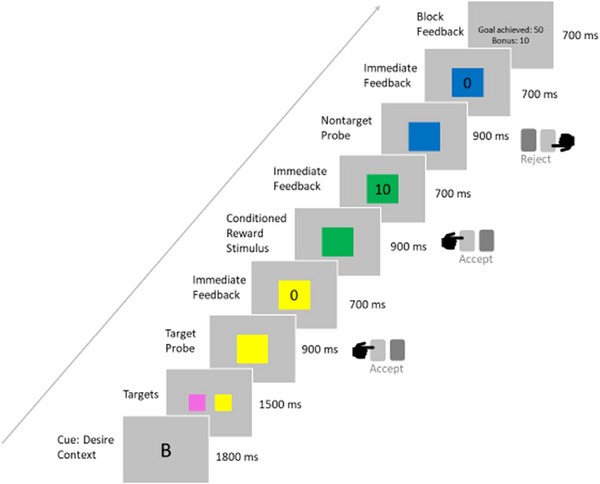
Eighty-three MDD patients performed the desire-reason dilemma task and completed the Rosenberg Self-Esteem Scale (RSES). Brain activity during bottom-up reward processing was regressed upon the RSES scores, controlling for depression severity measured by the Montgomery-Åsberg Depression Rating Scale. To corroborate the findings, we compared self-esteem scores between patient subgroups with impaired task-induced deactivation (n = 31) and with preserved task-induced deactivation (n = 31) of the pgACC.
Consistent with our a priori hypothesis, activity in a bilateral fronto-striatal network including pgACC and ventral striatum correlated negatively with RSES scores, also when controlling for depression severity. In the additional analysis, patients with impaired task-induced pgACC deactivation showed lower self-esteem (t (52.82) = -2.27; p = .027, d = 0.58) compared to those with preserved task-induced pgACC deactivation.
We conclude that low self-esteem in MDD patients is linked to a task-induced deactivation dysfunction of the pgACC. Our findings suggest that a previously described possible subtype of MDD with pgACC and ventral striatal overactivations during reward processing is clinically characterized by low self-esteem.
低自尊是重性抑郁障碍(MDD)的常见症状。这项功能磁共振成像研究旨在探讨是否存在低自尊的 MDD 患者具有不同的神经病理生理学。先前的研究将低自尊与前扣带回皮质(pgACC)的任务诱发去激活减少联系起来,pgACC 是默认模式网络的一部分,与 pgACC 和奖励系统之间的连通性减少有关。Goya-Maldonado 等人鉴定了一种在奖励处理过程中 pgACC 和腹侧纹状体过度激活的 MDD 亚型。我们假设这种亚型可能以低自尊为特征。
83 名 MDD 患者完成了欲望-理由困境任务,并完成了罗森伯格自尊量表(RSES)。在控制蒙哥马利-阿斯伯格抑郁评定量表(MADRS)测量的抑郁严重程度的情况下,根据 RSES 评分回归眶额皮层(pgACC)的奖励处理过程中的脑活动。为了证实这一发现,我们比较了 pgACC 任务诱发去激活受损(n=31)和保留(n=31)的患者亚组之间的自尊评分。
与我们的先验假设一致,包括 pgACC 和腹侧纹状体在内的双侧额纹状体网络的活动与 RSES 评分呈负相关,即使在控制抑郁严重程度的情况下也是如此。在额外的分析中,与保留任务诱导 pgACC 去激活的患者相比,pgACC 任务诱导去激活受损的患者自尊较低(t(52.82)=-2.27;p=.027,d=0.58)。
我们的结论是,MDD 患者的低自尊与 pgACC 的任务诱导去激活功能障碍有关。我们的研究结果表明,以前描述的一种可能的 MDD 亚型,在奖励处理过程中 pgACC 和腹侧纹状体过度激活,其临床特征是低自尊。