Nurmambetova Elvira, Pan Jie, Zhang Zilong, Wu Guosong, Lee Seungwon, Southern Danielle A, Martin Elliot A, Ho Chester, Xu Yuan, Eastwood Cathy A
Centre for Health Informatics, Cumming School of Medicine, University of Calgary, Calgary, AB, Canada.
Department of Community Health Sciences, Cumming School of Medicine, University of Calgary, Calgary, AB, Canada.
JMIR AI. 2023 Mar 8;2:e41264. doi: 10.2196/41264.
Surveillance of hospital-acquired pressure injuries (HAPI) is often suboptimal when relying on administrative health data, as International Classification of Diseases (ICD) codes are known to have long delays and are undercoded. We leveraged natural language processing (NLP) applications on free-text notes, particularly the inpatient nursing notes, from electronic medical records (EMRs), to more accurately and timely identify HAPIs.
This study aimed to show that EMR-based phenotyping algorithms are more fitted to detect HAPIs than ICD-10-CA algorithms alone, while the clinical logs are recorded with higher accuracy via NLP using nursing notes.
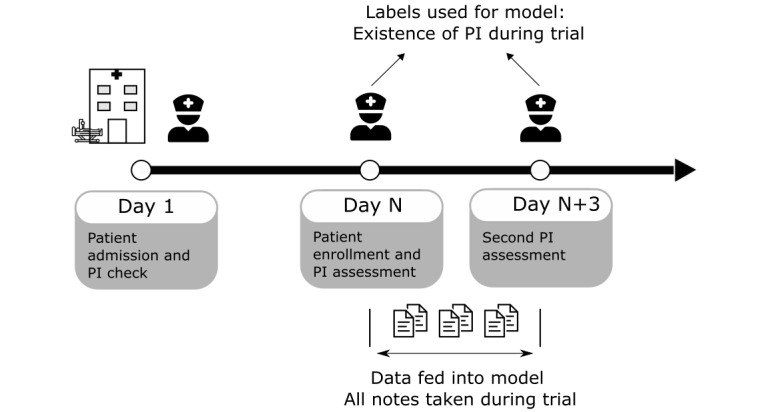
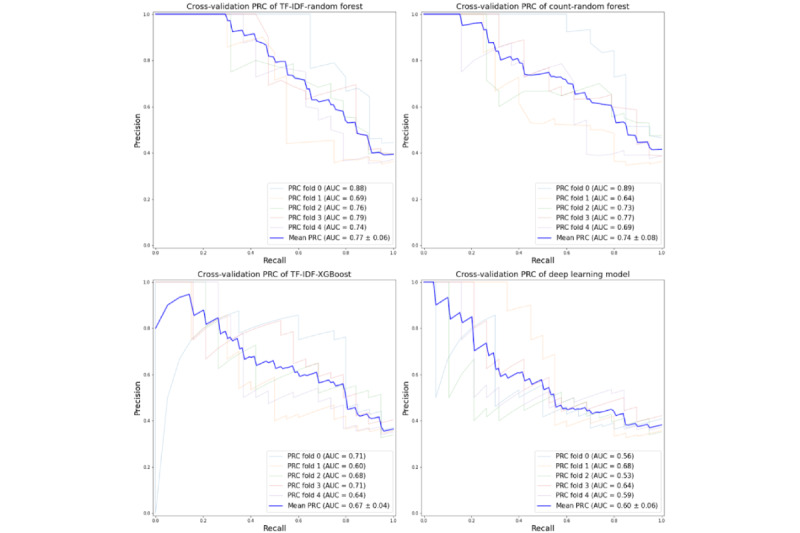
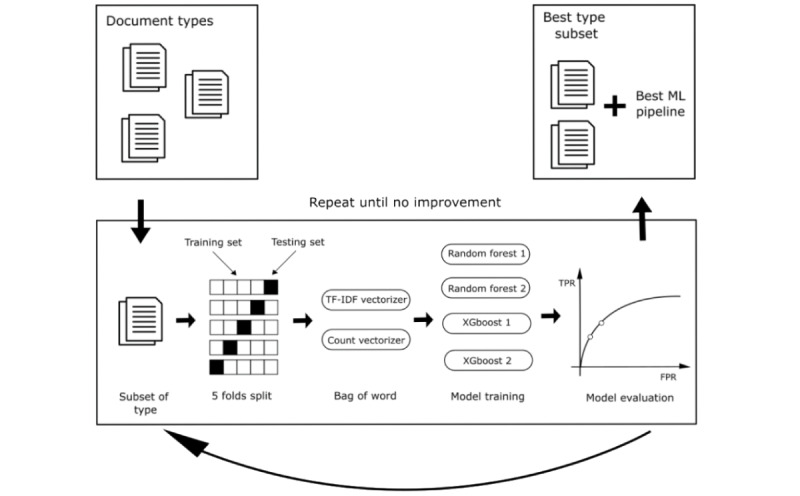
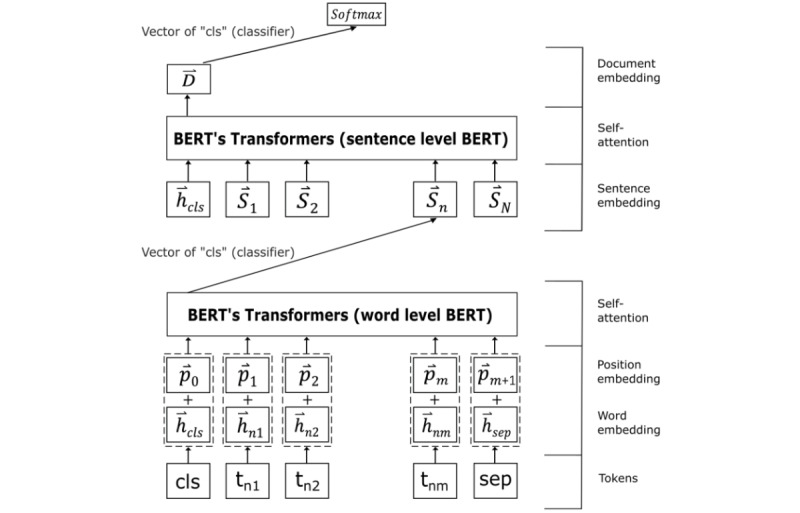
Patients with HAPIs were identified from head-to-toe skin assessments in a local tertiary acute care hospital during a clinical trial that took place from 2015 to 2018 in Calgary, Alberta, Canada. Clinical notes documented during the trial were extracted from the EMR database after the linkage with the discharge abstract database. Different combinations of several types of clinical notes were processed by sequential forward selection during the model development. Text classification algorithms for HAPI detection were developed using random forest (RF), extreme gradient boosting (XGBoost), and deep learning models. The classification threshold was tuned to enable the model to achieve similar specificity to an ICD-based phenotyping study. Each model's performance was assessed, and comparisons were made between the metrics, including sensitivity, positive predictive value, negative predictive value, and F-score.
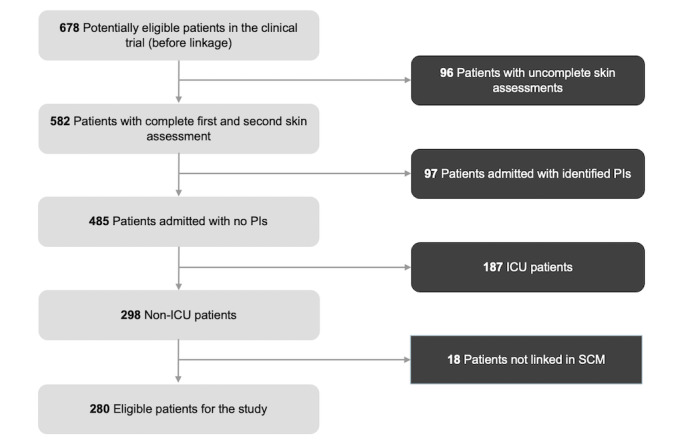
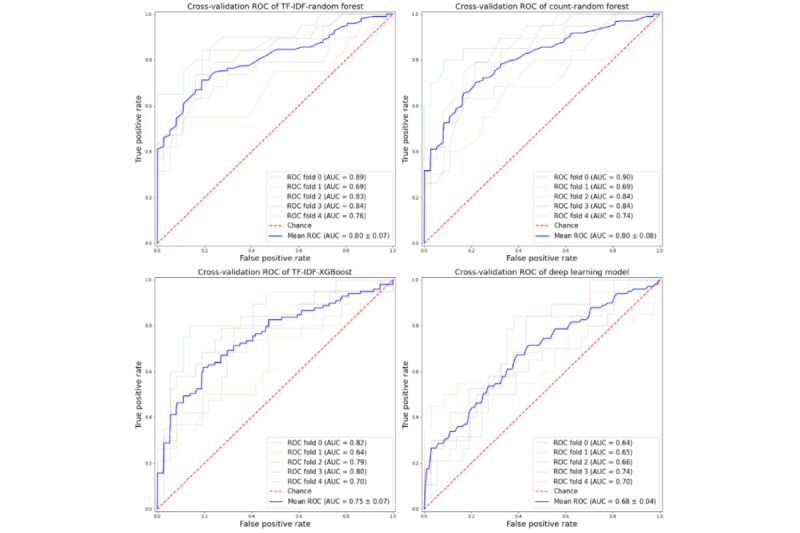
Data from 280 eligible patients were used in this study, among whom 97 patients had HAPIs during the trial. RF was the optimal performing model with a sensitivity of 0.464 (95% CI 0.365-0.563), specificity of 0.984 (95% CI 0.965-1.000), and F-score of 0.612 (95% CI of 0.473-0.751). The machine learning (ML) model reached higher sensitivity without sacrificing much specificity compared to the previously reported performance of ICD-based algorithms.
The EMR-based NLP phenotyping algorithms demonstrated improved performance in HAPI case detection over ICD-10-CA codes alone. Daily generated nursing notes in EMRs are a valuable data resource for ML models to accurately detect adverse events. The study contributes to enhancing automated health care quality and safety surveillance.
依靠行政健康数据对医院获得性压疮(HAPI)进行监测往往效果不佳,因为国际疾病分类(ICD)编码存在长时间延迟且编码不足。我们利用自然语言处理(NLP)应用程序处理电子病历(EMR)中的自由文本记录,特别是住院护理记录,以更准确、及时地识别医院获得性压疮。
本研究旨在表明,基于电子病历的表型分析算法比单独使用ICD-10-CA算法更适合检测医院获得性压疮,同时通过使用护理记录的NLP可以更准确地记录临床日志。
在加拿大艾伯塔省卡尔加里于2015年至2018年进行的一项临床试验中,从一家当地三级急性护理医院的从头到脚皮肤评估中识别出医院获得性压疮患者。在与出院摘要数据库建立链接后,从电子病历数据库中提取试验期间记录的临床记录。在模型开发过程中,通过顺序向前选择对几种类型临床记录的不同组合进行处理。使用随机森林(RF)、极端梯度提升(XGBoost)和深度学习模型开发用于检测医院获得性压疮的文本分类算法。调整分类阈值以使模型能够达到与基于ICD的表型分析研究相似的特异性。评估每个模型的性能,并对包括敏感性、阳性预测值、阴性预测值和F分数在内的指标进行比较。
本研究使用了280名符合条件患者的数据,其中97名患者在试验期间发生了医院获得性压疮。随机森林是表现最佳的模型,敏感性为0.464(95%CI 0.365-0.563),特异性为0.984(95%CI 0.965-1.000),F分数为0.612(95%CI为0.473-0.751)。与先前报道的基于ICD算法的性能相比,机器学习(ML)模型在不牺牲太多特异性的情况下达到了更高的敏感性。
基于电子病历的NLP表型分析算法在检测医院获得性压疮病例方面比单独使用ICD-10-CA编码表现出更好的性能。电子病历中每日生成的护理记录是机器学习模型准确检测不良事件的宝贵数据资源。该研究有助于提高自动化医疗保健质量和安全监测水平。