Institute of Social and Preventive Medicine, University of Bern, Bern, Switzerland
Department of Psychiatry and Psychotherapy, School of Medicine and Health, Technical University of Munich, Munich, Germany.
BMJ Ment Health. 2024 Jun 13;27(1):e301018. doi: 10.1136/bmjment-2024-301018.
To describe the pattern of the prevalence of mental health problems during the first year of the COVID-19 pandemic and examine the impact of containment measures on these trends.
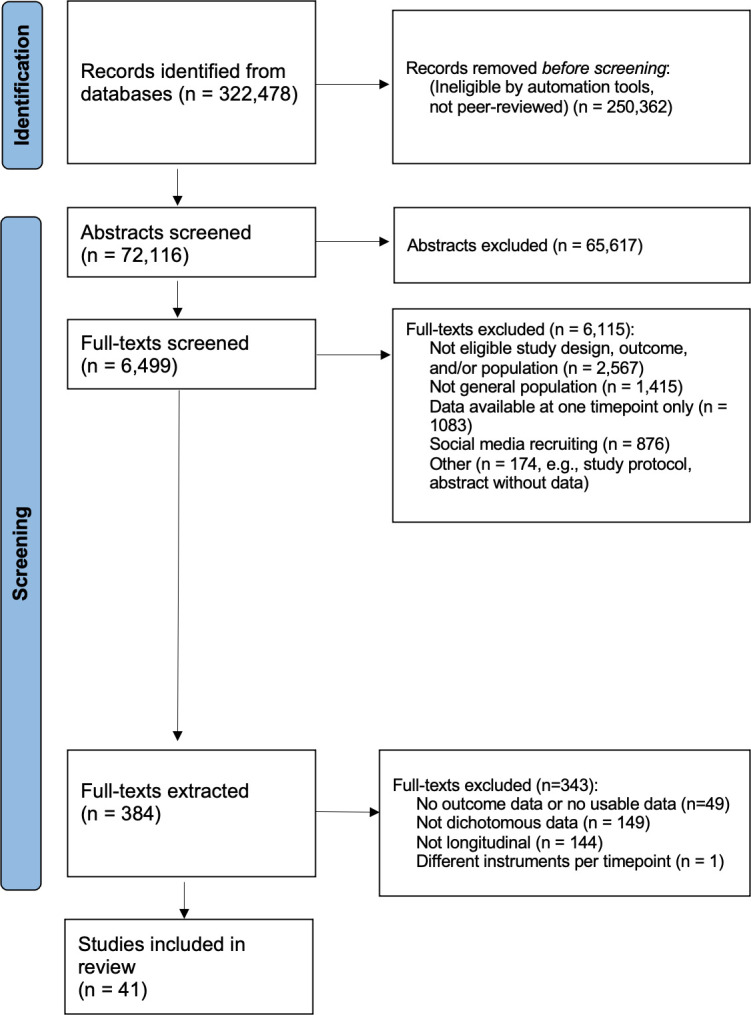
We identified articles published until 30 August 2021 that reported the prevalence of mental health problems in the general population at two or more time points. A crowd of 114 reviewers extracted data on prevalence, study and participant characteristics. We collected information on the number of days since the first SARS-CoV-2 infection in the study country, the stringency of containment measures and the number of cases and deaths. We synthesised changes in prevalence during the pandemic using a random-effects model. We used dose-response meta-analysis to evaluate the trajectory of the changes in mental health problems.
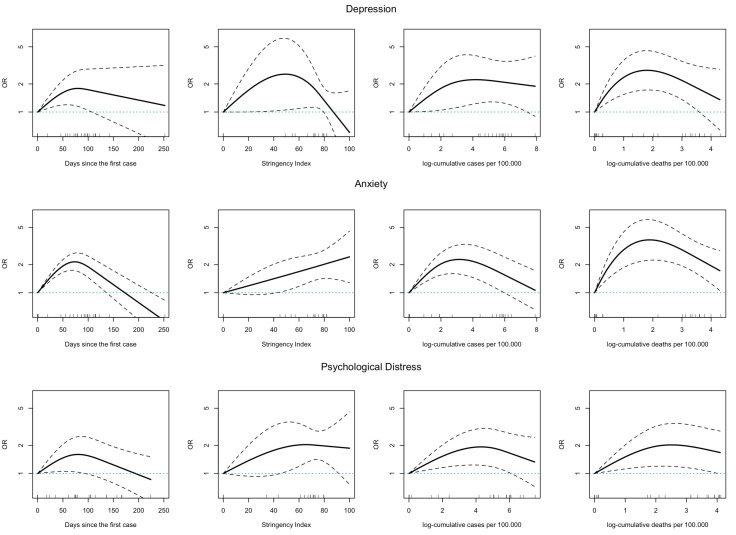
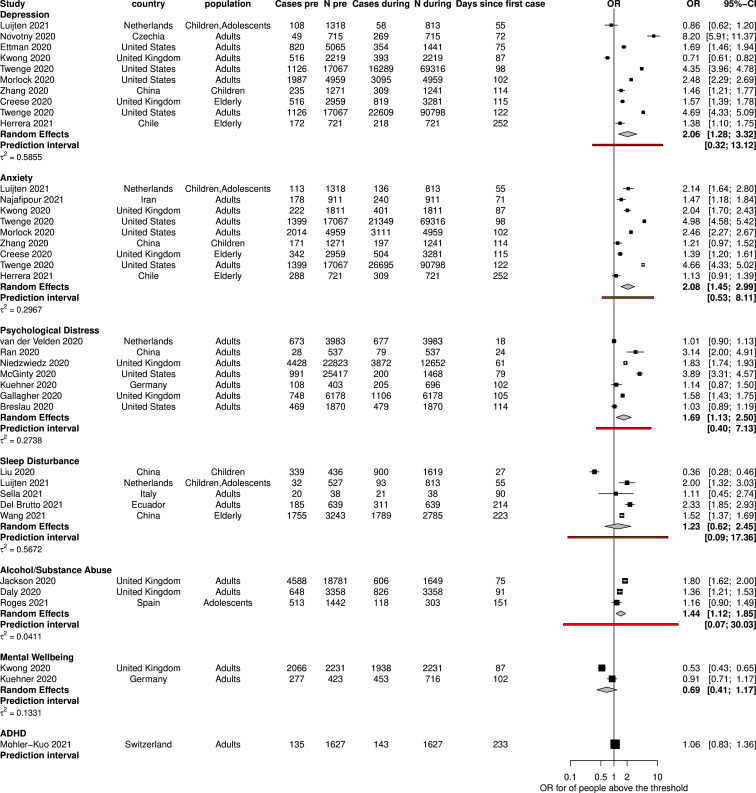
We included 41 studies for 7 mental health conditions. The average odds of symptoms increased during the pandemic (mean OR ranging from 1.23 to 2.08). Heterogeneity was very large and could not be explained by differences in participants or study characteristics. Average odds of psychological distress, depression and anxiety increased during the first 2 months of the pandemic, with increased stringency of the measures, reported infections and deaths. The confidence in the evidence was low to very low.
We observed an initial increase in the average risk of psychological distress, depression-related and anxiety-related problems during the first 2 months of the pandemic. However, large heterogeneity suggests that different populations had different responses to the challenges imposed by the pandemic.
描述 COVID-19 大流行第一年期间心理健康问题的流行模式,并探讨遏制措施对这些趋势的影响。
我们确定了截至 2021 年 8 月 30 日发表的文章,这些文章报告了普通人群中在两个或更多时间点的心理健康问题的流行率。一个由 114 名评论者组成的团队提取了流行率、研究和参与者特征的数据。我们收集了研究国家中从首次 SARS-CoV-2 感染以来的天数、遏制措施的严格程度以及病例和死亡人数的信息。我们使用随机效应模型综合了大流行期间流行率的变化。我们使用剂量-反应荟萃分析来评估心理健康问题变化的轨迹。
我们纳入了 41 项研究,涉及 7 种心理健康状况。在大流行期间,症状的平均几率增加(平均 OR 范围从 1.23 到 2.08)。异质性非常大,无法用参与者或研究特征的差异来解释。在大流行的头 2 个月,心理困扰、抑郁和焦虑的平均几率增加,措施的严格程度、报告的感染和死亡人数增加。证据的可信度为低到极低。
我们观察到在大流行的头 2 个月,心理困扰、与抑郁相关和与焦虑相关问题的平均风险最初增加。然而,巨大的异质性表明,不同人群对大流行带来的挑战有不同的反应。