Endowed Department of Cognitive Function and Pathology, Institute of Brain Science, Graduate School of Medical Sciences, Nagoya City University, Nagoya, 467-8601, Japan.
Department of Pharmacology, Graduate School of Pharmaceutical Sciences, Hokkaido University, Sapporo, 060-0812, Japan.
Mol Brain. 2024 Jun 15;17(1):38. doi: 10.1186/s13041-024-01111-8.
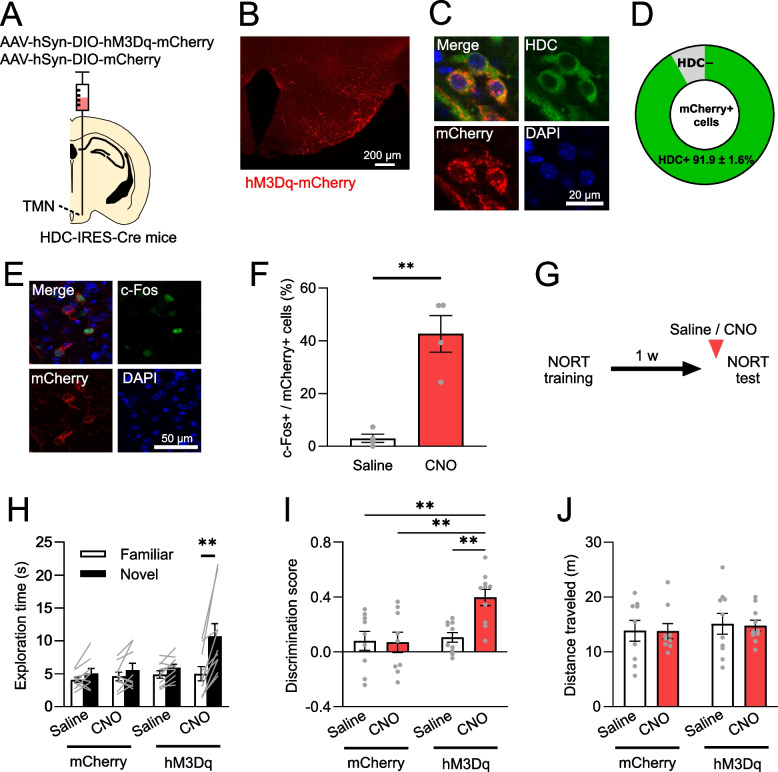
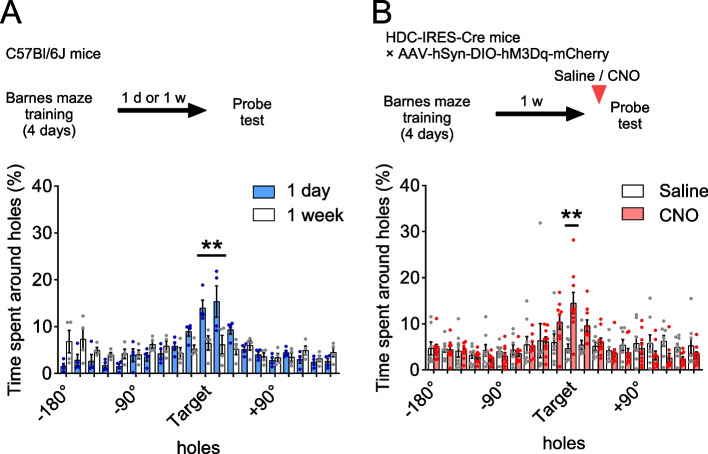
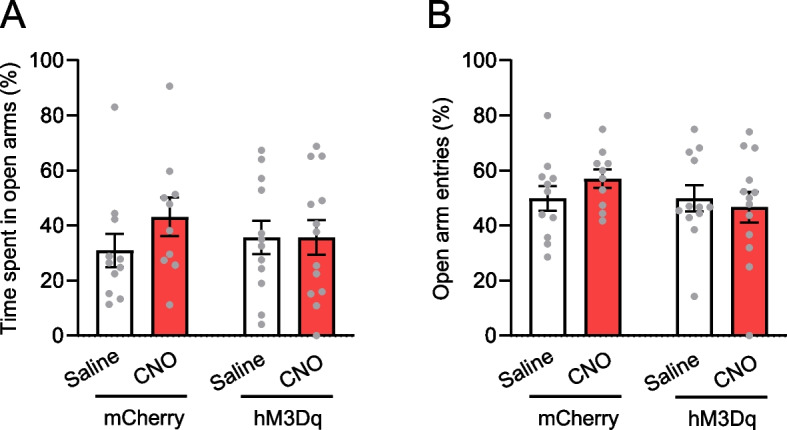
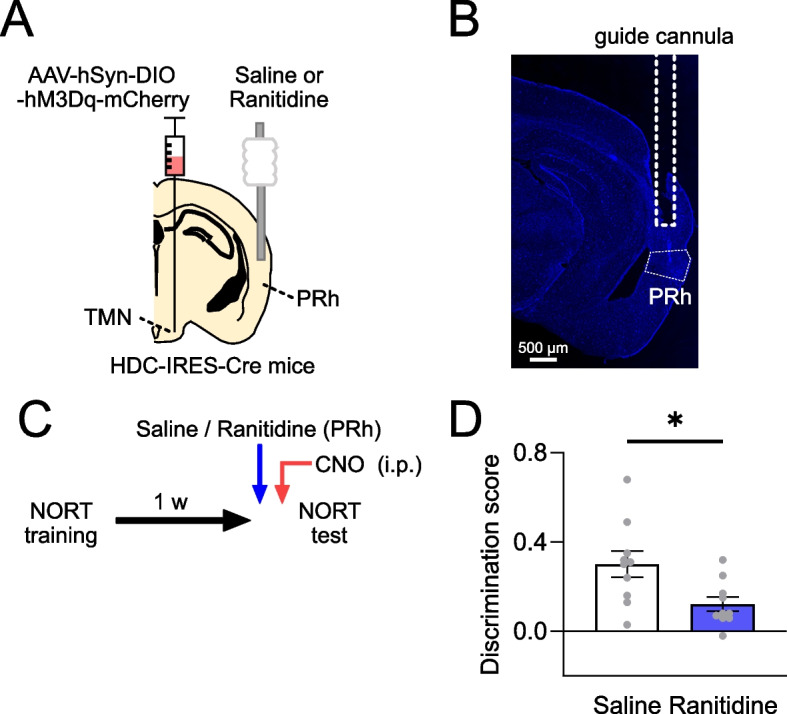
Memory retrieval can become difficult over time, but it is important to note that memories that appear to be forgotten might still be stored in the brain, as shown by their occasional spontaneous retrieval. Histamine in the central nervous system is a promising target for facilitating the recovery of memory retrieval. Our previous study demonstrated that histamine H3 receptor (H3R) inverse agonists/antagonists, activating histamine synthesis and release, enhance activity in the perirhinal cortex and help in retrieving forgotten long-term object recognition memories. However, it is unclear whether enhancing histaminergic activity alone is enough for the recovery of memory retrieval, considering that H3Rs are also located in other neuron types and affect the release of multiple neurotransmitters. In this study, we employed a chemogenetic method to determine whether specifically activating histamine neurons in the tuberomammillary nucleus facilitates memory retrieval. In the novel object recognition test, control mice did not show a preference for objects based on memory 1 week after training, but chemogenetic activation of histamine neurons before testing improved memory retrieval. This selective activation did not affect the locomotor activity or anxiety-related behavior. Administering an H2R antagonist directly into the perirhinal cortex inhibited the recovery of memory retrieval induced by the activation of histamine neurons. Furthermore, we utilized the Barnes maze test to investigate whether chemogenetic activation of histamine neurons influences the retrieval of forgotten spatial memories. Control mice explored all the holes in the maze equally 1 week after training, whereas mice with chemogenetically activated histamine neurons spent more time around the target hole. These findings indicate that chemogenetic activation of histamine neurons in the tuberomammillary nucleus can promote retrieval of seemingly forgotten object recognition and spatial memories.
随着时间的推移,记忆检索可能会变得困难,但值得注意的是,那些似乎被遗忘的记忆可能仍然储存在大脑中,因为它们会偶尔自发地被检索到。中枢神经系统中的组胺是促进记忆检索恢复的一个有希望的靶点。我们之前的研究表明,组胺 H3 受体(H3R)反向激动剂/拮抗剂激活组胺的合成和释放,增强了边缘区的活动,有助于检索被遗忘的长期物体识别记忆。然而,考虑到 H3R 也存在于其他神经元类型中,并影响多种神经递质的释放,单独增强组胺能活性是否足以恢复记忆检索还不清楚。在这项研究中,我们采用了一种化学遗传方法来确定是否特异性激活乳突体核中的组胺神经元有助于记忆检索。在新物体识别测试中,对照组小鼠在训练后 1 周没有表现出基于记忆的物体偏好,但在测试前化学遗传激活组胺神经元可以改善记忆检索。这种选择性激活不会影响运动活动或与焦虑相关的行为。直接将 H2R 拮抗剂注入边缘区可以抑制由组胺神经元激活引起的记忆检索的恢复。此外,我们利用巴恩斯迷宫测试来研究化学遗传激活组胺神经元是否会影响对遗忘空间记忆的检索。在训练后 1 周,对照组小鼠在迷宫中平等地探索所有的洞,而化学遗传激活组胺神经元的小鼠则在目标洞周围花费更多的时间。这些发现表明,乳突体核中组胺神经元的化学遗传激活可以促进对看似被遗忘的物体识别和空间记忆的检索。